


Build Your Armor
Arnold Schwarzenegger on real mental toughness: why the tough-guy act is a mask, lessons from Carl Jung, and how to face your fears.
Welcome to the positive corner of the internet. We’re here to make your life healthier, happier, and less stressful. At the bottom of each email, we explain our editorial process, stance on AI, and partnership standards.
If you were forwarded this message, you can get the free daily email here.
Today’s Health Upgrade
Arnold’s Corner: Monday motivation
When sleep debt becomes more expensive
A simple way to de-stress
Workout of the week
Arnold’s Corner
Monday Motivation: The Armor
After I talked about my struggles with recording, a lot of you wanted to know about my book coming out in January.
It’s called Better Every Day: An Action Plan for a Full Life.
When I say action plan, I mean it.
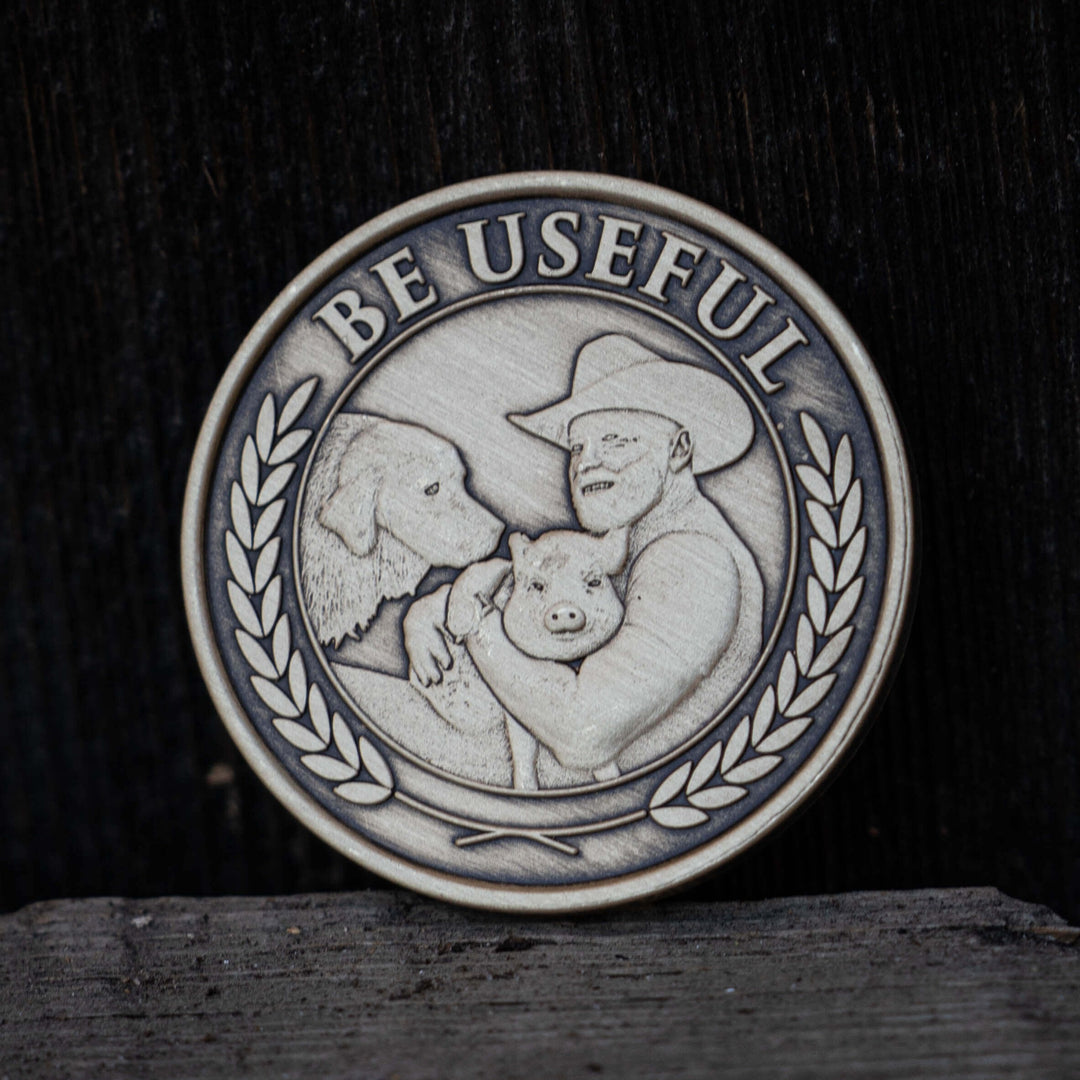
Be Useful is my philosophy; Better Every Day is how you put it into practice.
This book is a playbook, filled with stories from my life, always connected to weekly actions you can add to your life immediately.

Like the newsletter, the goal wasn’t just to give you philosophy or information. It was giving you actionable philosophy or information.
Learning is important, but without action, it doesn’t do much for you.
I wrote this book to get you moving forward and show you what to do every step of the way.
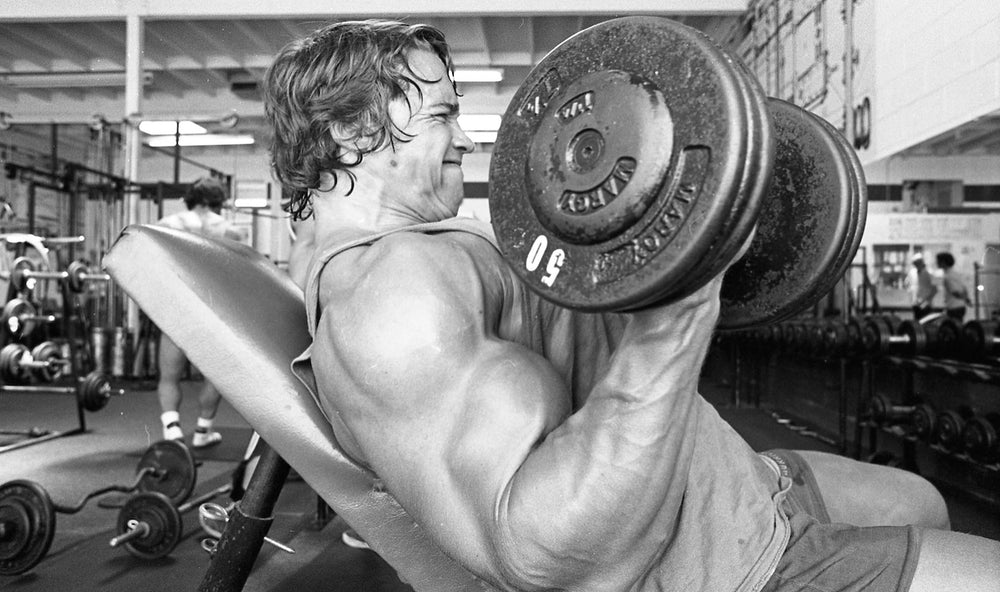
Because most of the lessons I learned in my life came from the work. Most of the time with a barbell or a dumbbell in my hand in the gym.
I think the best way to learn is by doing, and the gym offers everyone a safe laboratory to test many of the lessons.
The gym builds our armor.
You don't get stronger by ignoring your fear, your anger, or your shame. You get stronger by facing them.
I don’t just mean physical armor, although you know by now that the strength and muscle we build protect our bodies from cancer, diabetes, heart disease, broken and frail bones — pretty much every ailment.
I mean mental armor.
And I want to be very, very clear. When I say mental armor, I don’t mean the tough-guy, fake-stoic, doesn’t-feel-anything kind of armor.
That’s bullshit. It’s camouflage, not armor.
Carl Jung had a name for the camouflage. He called it the persona. The mask we wear for the world.
Everybody needs one sometimes. The trouble starts when you forget it's a mask and start believing it's you.
The armor we build becomes part of us. The mask never is.
Jung said you don't grow by picturing the light. You grow "by making the darkness conscious."
In other words: you don't get stronger by ignoring your fear, your anger, or your shame. You get stronger by facing them.
Then he admitted most people won't do it, because it's unpleasant.
He was right. It is unpleasant. So is a heavy squat.
Real mental toughness is not pretending to be invulnerable. I talk about this in the book, but I also had to learn to let go of hiding from emotions to become truly mentally strong.
The reason I say the gym is the best testing ground for building this armor is because of how many of the lessons the iron can teach you at a pretty low cost compared to learning them from life events.
You learn that doing hard things won’t kill you.
You learn that a failure today doesn’t say anything about what is possible tomorrow.
You learn that a setback isn’t an end; it’s a setup for a comeback.
You learn that discomfort isn’t something to escape; it’s the path to what you want.
You learn to relentlessly chase being better every day.
I talk about this in the book, but that hunt for self-improvement isn’t about vanity.
It’s our nature. We were hunters for hundreds of thousands of years before we became people who could farm and then people who could order fast food from our couches.
We are born to hunt, and forgetting that is why I believe a lot of people are unhappy.
I don’t mean hunting animals — you all know that’s not my style. I mean hunting for anything.
Searching. Finding.
Your hunt might be learning a language or improving your chess game. It might be finding a soulmate or starting a business. It might be getting healthy.
That’s what these lessons are about. It’s why we need armor. It’s easier to put ourselves out there and hunt for more if we feel protected.
And there is no cheaper way to start building your armor than in a workout, because let me tell you, hard things are coming for you in life.
No matter who you are.
We choose to do hard things now so when the real hard stuff hits, it doesn’t feel quite as heavy.
It’s why this app became much more than I ever expected. I expected to read all of your success stories about losing weight and getting stronger, and I was surprised at how many of you said you transformed mentally.
I should have known better. Because that was me, too.
The reps I started in the gym under the stadium in Graz six decades ago didn’t just grow my muscles; they grew my mind.
I’m at the stage of my life where I want to share everything that’s helped me with as many people as possible.
Better Every Day isn’t a fitness book or a workout program, even though some of the weekly actions will improve your fitness and your health.
It’s a program for life, laid out one week at a time, so that you can build the armor that allows you to live fully.
To live more.
If you want to pre-order your copy to build your armor, here’s where you can find it:
Together With Eight Sleep
Your Sleep Debt Gets More Expensive Every Decade
When you get used to a certain amount of sleep, it can feel like enough. And when you’re younger, maybe you can get away with it. But the schedule your brain tolerated at 25 may hit differently with each passing decade.
Short sleep appears to take a greater toll with age. By your 40s and 50s, the deepest stage of sleep is already declining, so every hour you cut comes from a smaller reserve.
A meta-analysis of 61 experiments focused on situations where researchers deliberately restricted sleep and then tested cognitive performance. The biggest losses weren’t in intelligence or memory. They showed up in sustained attention and executive function: staying focused while driving, catching a mistake before it causes trouble, or pausing before acting on impulse. Memory declined too, but the effect was smaller.
Deep, slow-wave sleep begins declining in the 40s and 50s. Falling asleep can take longer, awakenings become more common, and you spend less of the night in that restorative stage.
Aging is already reducing the amount of high-quality sleep available. Cutting the night short reduces it further, especially if you’re sleeping around 6 hours or less.
Your day-to-day life depends heavily on attention and self-control, and the analysis found that the consequences of repeated short nights grew with age. That was true for partial sleep restriction, which means you’re getting too little night after night.
And the hardest part is you might not even realize it’s happening. A lapse in attention is difficult to catch when attention itself is impaired.
If you’re not worried about attention, another reason to prioritize sleep is how short sleep is linked to brain-related diseases.
In a 25-year study of nearly 8,000 adults, people who consistently slept six hours or less in their 50s and 60s had about a 30 percent higher risk of dementia. That was an association, not proof that short sleep caused dementia. Poor sleep in midlife could also be an early symptom of changes already underway.
If you want to rest your sleep, start with a consistent wake time, including weekends. Then try to earn back 40 to 60 minutes, which you might be able to reclaim from late-night scrolling.
Getting those minutes back matters. But the research above points at a second problem the extra minutes won't solve on their own. It isn't only how long you sleep. It's how much of the night you spend in the deep, slow-wave stage, and that's the exact stage that starts thinning out in your 40s and 50s.
If you need help getting more deep sleep, clinical trials suggest the Eight Sleep pod will make a difference.
Your core body temperature has to drop for your brain to drift into deep sleep and hold there. And many factors can fight against you, whether it’s a room that runs warm, a partner who sleeps hot, or a body that regulates heat less efficiently as you age.
And you can't fix it by trying harder. Nobody can will their bedroom cooler at 3 a.m.
The Pod 5 actively cools or heats each side of the bed on its own schedule through the night. When your body needs to shed heat to reach deep sleep, it pulls the temperature down for you.
Studies suggest that the Eight Sleep pod results in 34% more deep sleep, and that users fall asleep faster, stay asleep longer, and wake up feeling more refreshed.
It’s a real investment, not a gadget. But it works so well that our readers voted it Product of the Year last year.
As a Pump Club reader, you get up to $350 OFF the Eight Sleep Pod. And you get 30 days to try it at home and return it if you don't love it.
If you have an HSA or FSA, the Pod may qualify as a medical expense through Truemed, and qualified customers save an average of about 30%. Check your eligibility here.
Start Your Week Right
The Simplest Way to Start the Day With Less Stress
A morning reset and a more relaxed mindset doesn’t require an app, a class, or another skill to master.
It can be as simple as pressing play.
If you’re looking for a way to de-stress, science suggests listening to several of your favorite songs can shift your mood and mindset.
Researchers reviewed 104 randomized trials about the relationship between music and mood.
Scientists found that calming music lowered heart rate, blood pressure, and cortisol. The effects were real, but expectations matter. The music can help you chill out and change how your body reacts to hard times, but it won’t erase the stress in your life.
If you’re looking for some magical playlist, the best results came when people chose their own music and listened with the intention of relaxing.
That means your go-to playlist may work better than one labeled “healing” or “528 Hz for anxiety.”
While science supports the role of different frequencies, this study showed another variable that can help calm your mind without needing the perfect frequency.
Familiar music you enjoy seems to shift the nervous system toward its rest-and-recover state, lowering heart rate and slowing breathing. Paying attention to the music also worked better than leaving it on while doing something else.
If the music you love feels a little too fast for relaxation, nature sounds may help, too. A separate review linked rain, waves, and birdsong with lower stress. That research included a mix of study designs, so the evidence is encouraging but can’t prove the sounds caused the improvement.
The research suggests listening for about 20 minutes is enough to lead to a real change. So, if you want to start this week right, put together a short playlist or find a favorite album, and keep reading for the rest of this email and as you start your day.
Fitness
Workout of the Week
Need help building your armor? This will get you started in the right direction.
This time-friendly workout earns its keep by hitting all five patterns—push, pull, hinge, squat, carry—so your whole body feels challenged. And it gives you a cardiovascular challenge by pairing antagonists (think a press and row). Choose a weight that ensures the final 2-3 reps of each set are a challenge.
How to do it
Warmup
Goblet squats: 1 sets x 10 reps
Kettlebell (or dumbbell) swings: 1 set x 15 reps
Pushups: 1 set x 15 reps
The Workout
Superset 1
Perform these two exercises back-to-back with minimal rest. Then, rest 90 seconds and repeat 2 more times.
Overhead Press: 3 sets x 5 reps
Bent-Over Row : 3 sets x 8 reps
90 seconds rest
Superset 2
Perform these two exercises back-to-back with minimal rest. Then, rest 90 seconds and repeat 2 more times.
Goblet Squat: 3 sets x 5 reps
Kettlebell (or dumbbell) Swing: 3 sets x 15 reps
90-second rest
Finisher
Farmer’s carry: Heaviest dumbbell you can carry for 30 seconds.
Rest 1 minute and repeat for 2-4 more sets.
Give it a try, and start your week strong!
Better Today
Take any of these tips from today’s email and put them into action:
1. Arnold: "The Tough-Guy Act Isn't Armor. It's Camouflage."
Arnold Schwarzenegger argues that real mental toughness is built by facing fear, anger, and shame, not by pretending to be invulnerable. He calls the gym the best place to practice to learn because you find out that hard things won't kill you, today's failure says nothing about tomorrow, and discomfort can be the path.
2. Six Hours of Sleep Worked at 25. Here's Why It Might Stop Working at 45.
For most people, six hours of rest gets costlier with age. In a meta-analysis of 61 sleep-restriction experiments, the largest impairments were in sustained attention and executive function, and the effect increased with age. And there’s a potential risk reduction for dementia. Persistent short sleep in midlife was linked to about a 30% higher risk, and poor sleep may also be an early symptom.
3. Music Lowers Heart Rate, Blood Pressure, and Stress Hormones. No Special Frequency Required.
A meta-analysis of 104 randomized controlled trials found that music interventions significantly reduced both physiological stress and psychological stress. In the largest review, no style clearly won, so choose the type of music you enjoy and listen for about 20 minutes to experience the effects.
The Positive Corner of The Internet
About Arnold’s Pump Club Editorial Standards
We do things a bit differently here, starting with transparency.
The Content: All APC emails are researched, written, and fact-checked by the APC editors (see bottom of the email), with written contributions from Arnold (noted with “Arnold’s Corner”). Links take you to original studies (not second-hand sources).
Does AI play a role? Not for the primary content, but it is used in two ways. The main items are original content written by the APC team. The summaries at the end are AI-generated based on the human-written content above. We also use an AI tool to edit and review our interpretations of the research, ensuring scientific accuracy. We don’t assume AI is right, but we use technology to hold ourselves accountable.
Yes, we have partners (all clearly noted by “Together With”). Why? Because it allows us to keep the APC emails free. We first test products, and then reach out to potential partners who offer ways to help you improve every day. The bar is set high, and to date, we have turned down millions in ad deals. (Example: we will not partner with any non-certified supplements or those without evidence in human trials). If we won’t buy the product, we won’t recommend it to you. And if there’s no evidence it works, then there’s no place for it here.
—
Publisher: Arnold Schwarzenegger
Editors-in-chief: Adam Bornstein and Daniel Ketchell