

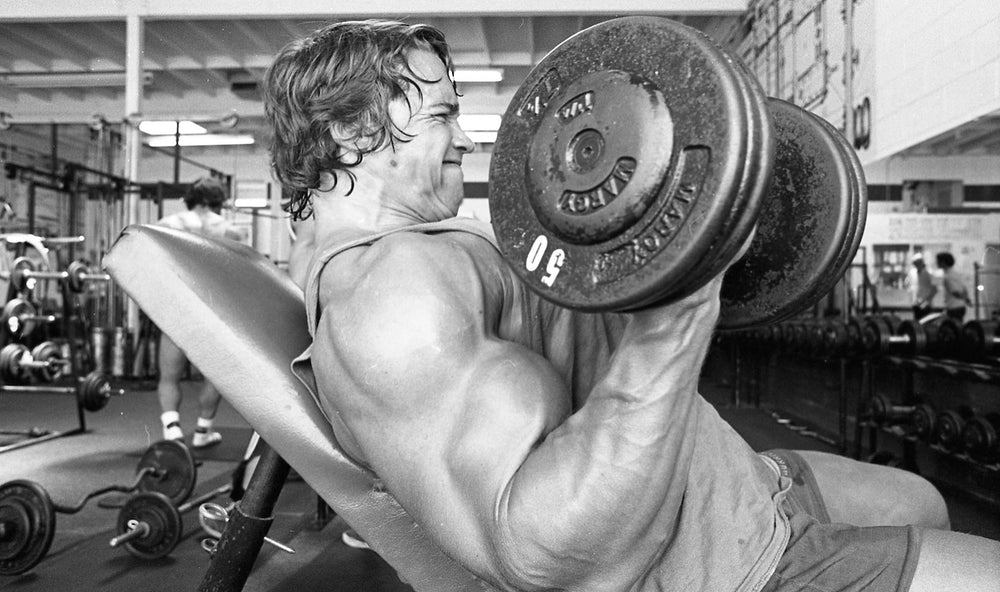

Arnold Schwarzenegger's Service Solution: Why Helping Others Helps You
Arnold skips the galas every Veterans Day to serve pizza to vets. Here’s why he thinks service fixes loneliness, and what a 13,000-person study found.
Welcome to the positive corner of the internet. We’re here to make your life healthier, happier, and less stressful. At the bottom of each email, we explain our editorial process, stance on AI, and partnership standards.
If you were forwarded this message, you can get the free daily email here.
Today’s Health Upgrade
Arnold’s Corner: Monday motivation
Do you have a nutrition question you’ve always wanted answered?
Don’t fall asleep with the TV on
Good fats vs. bad fats
Workout of the week
Arnold’s Corner
Monday Motivation: Service Is The Solution
Every year around Veterans Day, my calendar fills up with invitations.
Big fancy celebrations. Ballrooms. Podiums. Red carpets. Speeches.
And every year, I say no to most of them. Because I have somewhere better to be.
I order a ton of really good pizzas, load them up, and head to the VA campus in West LA.
No speeches. No podium. No red carpet.
I just show up with the pizza, serve it, and thank the men and women there.
It started years ago.
I used to drive by the VA and see veterans living in tents outside. Rows of them. The people who served this country, sleeping on the sidewalk in front of the building that was supposed to take care of them.
And people just drove past. Everybody seemed to forget them.
I couldn't forget them.
So I did the simplest thing I could think of. I showed up with pizza.
That was it. That was the whole plan.
But here's the thing about showing up. Once you show up, you can't unsee it. You start asking questions. You start wanting to do more.
I believe service is the solution to most of the problems we hear about today.
Five years ago, at one of those pizza parties, I made a deal. I would donate tiny homes so they could get out of the tents, but only if the homes were built by Christmas.
They were.
Those veterans got off the sidewalk and into homes on the VA campus, with heat and electricity.
And I keep showing up with my pizzas.
Now, some of them come through the line and say, "Thank you for getting me off the street."
I've won a lot of things in my life. Seven Mr. Olympias. Box office records. Two elections.
None of them, not one, feels as good as a man in that line looking me in the eye and saying thank you.
A couple of years ago, a friend of mine started coming with me to help: Governor Gray Davis.
If you know your California history, you know that's a funny pairing.
We were political rivals. We come from different parties. I took his job. People are always surprised to see us together, and we get a good laugh out of that.
And the idea that this means we can't be friends is crazy.
Plus, Gray is a veteran himself. He was an Army captain in Vietnam and earned a Bronze Star. He knows better than anyone what those men and women gave, and what they're owed.
I tell you all of this because I believe service is the solution to most of the problems we hear about today.
Look at the headlines.
People talk about political division.
Service brings us together for a common goal. Gray and I don't ask the vets in the line what party they come from. They don't ask us. Nobody cares.
A hungry man or woman doesn't want a Democrat pizza or a Republican pizza. He wants a pizza and someone who gives a damn. We feel good. They feel good. We're there for each other. It's that simple.
People talk about loneliness.
You can't serve yourself. Service gets you off the couch and out into the world. You have to find someone to help. And the moment you do, you're not alone anymore. You're part of something.
People talk about a lack of purpose.
Serving someone else is the ultimate purpose. Do you know how great it feels to hear a thank you, or see a smile, when you've helped someone? There is no pill, no supplement, no self-help guru that gives you that feeling. Only service does.
And it's not just a feeling. Researchers at Harvard followed about 13,000 adults over 50. The ones who volunteered a couple of hours a week reported more purpose and less loneliness, and they were less likely to die in the years that followed. Helping others helps you too.
My father used to tell me, "Be useful."
I didn't fully understand it when I was a kid. I thought it meant “do your chores.”
Now I know it's the whole game.
So this is my push to all of you.
Get out there and serve something bigger than yourself.
And don't tell me you don't have the money.
It doesn't require money.
At the VA, people were there just to hand out food and drinks. Others came just to say thank you and give someone a person to talk to.
It only requires your time.
So start small, just like you would in the gym.
Volunteer for one hour this week.
Call a veteran in your family and ask them about their service.
Help a neighbor carry their groceries.
Coach a kid.
Visit someone who doesn't get many visitors.
One hour. One person.
Just like your workouts, it compounds. You show up once, it feels good. You show up again, it becomes who you are.
They'll feel better. You'll feel better. The world gets a little better.
So hit reply and tell me: who's getting your hour this week?
Be of service. Be useful.
Community
Free Virtual Event: Nutrition Q&A With Co-CEO and Co-Editor-in-Chief, Adam Bornstein
Do you have a nutrition question that’s been driving you crazy? Maybe something about performance, fat loss, muscle gain, longevity, supplements, or popular diet plans?
Tomorrow at 12 pm PST/3 pm EST, you can join Adam Bornstein, Pump Club Co-CEO and Co-Editor-in-Chief, for a live Q&A.
Pump Club app members get access to these Q&As every week, but in the holiday spirit, we’re making some of them available to all newsletter members.
Join the Q&A here (we’ll also send a reminder tomorrow).
We hope to see many of you there.
Start Your Week Right
Does Your Bedroom Need to Be Darker?
Most of us don’t sleep in total darkness, and you probably don’t think twice about it. You might fall asleep to the TV. Or maybe the outdoor lights that peek through the curtains.
Just because you don’t feel it doesn't mean it doesn't make a difference. Studies suggest that light at night affects your sleep and health, and may increase your risk of serious issues.
Scientists found that nighttime light exposure affects your circadian rhythm, triggering a domino effect of health problems.
Recent studies suggest that bedroom light while you sleep could lead to cardiovascular problems and other health issues.
And the latest research found that people exposed to more light at night had small differences in heart structure and function. However, the study didn’t prove that light caused them.
Researchers measured light exposure using wrist sensors for seven days. About three years later, participants underwent heart MRI scans.
Those with the most nighttime light exposure had a slightly heavier main pumping chamber, thicker heart walls, and a lower measure of contraction. These were subtle findings on sensitive scans, not diagnoses of heart disease.
As we mentioned, light helps set your internal clock, which influences sleep and daily changes in blood pressure and heart rate. Shorter sleep statistically explained about a quarter to half of the associations, suggesting sleep duration could be part of the picture.
But a sensor on your wrist for one week can’t tell us how much light reaches your eyes over years. Other differences between people, including their health and sleep habits, could also contribute to the findings.
If you need a night-light, this isn’t evidence that you’re damaging your heart.
And, you’re likely reducing potential risks if you can make your bedroom as dark as possible. That means reducing the light you don’t need. Turn off the TV before falling asleep. Close the curtains or shift away from light coming through the window.
If you need light for bathroom trips, keep a dim, warm nightlight. You don’t need to stumble through a pitch-black room to practice good sleep habits.
Better Every Day
Why “Good Fats, Bad Fats” Can Do More Harm Than Good
What’s the difference between good and bad fats?
The idea of “good fat vs. bad fat” might help you understand that not all fats are the same. But it can also create unnecessary fear.
Instead, it’s more helpful to see it as “eat more,” “eat less,” and “avoid.”
Eat more: unsaturated fats
Examples: Olive oil, avocado, nuts, seeds, fatty fish (salmon, sardines, trout)
These fats have the strongest evidence. Swapping them in for other fats lowers LDL cholesterol in controlled trials, and people who eat more of them have lower rates of heart disease.
Eat less: saturated fats
Butter, red meat, cheese, coconut oil, full-fat dairy
This is where the real debate is, and the short answer is that what matters is the source and how it affects your blood work.
For most people, trading butter for olive oil or nuts benefits your heart. But that doesn’t mean butter is bad. It just means that if you eat too much, it can affect things like LDL cholesterol, which is associated with cardiovascular disease.
The source matters too: yogurt and cheese look fairly neutral in long-term studies, while processed meats like bacon and deli meat are consistently linked to worse outcomes. But processed meat is not the same as unprocessed meat, or meat that’s lower in saturated fat.
Your best bet is to get blood work and understand your cardiovascular risk, then adjust your diet accordingly.
Avoid
Partially hydrogenated oils, once common in fried foods, margarine, and packaged baked goods
These are the biggest problem. The U.S. has mostly banned them, but check labels on imported or older shelf-stable snacks.
Fat is essential. It’s good to include it in your diet, but how much and where it comes from will determine what you need.
This could look like simple swaps:
Cook with olive oil instead of butter
Trade chips or crackers for a handful of nuts
Swap one red-meat meal this week for salmon
Swap mayo for avocado
You don’t need to fear fat. Just get more of it from whole foods and less from processed ones. If you need help, the Pump Club app's personalized nutrition tracker and Arnold Intelligence can do the thinking for you.
Together with Rogue
Workout of the Week
For the last two weeks, we’ve shared individual workouts from the “Short on Time Foundation” program in the Pump Club app. And today, we’re continuing the trend with another workout from the program.
Ketch recently welcomed his third child. Despite the added responsibility (and increase in sleepless nights), he didn’t want to let his fitness slide while his family needs him most.
So he started the “Short on Time Foundation” program because it lets him train hard while requiring less time in the gym and only 3 days of resistance training per week.
All app members can follow along with Ketch and train with him live. In the spirit of the holiday season, we’ve been granting all newsletter readers access once per week. You can join in, do the workout, or just watch as he guides you through the program and as he answers questions.
This week, you can join him on Friday (we’ll send a reminder that morning). This is free for any newsletter subscriber.
The next workout in the program is also this week’s “Workout of the Week.” Enjoy!
Warmup
Hip raise: 1 set x 8 reps
Inchworm: 1 set x 8 reps
Pushups: 1 set x 8 reps
Bodyweight squat: 1 set x 8 reps
The Workout
Perform work-up sets for each of the main movements. In general, you’ll complete 8 reps at 50% of the weight you’ll use, 5 reps at 60%, and 2-3 reps at 70-80%. The stronger you are, the more work-up sets you might need. But the goal of the work-ups is to prepare your body, the movement, and your muscles, not to fatigue them.
The sets listed are your working sets only. So if you see “3 sets x 15 reps,” that means you’ll complete the work-up sets and then perform 3 sets x 15 reps, where the last 2-3 reps of each set should be extremely challenging. That’s how you know you’re at the correct weight.
1. T-Bar Row: 3 sets x 15 reps (2 min rest)
2. Barbell squat: 3 sets x 12 reps (2 min rest)
Superset
3a. Barbell lunge: 2 sets x 12 reps (30-second rest)
3b. Pullups: 2 sets x 6 (60-second rest)
4. Reverse crunch: 2 sets x 10 reps (60-second rest)
Equipment needed:
Want to build a home gym like Ketch? Here are a few essentials that are Pump Club approved. These consider quality products, durability, and considerations for limited space, even if you just have a corner of a room.
Give it a try, and start your week strong!

Better Today
Take any of these tips from today’s email and put them into action:
1. Service Isn’t a Sacrifice. It’s the Best Thing You Can Do for Yourself
Regular volunteering is linked to more purpose, less loneliness, and a lower risk of death in adults over 50. In a Harvard study of nearly 13,000 people, the benefit showed up at about two hours a week. Most people think helping others costs time and energy. The data suggests it brings purpose and connection, and it costs no money.
2. Sleeping With the Light On Is Linked to Heart Changes
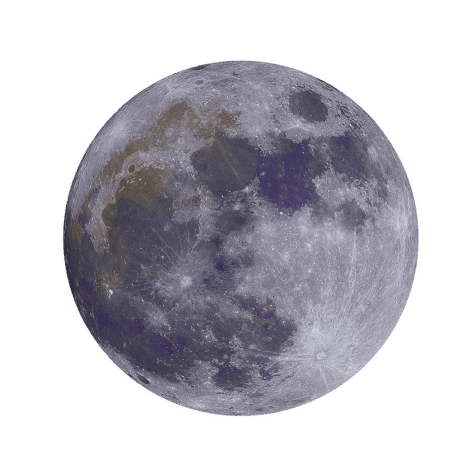
Sleeping with light on is linked to small but measurable heart changes. A 2026 study of 11,000 adults found that people exposed to light at night (about as bright as moonlight) had greater left ventricular mass about three years later. It’s not the only study to connect light at night to changes in sleep and cardiovascular health. Most people assume that if light doesn’t wake you, it doesn’t matter. This study suggests your body still responds even when you don’t notice.
3. Good Fats vs. Bad Fats: Eat More, Eat Less, and the One to Avoid
The “good fat vs. bad fat” split creates fear. Instead, it helps to know which fats are associated with better health outcomes, and which ones are linked to health conditions if you consume too much. Unsaturated fats (olive oil, nuts, fatty fish) are the ones to eat more of. Swapping them in for saturated fat lowers LDL cholesterol in controlled trials. Saturated fat is a “less,” not a “never,” and trans fats are the only true “avoid.”
The Positive Corner of The Internet
About Arnold’s Pump Club Editorial Standards
We do things a bit differently here, starting with transparency.
The Content: All APC emails are researched, written, and fact-checked by the APC editors (see bottom of the email), with written contributions from Arnold (noted with “Arnold’s Corner”). Links take you to original studies (not second-hand sources).
Does AI play a role? Not for the primary content, but we use it in two ways. The main items are original content written by the APC team. The summaries at the end are AI-generated based on the human-written content above. We also use an AI tool to edit and review our interpretations of the research, ensuring scientific accuracy. We don’t assume AI is right, but we use technology to hold ourselves accountable.
Yes, we have partners (all clearly noted by “Together With”). Why? Because it allows us to keep the APC emails free. We first test products, and then reach out to potential partners who offer ways to help you improve every day. The bar is set high, and to date, we have turned down millions in ad deals. (Example: we will not partner with any non-certified supplements or those without evidence in human trials). If we won’t buy the product, we won’t recommend it to you. And if there’s no evidence it works, then there’s no place for it here.
—
Publisher: Arnold Schwarzenegger
Editors-in-chief: Adam Bornstein and Daniel Ketchell