


Your Biological-Age Test Is Fuzzier Than It Looks
Researchers ran the same blood twice and got biological ages up to 9 years apart. What epigenetic clocks can and can’t tell you, and the simple at-home test that tracks health outcomes.
Welcome to the positive corner of the internet. We’re here to make your life healthier, happier, and less stressful. At the bottom of each email, we explain our editorial process, stance on AI, and partnership standards.
If you were forwarded this message, you can get the free daily email here.
Today’s Health Upgrade
Is one type of exercise best for longevity?
How to maximize coffee’s flavor (when you make it at home)
The truth about “biological age” tests
Adam’s Corner: The Box
Fitness
Strength or Cardio? The Longest Lives Had Both
Spend any time in the strength corner of the internet, and you’ll hear that lifting is the only longevity exercise you need. Spend time in the endurance world, and you’ll hear the opposite.
A large new analysis suggests both camps are half right because the people who lived longest didn’t pick a side and prioritized lifting weights and cardiovascular training.
Researchers followed nearly 147,000 health professionals for up to 30 years, tracking how much aerobic exercise and how much weight training each person did. Because they recorded both, they could see how each one related to risk of death, on its own and together.
To be clear, the research was observational, so it shows which habits were linked to longer lives, not proof that exercise caused them.
Regular aerobic activity was associated with roughly a 26% to 43% lower risk of death than barely moving, and more activity tracked with more protection.
Lifting was linked to additional protection.
And the main takeaway is that the lowest risk belonged to people who did plenty of both.
One detail is easy to misread. Lifting alone showed only a weak signal in this data. That doesn’t mean strength doesn’t matter. The study measured time spent lifting, not strength or muscle mass, and those are the things that protect your independence, your bones, your blood sugar, and your ability to get off the floor or carry groceries upstairs at 80.
Cardio can’t build those. Lifting can’t build a strong heart and lungs in the same way. Each covers what the other misses.
That’s the real takeaway: exercise isn’t a competition over which program matters more. They stack and work together to build a healthier system. Strength keeps your body capable. Cardio keeps your engine running. You need both for a long life you can actually enjoy.
So look at your week and find the missing piece. If you’re all dumbbells, add movement that leaves you breathing hard: three brisk 30-minute walks, a couple of bike rides, a swim. If you’re all running, add two full-body strength sessions. Neither replaces the other. Together, they’re where the longest lives were found.
Together With Cometeer
The Coffee That Actually Tastes Good Black
Most coffee needs milk and sugar to hide how bitter it tastes. But what if the problem isn't your taste buds? It's how you make your coffee.
MIT engineers cracked the code on something coffee lovers have been chasing for decades: how to capture peak flavor and lock it in permanently. They brew coffee at 10x the normal strength, then flash-freeze it the moment it hits perfect extraction.
The result? Coffee so smooth and naturally sweet, you'll never want to add anything to it again.
Here's what makes this different: traditional brewing methods expose coffee to heat and air for too long, creating bitter compounds that mask coffee's natural sweetness.
That’s what makes Cometeer a coffee-drinker’s dream. Their process stops extraction at the peak moment, preserving only the good stuff—rich flavor, natural antioxidants, and clean energy without the crash.
Each cup contains 180mg of natural caffeine, plus more antioxidants than a handful of blueberries. No sugar, no fillers, no oils that slow you down. Just pure coffee that tastes the way you want.
The convenience factor changes everything: these frozen capsules melt into perfect coffee in seconds. No machine required. Throw them in your gym bag, take them on flights (TSA-approved), or blend them into your post-workout shake. Café-quality coffee for $2 a cup, anywhere you need it.
We're talking about beans from award-winning roasters like Counter Culture and Intelligentsia, showing what coffee tastes like when it's done right.
As a Pump Club reader, you get $20 OFF your first Cometeer order.
This isn't just better coffee. It's coffee that works with your goals, not against them.
Health
Fact Or Fiction: Should I Test My Biological Age
Your Biological-Age Test Is Fuzzier Than It Looks
You spit in a tube or take some blood to get a better picture of your health. That’s the good news. Many of these tests now make people pay closer attention to their health, and proactive prevention is a good thing.
But when you get your labs back, you see a bunch of medical tests, and then learn you’re “really” 41, despite the fact that you’re really 49.
You suddenly feel better about all your decisions, but the age you want to believe might be noise.
A Yale-led team took 36 blood samples and ran each one twice through popular epigenetic clocks, the DNA-based tests behind most biological-age kits. Same blood. Same person.
Despite everything being the same, the clocks were consistently inconsistent, with some older biological clocks showing more than an 8-year difference between the samples.
The team then built a redesigned version that shrank most of those gaps. Even then, differences between lab batches still moved results by three to four years.
And when we looked at disclosures, the senior author has advised a consumer clock company, and the fix is patent-pending. If anything, that gives the warning more weight.
While biological clocks can be a fun way to look at your health, the inconsistencies probably shouldn’t surprise you.
Saliva and blood from the same person can give very different answers. In a two-year calorie-restriction trial, different clocks disagreed about whether it slowed aging at all.
And a 2023 consensus of aging researchers put it plainly: “There are not yet any formally validated or likely surrogate endpoint biomarkers of aging.”
That doesn’t mean that biological clocks lack any value. On a practical level, if it helps you make healthier decisions to try and lower your age, then the net is better behaviors and better health, even if the number doesn’t truly mean much.
On a larger scale, clocks can help compare thousands of people to identify observational health effects.
Those are both helpful, but the biological clocks — at least at this point — weren’t built to give you a precise personal number, or to tell you whether last month’s protocol worked.
That doesn’t mean you have to stop using the biological clock, but it’s good to know what it really measures.
If you want a self-test tied to health outcomes, you can check your blood pressure at home and track it month by month. In controlled trials, each 10-point drop in systolic pressure cut major cardiovascular events by about 20%.
Adam’s Corner
The Box
Peggy sat on a barstool and answered questions. I half-listened, half-prepared for the rest of the day’s video shoot. Then she said something I can’t quote, but it was too memorable to forget.
My life made me shrink.
Those weren’t the exact words, but that was the point. It was sharp enough that I stopped, made a note on my phone, and a few minutes later asked her follow-up questions to learn more.
The thing is, Peggy didn't say it like a confession. She said it the way you'd mention traffic, which is usually how you know someone has been carrying something for years.
She flew to Los Angeles because of what she'd accomplished in the Pump Club app. She went from a beginner who only did bodyweight to winning powerlifting competitions in her 50s. By any reasonable measure, this was the kind of day people frame and hang on the wall.
But in this moment, there was reflection, joy, and pain. Because the shrinking came from something that also made her feel pride.
Peggy is a mom. From what I can tell, she loves and values it. It’s a role that gave her purpose and answered who she was before anyone had to ask. Over the years, it's also the role that took everything else about her and folded it down until it fit inside.
Moms don't take up space in the weight room. Moms don't spend that kind of time on themselves. Moms definitely don't get flown to LA.
Some of those rules came from other people. The rest, it seemed, she'd repeated to herself so long she'd forgotten she'd written them.
Then, at a live Pump Club event a few years ago, Peggy deadlifted for the first time ever. I still remember it because I told her she was strong, and then she told me it was her first time deadlifting. I couldn’t believe it because her deadlift was great for anyone. But for a first-timer, it was spectacular.
But let’s not turn the moment into something it wasn't. It wasn't a speech. It was one sentence, said in passing because it was true. She took it more seriously than I did. No one had ever told her that before.
One line from me challenged an entire story she had written for herself. And she decided that maybe it was time to edit the narrative and write a new chapter.
She kept training. She kept showing up. She became a powerlifting champion.
So when she sat in that chair, in a city she never pictured herself in, she wasn't thinking about cameras. She was thinking about the box. The one she and others created. And how, for the first time in a long time, she could see over the edge of it.
The Box Isn’t Always Bad (But It’s Still A Box)
Most of us live in a box.
Some we build. Some get handed to us, already labeled, and we carry them so long we forget we ever had a choice.
Mom. Dad. The reliable one at work. The guy who was a high school athlete and isn't anymore. The person who swears they're "not a gym person."
What makes this tricky is that the box usually isn't bad.
Being a mom or a dad isn't a prison. It’s a privilege with enough good to last a lifetime. And that’s why it’s complicated.
A bad box, you push against. A good box, you decorate and move into. You hang pictures. You get comfortable. And little by little, the role stops being something you do and becomes a key part of who you are.
The problem is, for many people, the box can become the only thing you are. And that works fine, until it doesn't.
The kids move out. The job disappears. The body that used to cooperate starts negotiating. And what follows isn't just a change in routine. It feels more like mourning, because you're not only losing a role. You're losing the only version of yourself you've let exist for years.
A box doesn't have to be bad to make you small. It only has to be the only place you believe you're allowed to live.
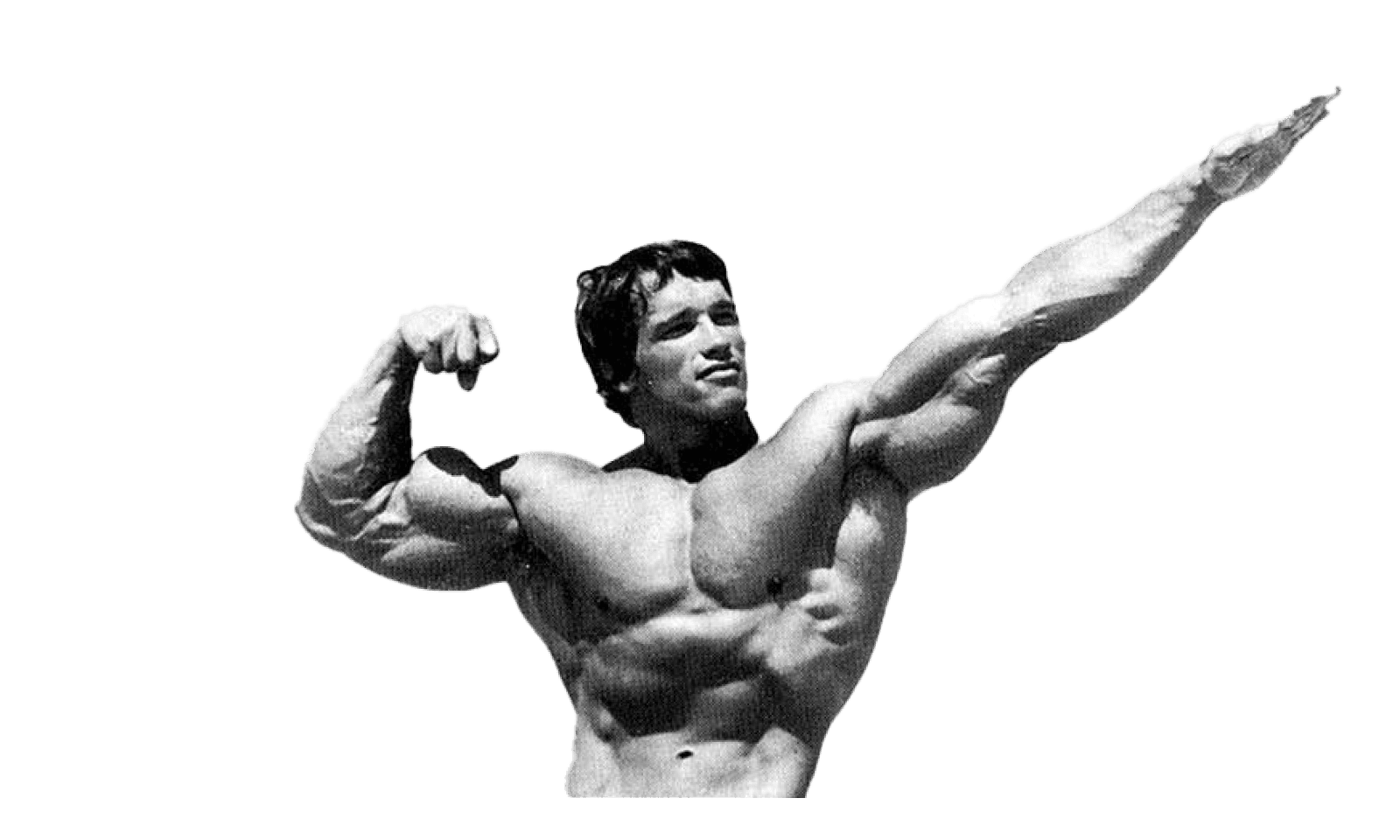
If anyone understands this, it's the farm boy from a tiny village in Austria who became the world’s greatest bodybuilder.
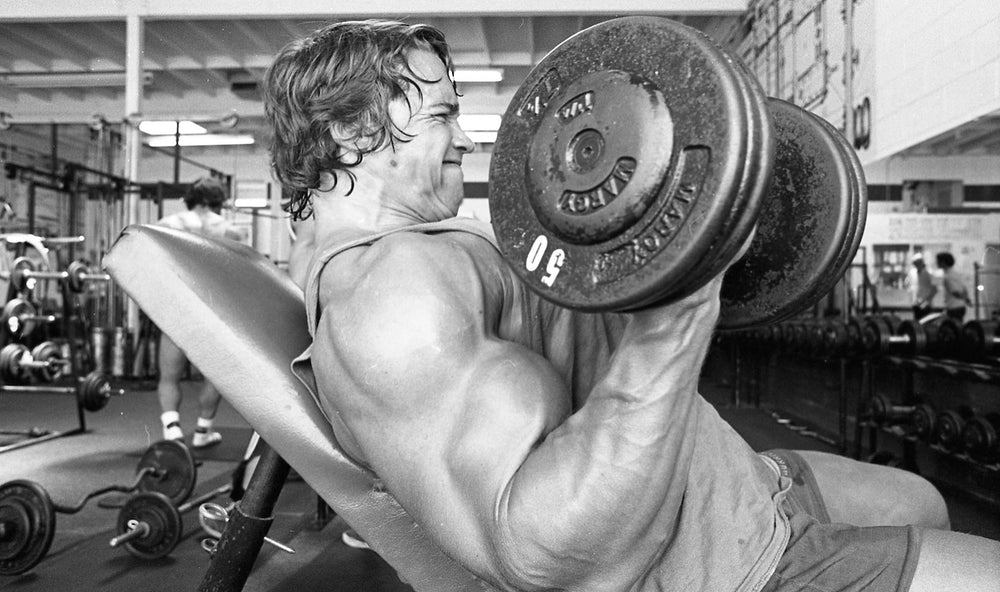
For so long, that was Arnold’s box, and he earned every inch of it. And even back in the 1970s, recognized as the greatest bodybuilder ever.
Then he said he wanted to be a leading man in Hollywood, and the people who decide those things handed him their list. The accent was too thick. His body was too big for the screen, and nobody would ever fit “Schwarzenegger” on a marquee. They told him to stick to what he knew.
He held out for the dream anyway and became one of the biggest movie stars on the planet.
Then he wanted to serve, and a new set of experts showed up with new reasons. Actors don't belong in politics. He became governor of California.
The highlight reel misses that bodybuilding wasn't a mistake he had to escape, and acting wasn't a phase he had to grow out of. Every box was good. None of them was everything.
If a farm boy from Austria can refuse to be just one thing, any of us can.
The Room Built For Getting Bigger
We talk about training because it’s good for your health and your body. But it’s bigger than that.
That’s why so many people who feel nervous walking in misunderstand resistance training and the gym.
Many people don’t work out because the environment feels unwelcoming. It’s so clear that a key element of the Pump Club is our inclusiveness and positivity. It’s why beginners and advanced lifters can coexist. A 20-year-old can share the same space as a 60-year-old, and both walk away feeling great about it.
But outside of the Pump Club, the fear makes sense, even if it’s misguided. You picture eyes on you. Judgment. A room full of people who belong there, and then you.
But the best gyms are the opposite. The person at the next rack doesn't know whether you're a mom, a manager, or someone who hasn't trained in fifteen years. They only know you came back. In a good gym, the work is the currency, and everyone respects someone willing to be uncomfortable on purpose.
It's also one of the few places in adult life where the entire goal is to take up more space than you did yesterday.
And strength has a funny way of leaking into everything else.
Peggy didn't become a different person the first time she pulled a weight she thought was impossible. She just had evidence. Proof that one rule was wrong.
And once one rule is wrong, every other rule in the box starts to look a little less permanent.
So it's worth asking which rules you're still following. Which ones someone else wrote, and which ones you wrote a long time ago and never went back to read. And what the smallest version of breaking one might look like this week.
When Peggy flies home, she’ll still be a mom. Nothing about the role she loves will change.
What changes is how much of her gets to live outside of it.
That’s the thing about boxes. You were never supposed to have just one.
You fill the first one to the brim, and somewhere in all that filling, you learn how it’s done. The patience. The willingness to be bad at something long before you’re any good. Then you look around and notice the rest of the pile, empty and waiting, every one of them yours to build.
Arnold did it on the biggest stage imaginable, from bodybuilder to movie star to governor. Most of us won’t. We don’t have to.
The move is the same at any size: master the role you’re in, and the mastery is all the evidence you need to do more, whatever that might be.
Peggy spent years filling one box.
Now she’s eyeing the pile.
If you’ve been living in one box so long it feels like the whole house, look around. More boxes are waiting to be filled. And it’s never too late to grow into them. -AB
-Adam Bornstein is the co-founder and co-editor-in-chief of Arnold’s Pump Club

Better Today
Take any of these tips from today’s email and put them into action:
1. Strength or Cardio? The Longest Lives Had Both
Doing both cardio and weights is associated with the longest lives. In a 30-year Harvard cohort study of more than 147,000 adults, aerobic activity alone was linked to 26-43% lower mortality, and adding resistance training lowered risk further at every aerobic level up to about 45 MET-hours per week. About 2 days per week of each is enough to make a meaningful difference, protect your long-term health, and lower risk.
2. Biological Age Tests Can Swing Up to 9 Years on the Same Sample
Biological age tests aren’t yet precise enough to give a reliable personal number. A Yale-led analysis found that the same blood sample, run twice, could produce epigenetic ages up to 9 years apart on popular clocks. But if a clock helps you change behaviors in the quest to get a lower “age,” then it has a net positive effect. And they’re useful for big population studies. But if you’re worried about health outcomes, no data show a connection between biological age and reduced risk. Instead, keep an eye on your blood pressure. Lowering it is directly tied to fewer heart attacks and strokes.
3. Don’t Let Your Life Roles Shrink Your Potential
You don’t have to let your roles and responsibilities — even things you love — limit or determine who you can be and what you can do. It can feel like you need to play in one box, but that’s an illusion. Like Arnold, who went from bodybuilder to actor to politician, you can explore your curiosity and make the most of your time and interests. Life is about growth and experiences. And small physical wins, like those you get in the gym, can give you concrete proof that old rules about yourself were wrong.
The Positive Corner of The Internet
About Arnold’s Pump Club Editorial Standards
We do things a bit differently here, starting with transparency.
The Content: All APC emails are researched, written, and fact-checked by the APC editors (see bottom of the email), with written contributions from Arnold (noted with “Arnold’s Corner”). Links take you to original studies (not second-hand sources).
Does AI play a role? Not for the primary content, but we use it in two ways. The main items are original content written by the APC team. The summaries at the end are AI-generated based on the human-written content above. We also use an AI tool to edit and review our interpretations of the research, ensuring scientific accuracy. We don’t assume AI is right, but we use technology to hold ourselves accountable.
Yes, we have partners (all clearly noted by “Together With”). Why? Because it allows us to keep the APC emails free. We first test products, and then reach out to potential partners who offer ways to help you improve every day. The bar is set high, and to date, we have turned down millions in ad deals. (Example: we will not partner with any non-certified supplements or those without evidence in human trials). If we won’t buy the product, we won’t recommend it to you. And if there’s no evidence it works, then there’s no place for it here.
—
Publisher: Arnold Schwarzenegger
Editors-in-chief: Adam Bornstein and Daniel Ketchell