


Excess Body Fat Is Linked to 19 Cancers. Here's What You Can Control.
A review of 226 studies tied higher BMI to 19 cancers. See which ones, why waist size may matter more for lifters, and what you can do to reduce your risk.
Welcome to the positive corner of the internet. We’re here to make your life healthier, happier, and less stressful. At the bottom of each email, we explain our editorial process, stance on AI, and partnership standards.
If you were forwarded this message, you can get the free daily email here.
Today’s Health Upgrade
Number you won’t forget: cancer risk reduction
Does red light help reduce the signs of aging?
Weekly wisdom
How to build healthier, stronger tendons
Health
Number You Won’t Forget: 19 Forms Of Cancer
One Of The Most Effective Ways To Reduce Cancer Risk Is Within Your Control
Cancer prevention comes with an uncomfortable reality: even if you do everything right, there are no guarantees. Age and genetics matter. Sometimes cancer develops without a clear explanation.
But risk isn't fixed, either.
Keeping body fat in a healthy range is linked to lower risk of several cancers.
A recent analysis from the National Cancer Institute combined 226 studies covering more than 1.5 million cancer cases across 25 types. Higher BMI was associated with greater risk for 19 of them. Most increases were modest, though some were larger. And waist circumference produced similar results.
Observational research can show associations, but it can't prove causation. So the researchers also compared those findings with genetic data. For 8 of the 19 cancers, the genetic evidence suggested similar outcomes, strengthening the case that excess body fat contributes to cancer risk rather than simply appearing alongside other risk factors.
Fat tissue can affect estrogen and insulin levels and contribute to chronic inflammation. Those changes may create conditions that encourage abnormal cell growth. The study didn't directly test those mechanisms, but they fit with existing evidence.
The data suggest that for every 5 points of BMI (about 34 pounds for someone 5'9"), risk rose by a few percentage points for some cancers and as much as 58% for endometrial cancer. Colorectal cancer, one of the most common, rose about 10 percent.
BMI also has an obvious weakness for people who lift: it can't distinguish muscle from fat. A muscular person may have a high BMI without carrying excess body fat, which can make waist measurement and actual body composition more informative than scale weight alone.
If you're currently carrying more body fat than what’s considered healthy, improvement doesn't require reaching an "ideal" number. And you don’t need to count calories. Losing some excess weight and keeping it off may shift the odds in your favor.
Together With Celluma
Can Red Light Help With The Frustrations of Aging?
The strongest plan for aging well fits on a short list: lift weights, get enough sleep, eat plenty of protein and fiber, build most meals from whole foods, connect with friends and loved ones.
Beyond that, most longevity hacks are, well, just that — more hack than help.
But there’s a short list of newer technologies — including red light therapy — that research suggests could help with some of the bigger frustrations of aging.
A large 2025 review of more than 200 randomized trials found encouraging evidence for thinning hair, achy knees, and wrinkles.
Hair loss produced one of the strongest and most consistent results. A separate meta-analysis of randomized trials found that red light increased hair density in adults with pattern hair loss, the most common form in men and women.
Scientists believe the light is absorbed by mitochondria, the parts of your cells that produce energy. This may help struggling follicles function better, improve blood flow to the scalp, and keep hairs in their growth phase longer.
Studies generally required months of regular use. Realistically, you may see thicker coverage from the hair you still have, not a full head of hair.
Red and near-infrared light may also help people with knee osteoarthritis move with less pain. An analysis of 22 placebo-controlled trials found improvements in pain and daily function, with the largest benefits appearing when researchers used specific, measured doses. Pain relief peaked several weeks after treatment ended.
Scientists believe it might reduce inflammation and change how pain signals are transmitted. Many of the studies also paired light therapy with exercise, which is an important distinction. Red light may make movement more comfortable; exercise remains one of the best arthritis treatments.
And the evidence for wrinkles is promising but less settled. In a trial focused exclusively on women ages 40 to 65, red light treatments reduced wrinkle volume around the eyes by about 30 percent.
Lab studies suggest that red light may prompt skin cells to produce more collagen, the protein that helps skin stay firm and smooth. Collagen production naturally declines with age.
Look closely at those studies, and you'll see a pattern. Each benefit came from its own wavelengths, dose, and schedule. Knees got one protocol. Skin got another.
That's where most at-home light therapy falls apart. People end up with a mask for their face, a wrap for their knee, a drawer full of chargers, and no real idea whether any of them delivers what the research actually tested.
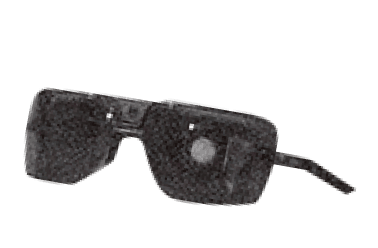
When we tested red light devices for effectiveness and FDA approval, Celluma PRO PLUS stood out above and beyond the rest.
It's a flexible panel that bends around a knee, a lower back, or your face, and it runs on a battery, so you can use it on the couch or pack it in a carry-on. It uses blue, red, and near-infrared light, with a separate program for each job, and it's FDA-cleared for four different goals.
If thicker hair is your focus, Celluma has an FDA-approved device for that, too. Because remember, not all red light is the same, and you need the right approach to see results.
As a Pump Club reader, first-time buyers get $125 off the PRO PLUS (or the PRO) with code PUMPED. It's HSA/FSA eligible, which may lower your cost further, and shipping is free.
The short list still comes first, and red light therapy is your insurance that makes a few frustrations easier to live with.
Mindset
Weekly Wisdom
We do not see things as they are; we see them as we are.
Your co-worker answers your email with one word: "Fine."
If you slept well and the morning went smoothly, you probably read that as someone slammed with work, and you move on.
However, if you were up all night, argued with your partner before you left the house, and skipped breakfast, that same word lands differently. Now it sounds cold. By lunch you've replayed the exchange twice, drafted a defensive follow-up in your head, and decided something is off between the two of you.
Nothing about the email changed between those two versions of your morning.
When you understand how your state of being affects how you experience the world, it can prevent unnecessary stress, friction, anxiety, and conflict.
Your brain doesn't record life like a security camera. It works more like an editor, filling in gaps with what you've lived through and how you feel right now. Most of the time that's useful, since it lets you read a room in seconds.
The trouble starts when the editor is running on stress or fumes, and you have no idea it's on shift. A tired, anxious mind tends to read ambiguity as threat.
Most of us try to fix our experience by fixing the outside. But so much of life is an inside game.
The hard part is that many of your emotions run under the radar. To bring them to the surface, it helps to speak them into existence.
In one study, scientists had people who feared spiders approach a live tarantula. One group described what they were feeling out loud, in plain emotional words. Others tried to talk themselves into seeing the spider as harmless, distracted themselves, or simply stood there.
A week later, facing a different spider in a different room, the group that named their feelings showed less physiological arousal and could move closer to the spider. The more fear words they used, the stronger the effect.
People in that group didn't say they felt any less afraid, but their bodies calmed down anyway.
That same lab spent years studying the phenomenon and kept discovering the same outcome:
Putting a feeling into words seems to take a little of its control away. And it makes you aware of the emotions that can influence your thinking.
Turn Wisdom Into Action
When you feel a strong reaction rising, are overwhelmed, or questioning your thought process, run the spider test.
Talk out what you’re feeling or what’s going on in your life, so you get a fresh look at what might be happening behind the scenes.
Then ask one question: How would I read this on a good day?
You don't need a perfect answer. The gap between your initial reaction and the thought experiment will help you determine what you really think.
Do this enough, and you won’t just start to make better decisions. You might find out when you're more prone to bad ones.
Maybe your worst reads all happen after 3 p.m. on days you skipped lunch. Maybe they cluster after nights you scrolled until midnight. You can change those patterns, which puts you more in control of your thoughts and decisions.
Fitness
How To Build Stronger Tendons (And Reduce Injury Risk)
This week was a masterclass in living pain-free.
Earlier this week, we discussed collagen. Yesterday we answered your question about faster recovery from muscle pulls and strains. And today we’re covering tendons because so many of you wanted to know how to protect them.
Most of us have a plan for our muscles and a plan for our heart. Almost nobody has a plan for their tendons, the tough cords that connect muscle to bone. Usually we only think about them once they get hurt.
In a review of 6 studies, lifting was the only exercise type that clearly improved every tendon measure they tracked.
Training made tendons stiffer, which generally means they stretch less under a given load, and that’s a good thing.
When you feel stiff, that's a sensation, like tightness or creakiness. When scientists say a tendon got stiffer, they mean something you can't feel.
Think of your tendon as a spring between muscle and bone. A worn-out spring stretches too far, wastes energy, and wears down. A firm spring holds its shape and snaps back.
The less your tendons have to stretch to handle a load, the more breathing room they have to function well and reduce the risk of pain and injury.
In the study, most improvements came from better material quality, like reweaving the same rope tighter instead of swapping it for a thicker one.
The likely driver is how much the tendon stretches under load, so focus on full range of motion in your exercises.
In studies that measured this directly, more tension, strain, and stretch were linked to healthier tendons, possibly by increasing collagen production.
If you're over 60, you might be wondering whether it's too late. It's not. Older adults' tendons still get stiffer and stronger from lifting. The changes don’t happen as fast, but they still happen.
If you want healthier tendons, stretch or work on mobility if it feels good. But if you want more resilient tendons, weight training is your best bet. Need a program customized to your needs, goals, and equipment? We have you covered.
And that’s it for this week. Thanks for being a part of the positive corner of the internet. And remember: don’t wait to make a change. Take action on any goal, don’t quit in the hard moments, and the results will come. Have a fantastic weekend!
-Arnold, Adam, and Daniel
Better Today
Take any of these tips from today’s email and put them into action:
1. Body Fat and Cancer Risk: 19 Cancers Linked to Higher BMI
Higher body fat is linked to a higher risk of most common cancers. A 2026 National Cancer Institute meta-analysis of 226 prospective studies found higher BMI associated with greater risk for 19 of 25 cancer types. Losing excess fat and keeping it off may improve the odds, but it doesn't guarantee protection. And don’t obsess about the scale. You don't need to hit an "ideal" number for change to count.
2. How Red Light Therapy Can Help With Aging Skin, Joints, and Hair
Sleep, exercise, and nutrition are still the foundation of healthier aging. But emerging evidence suggests red light therapy may offer some benefits. The strongest evidence is for hair density in pattern hair loss and pain or disability in knee osteoarthritis. Red light therapy might also improve wrinkles and support more youthful-looking skin, but the evidence is less settled.
3. Name It to Tame It: How Putting Feelings Into Words Helps Change Your Reaction
Oftentimes, your state or emotions can influence how you react to situations. This usually happens without your awareness. Tapping into your emotions and fears can clear your thinking and improve your decision-making.
4. How to Strengthen Tendons: Why Lifting Beats Stretching
Across systematic reviews, lifting is the most effective exercise for improving tendon health, quality, and size in every age group studied, and higher-strain training produces the largest gains. Even at older ages, resistance training can still strengthen and help protect your tendons.
The Positive Corner of The Internet
About Arnold’s Pump Club Editorial Standards
We do things a bit differently here, starting with transparency.
The Content: All APC emails are researched, written, and fact-checked by the APC editors (see bottom of the email), with written contributions from Arnold (noted with “Arnold’s Corner”). Links take you to original studies (not second-hand sources).
Does AI play a role? Not for the primary content, but it is used in two ways. The main items are original content written by the APC team. The summaries at the end are AI-generated based on the human-written content above. We also use an AI tool to edit and review our interpretations of the research, ensuring scientific accuracy. We don’t assume AI is right, but we use technology to hold ourselves accountable.
Yes, we have partners (all clearly noted by “Together With”). Why? Because it allows us to keep the APC emails free. We first test products, and then reach out to potential partners who offer ways to help you improve every day. The bar is set high, and to date, we have turned down millions in ad deals. (Example: we will not partner with any non-certified supplements or those without evidence in human trials). If we won’t buy the product, we won’t recommend it to you. And if there’s no evidence it works, then there’s no place for it here.
—
Publisher: Arnold Schwarzenegger
Editors-in-chief: Adam Bornstein and Daniel Ketchell