


Does Your Body Really Get Used to Caffeine's Blood-Pressure Bump?
Half of coffee drinkers never build tolerance to caffeine's blood-pressure effect, and you can't feel which half you're in. Here's what's happening, and how it influences your health.
Welcome to the positive corner of the internet. We’re here to make your life healthier, happier, and less stressful. At the bottom of each email, we explain our editorial process, stance on AI, and partnership standards.
If you were forwarded this message, you can get the free daily email here.
Today’s Health Upgrade
The blood pressure response to coffee you can't feel
How to get the benefits of cardio without doing “cardio”
Can you eat your way to a stronger immune system?
-
Adam’s Corner: The missing week
Reader Question
Does Your Body Get Used to Caffeine's Blood-Pressure Bump?
Two days ago, we wrote about how coffee does not increase heart rate the way people think. In fact, in people who consistently drink coffee, it doesn’t appear to affect heart rate at all.
But one line, in particular, caught many of your attention: “When someone who rarely has caffeine drinks a cup, it does bump their blood pressure a little, but the body responds by slowing the heart rate to balance it out, so the pulse barely moves.”
And it’s true: caffeine can affect your blood pressure, but just how much depends on many variables.
When you take caffeine, it can raise blood pressure. But whether it regulates is partly influenced by whether you drink it consistently.
Researchers put healthy adults through a double-blind design, building their daily caffeine up to 600 mg (about six cups of coffee), then giving them a 250 mg dose and measuring blood pressure.
Half the participants saw no change in blood pressure from caffeine after regular daily use. However, the other half kept reacting to every dose, even after a week of heavy intake.
So does caffeine raise your blood pressure? Maybe a little. With a normal coffee habit (2-4 cups per day), research suggests it might raise it by a few points. However, larger studies of daily coffee drinkers don't find higher rates of high blood pressure.
Coffee is also different than a caffeine pill or an energy drink, and it appears to have less of an effect on your blood pressure because the other compounds in the bean seem to blunt the effect.
But here’s what matters: You can't feel which half you're in. Tolerance and no tolerance feel exactly the same.
That means your safest bet is annual exams with your physician. If your blood pressure runs normal, a couple of cups is likely safe. If you're already managing high blood pressure, that's a good reason to check.
Together With Rogue
The Benefits Of Cardio Without Ever Running
If running feels like a punishment, you might have decided cardio isn't for you. But what if you didn’t need to hit the pavement to strengthen your heart?
Researchers found that your cardiovascular system responds to many types of exercise, whether it’s classified as "cardio" or "strength."
Scientists reviewed 45 studies in which people did resistance work in a circuit (short rests, keep moving). On average, their VO2max — one of the best measures of aerobic fitness — improved by 6 percent. As an added bonus, participants lost fat and built muscle at the same time.
The lesson: lifting, if done in a way where you sustain a higher heart rate, buys you some of the same benefits as traditional cardio.
If you’re a runner (or like running for your health), that doesn’t mean you need to toss the running shoes. Studies suggest that head-to-head, steady aerobic work might still edge out lifting for pure VO2max. So this isn't "strength replaces cardio." It's "these exercises count as cardio when you push them hard."
If you’d prefer not to run, kettlebell swings have a track record as a solid cardio alternative. Twelve minutes of continuous swings put people at nearly 87% of max heart rate, and twelve weeks produced big VO2 max improvements.
The Echo bike (fan up front, arms moving with your legs) might be the most efficient of the bunch. Eight weeks raised peak VO2 about 11%, and working four limbs at once lets you hit a max effort most machines can't reach. And the learning curve is simple. But we’ll admit you have to be willing to suffer, because that workout is deceptively hard (in the best way possible)
If you want another alternative, rowing is a full-body workout that's kind to your knees. And the sled earns a spot too. Dragging it spikes your heart rate fast, but nobody's run the long study proving it raises VO2max. The mechanism's real. The proof isn't there yet.
If you’ve let your cardio slide and want to pick it up, choose an activity you can do consistently, or mix and match. Research suggests about 75 minutes of higher-intensity cardio per week is associated with better health outcomes.
Health
Can You Eat Your Way to a Stronger Immune System?
This week, Ketch felt a little under the weather. Not quite sick, but he noticed subtle changes that hinted he was fighting something. He'd also just deadlifted 470 pounds for multiple reps, so his recovery could've been off.
The combination of hard workouts and potential sickness led us to discuss how nutrition fuels recovery and prevents sickness.
We know food plays an important role in how you bounce back from your workouts, but what about a healthy immune system?
It's easy to think that because food fuels your body, more food will fuel your immune system, but that's not how it works.
Eating more than you need won't strengthen your immune system. But eating far too little can weaken it. The target for immune health is the "Goldilocks” rule: You want it to be just right.
Confusion about nutrition and immunity often comes down to two questions: First, does eating more while you're already sick help you beat the bug?
"Feed a cold, starve a fever" has been around for generations, and it isn't supported.
People often cite two studies as evidence, and they are surprisingly weak. One measured cytokine shifts in six healthy men in a lab. The other was in mice, where the effect flipped depending on whether the infection was viral or bacterial.
Neither tells you what to eat when you have a cold. So keep eating normally, hydrate, and don't force down more than you want.
Second, can eating more keep you from getting sick in the first place?
The strongest human signal comes from extremes. In US Army Ranger training, soldiers ran a deficit of 1,000 to 1,200 calories a day, lost about 15% of their body weight, and slept under four hours a night. The T-cells that help power your immune system stopped responding the way they should, and infection rates ran high.
When a follow-up course added about 400 calories a day (cutting the deficit by roughly 20%), weight loss slowed, and both immune markers and infection rates improved. However, the researchers were careful to say the food was likely only part of the story. Even then, their immune systems didn't fully recover, because the deficit was still enormous.
That's the real answer for immune health: It doesn't take a feast to protect your immune system. It takes not starving it.
And the Army Ranger study probably doesn’t even apply to you. Those results come from a brutal stack of huge deficits, no sleep, and hard exertion. And piling on more food won't help on the other end: over-nutrition and obesity are linked to worse immune function too.
That’s not to say nutrition doesn’t matter, but it’s typically lots of overthinking and misapplied science.
The best evidence is when you have a clear deficiency. If you’re fixing a shortfall, then you can support a healthier immune system by eating the right foods.
Zinc and vitamin C have the most support, and even then it's modest and mostly about a cold you already have. Taking zinc within a day of symptoms may shorten your sickness, and regular vitamin C trims a cold's length a little but won't stop you from catching one (unless you're under heavy physical stress, and then it might help cut the cold risk).
Vitamin D looked protective in earlier research, but the newest and largest analysis no longer shows a clear benefit outside people with very low levels.
If you want a better immune system, stick to the basics: Eat enough, get your protein and fiber, hydrate, consume fruits and vegetables, sleep, and stay hydrated.
Adam’s Corner
Sometimes Nothing Is Better Than Something
The cursor blinked in the same spot. I was stuck.
Every week, I type ideas in the notes app on my phone for my weekly column. When it’s time to write, sometimes the words flow easily, and other times it takes the entire week to bring an idea together. But last week was different.
I reviewed the topics, started writing, and when I read it back, I felt the thing writers dread more than an empty page.
The words were fine. But fine was all they were.
Part of me used to accept “fine” in the name of getting it done.
This time, I did something I hadn't done in nearly three years. I deleted the “Adam’s Corner” headline, focused on another piece of research I’d reviewed, and sent out the newsletter without my column.
I figured no one would clock a missing column tucked inside a daily newsletter. People are busy.
I was wrong. The emails and DMs came in. “Everything okay?” “It’s Thursday, where was the column this week?”
The conversations with the people who wrote pulled me back to a realization I had years ago: there’s a fine balance between consistency and quality, and sometimes we let the first stand in for the second.
Show Up Even When It's Gray
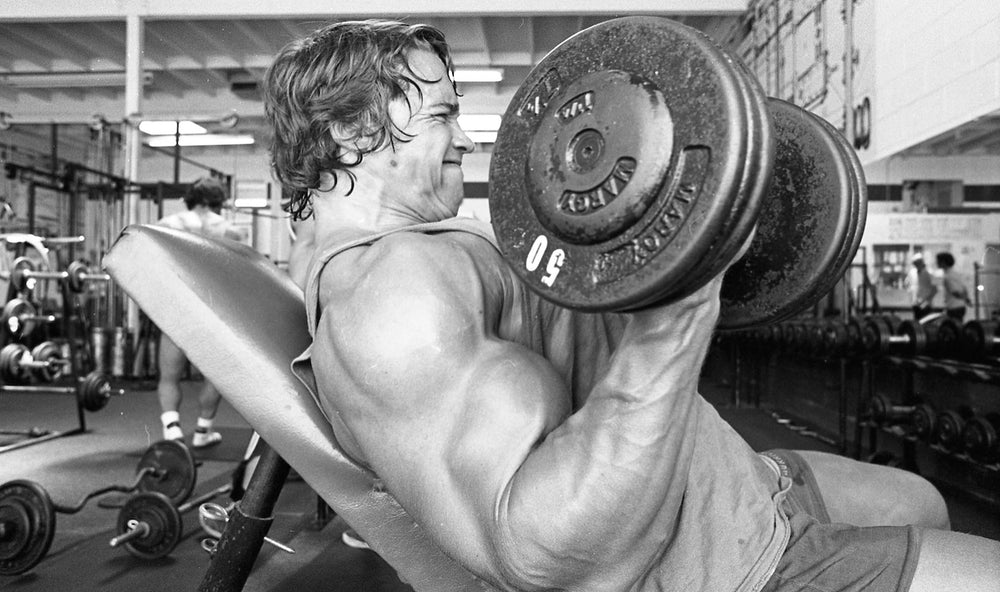
Arnold talks about going to the gym on the days he wants nothing to do with it. The first few sets are miserable. Then something turns over. He describes walking in when the whole world looks black and white, and walking out to find it's in color.
Consistency is the bedrock. You don't stumble onto it. You build it, and building it means forcing the reps on days it isn't there.
When it comes to writing, I don’t struggle with consistency. It’s my strongest habit. Something I’ve been doing for 26 years.
And for the last three years, I’ve written and edited Arnold’s Pump Club every single weekday without missing a single day. It’s an all-consuming task of talking with Arnold and Ketch, reading the research, deciding what clears the bar, drafting the summaries, tearing them up, drafting them again, getting feedback from Arnold and Ketch, and then sending it out to the world.
I do it over and over again. Most nights, this newsletter isn’t done until far later than I’d like to admit.
But here's what took me a lot longer to understand: Consistency creates the habit, but it doesn’t determine your level of success or the outcome.
Showing up beats staying home. But showing up to a standard beats showing up on autopilot.
And that’s why there was no column last week.
Each column has to live up to the promise of value, not just the fact that it exists.
And the promise is we won’t waste your time because your time is valuable.
I take pride in having something to say. I take more pride in not spending your attention if I don't.
Not every column lands the way I hope. But there's a level of quality control, and if I can't clear it — in the writing, the idea, or the worth of the few minutes I'm asking from you — I won't shove something across it just because I told you one was coming.
The Bar Moves Without Asking
The strange thing is that the longer I write the newsletter, the higher the bar gets set. And that’s a good thing, and arguably true of almost anything worth doing.
Your first month of training, "hard" means any workout that leaves you sore the next morning. A year in, that same session is a warm-up, and your body has rewritten the definition without consulting you. Nutrition is similar. Eat well long enough and the food you used to treat as a reward starts to taste like a step backward.
The reps don't just build the habit. They keep raising what the habit is supposed to deliver.
That's also where the trap hides. We’ve seen this in the app. People care more about a workout streak than the workout's benefit. So they deceive themselves just to get a hit of dopamine (I kept my streak!), which might keep them from making the changes that will lead to the outcome they want.
It shows up in many different ways. You still take the walk. You just stopped feeling it. You still log the workout, but you quit pushing it.
Habits are powerful. And once you build them, if you don’t pay attention and increase the bar, they can be deceiving.
Because if the habit holds while the standard slips, the damage is almost impossible to see.
Consistency got me to write a column for you every day for three years. But it was never what decided whether it earned your attention. That was always about living up to the standard. And the standard doesn't care about the streak.
So if this space is ever empty, you could look at it as a broken streak. Or, you could see it as the standard doing its job, keeping me honest, and pushing me to give you my best. -AB
-Adam Bornstein is the co-founder and co-editor-in-chief of Arnold’s Pump Club
Better Today
Take any of these tips from today’s email and put them into action:
1. Your Coffee Habit Doesn't Mean Your Blood Pressure Adapted to Caffeine
Large studies of daily coffee drinkers don't show higher rates of high blood pressure, and a habit tends to raise it by only a few points. However, other studies suggest that for about half of people, daily caffeine never fully blunts its blood-pressure effect. If you’re worried, it’s best to test your blood pressure to see if it’s in a healthy range.
2. How to Get Cardio Without Ever Running
Hard, circuit-style strength training counts as cardio but doesn't fully replace it. A 45-study meta-analysis found circuit resistance training improved VO2max by about 6%, while also reducing fat mass (~4%) and adding muscle (~2%). Head-to-head, steady aerobic work still edges out lifting for pure VO2max; the point is that hard circuit work counts, not that it replaces running.
3. Can You Eat Your Way to a Stronger Immune System?
Eating more than you need doesn't improve immunity. The real risk is under-eating, which suppresses immune function. A study in Army Ranger trainees found that a ~1,000–1,200-calorie daily deficit was associated with impaired T-lymphocyte response and high infection rates that eased when about 400 calories a day were added back. Your best bet is to eat normally, hydrate, and sleep. If you feel sickness coming on, zinc started within a day of symptoms may shorten a cold slightly, and regular vitamin C trims its length.
4. Habits Without Standards Can Undercut Your Goals
Consistency builds the habit but doesn't determine the outcome. If the habit holds while the standard slips, the damage is nearly invisible, so raising the bar matters as much as showing up.
The Positive Corner of The Internet
About Arnold’s Pump Club Editorial Standards
We do things a bit differently here, starting with transparency.
The Content: All APC emails are researched, written, and fact-checked by the APC editors (see bottom of the email), with written contributions from Arnold (noted with “Arnold’s Corner”). Links take you to original studies (not second-hand sources).
Does AI play a role? Not for the primary content, but it is used in two ways. The main items are original content written by the APC team. The summaries at the end are AI-generated based on the human-written content above. We also use an AI tool to edit and review our interpretations of the research, ensuring scientific accuracy. We don’t assume AI is right, but we use technology to hold ourselves accountable.
Yes, we have partners (all clearly noted by “Together With”). Why? Because it allows us to keep the APC emails free. We first test products, and then reach out to potential partners who offer ways to help you improve every day. The bar is set high, and to date, we have turned down millions in ad deals. (Example: we will not partner with any non-certified supplements or those without evidence in human trials). If we won’t buy the product, we won’t recommend it to you. And if there’s no evidence it works, then there’s no place for it here.
—
Publisher: Arnold Schwarzenegger
Editors-in-chief: Adam Bornstein and Daniel Ketchell