


Does Hormone Replacement Therapy Raise Dementia Risk?
The study behind the HRT dementia scare only tested women over a specific age. Here’s what a 13-year study of 183,000 people found, and who saw the biggest difference.
Welcome to the positive corner of the internet. We’re here to make your life healthier, happier, and less stressful. At the bottom of each email, we explain our editorial process, stance on AI, and partnership standards.
If you were forwarded this message, you can get the free daily email here.
Today’s Health Upgrade
Hormone therapy, menopause, and dementia risk
Can you freeze your banana into a prebiotic?
Adam’s Corner: Stop hiding your calves
Beyond The Headline
Does Hormone Therapy Raise Dementia Risk?
If you’re a woman going through menopause, hormone therapy can be an effective treatment for hot flashes and night sweats, and it can help you get back lost sleep.
But many women avoid HRT because they’ve heard it raises dementia risk, and that fear is based on some very misleading research.
In 2003, the Women’s Health Initiative Memory Study gave women estrogen plus progestin pills and found about twice the rate of probable dementia. The data were real, but the details were important to the bigger picture. Every woman in that trial was 65 or older. Most women who use hormones start in their late 40s or early 50s.
When women took hormones near menopause, they found no harm to memory or thinking.
Now a new study added a twist to the story. Researchers followed more than 183,000 women for about 13 years. Those who used hormone therapy for at least a year were 10% less likely to be diagnosed with dementia. But the actual numbers were small. About 2 in 100 women developed dementia during the study, so 10% worked out to roughly 2 fewer cases per 1,000 women.
But in women who’d had surgery to remove their uterus, ovaries, or both, the link was stronger: 26% lower risk. One theory is that removing the ovaries drops estrogen overnight instead of over years, and replacing a sudden loss may matter more than topping up a gradual one. But that’s a theory.
Even after adjusting for income, education, and health, this study can’t prove it’s the hormones. Women who choose hormone therapy tend to be healthier, better educated, and see doctors more often, all things linked to lower dementia risk. The study didn’t track which hormones women took, the dose, or whether they used pills or patches. Most participants were white and wealthier than average.
At this point, the decision for HRT is one you should discuss with your doctor because it is not necessary for all women.
If your physician suggests hormone replacement therapy, it could be a helpful option. If you start hormone therapy around menopause, the best trials so far show no harm to memory or thinking. If you want to have the conversation with your doctor, here’s what you might want to consider.
If menopause hit before 45, or you had both ovaries removed before then: ask about hormone therapy. Early estrogen loss is linked to bone loss, heart disease, and dementia, and guidelines recommend treatment until about 51 or 52 unless there’s a medical reason to avoid it.
If menopause came around the usual age: let your symptoms decide. Hormone therapy cuts hot flashes by about 75% and can improve sleep in women whose nights are disrupted by them. Weigh that against your personal health history with your doctor.
If you’re 65 or older and haven’t started: brain protection isn’t a reason to begin. Already taking it? Turning 65 doesn’t mean you have to stop, but it’s worth a conversation with your doctor.
Nutrition
Does Freezing a Banana Make It a Prebiotic?
Most people trying to eat better want a few of the same things: a happier gut, steadier energy, fewer blood-sugar crashes. Resistant starch can help with all three, so it’s no surprise everyone’s hunting for easy ways to get more.
The latest shortcut is tossing your bananas in the freezer, but it doesn't do what you might hear on TikTok.
Freezing a ripe banana doesn’t give your gut anything extra. But bananas are still one of the best sources of resistant starch you can buy, as long as you eat them a little green.
Resistant starch gets its name because it resists digestion in your small intestine. It passes through to your colon, where your gut bacteria feed on it. That’s the prebiotic payoff.
When you cook certain starches and then cool them, some of the starch reorganizes into a form that’s harder to digest. A raw banana skips the cooking step entirely. And in one study of cooking bananas, steaming plus freezing left no more resistant starch than steaming alone.
Ripeness is the key to more resistant starch. In a digestion study, starch dropped from about 37% of a banana’s dry weight when least ripe to about 3% when fully ripe. Far less of it reached the colon from the riper fruit.
As a banana sweetens, that starch is turning into sugar. Same banana, different nutritional composition.
If you want the cooling trick to work and increase resistant starch, use it on rice.
In a small study, white rice refrigerated for 24 hours and then reheated had about 2.5 times the resistant starch of freshly cooked rice, which led to an 18% lower blood-sugar response.
But for bananas, buy the ones with some green on the peel and eat them before they go full spotty.
Adam’s Corner
Stop Covering Your Calves
My wife and I watch Love Is Blind. Go ahead and judge.
Half the fun is sitting on the couch with her, calling bad decisions like it’s a playoff game. She picks the couples who will implode. I make a case for the underdogs. Our commentary is better than the show itself.
This season, a guy named Rob came apart on camera. A few episodes earlier, he’d been sure he was ready to get married.
How he got from there to a full meltdown is between Rob and whoever spent months in an editing room. What got me was the way he explained himself afterward.
He talked about everything he was battling that people couldn’t see. The pain and emotion he had to keep inside. On how people depended on him to be strong. As he understood the job, that meant keeping whatever hurt to himself.
I don’t know if he was coping, deflecting, or already in damage control. Maybe all of the above.
But I also knew that a variation of that mindset is very real and lives inside many people.
I know it because I grew up with someone like that.
I saw my dad cry twice. The first time was when he woke up from a coma after a ski accident. The second was right before he died.
For a long time, if I wanted you to understand how tough my dad was, I’d point to the lack of tears.
My dad was physically and mentally strong. And he was tough. But not because he didn’t cry.
I grew up admiring how easily my dad selflessly put everyone, especially his wife and kids, before himself. He never appeared to need help. Or, at least, he never asked for it.
I was a grown man before I understood what it cost him to never admit what he probably needed.
When someone I care about asks me for help, I’m usually glad they asked. I want to know what’s going on. I’d hate to find out they’d been struggling for months and thought they had to keep it from me.
I think most of us would say the same.
And yet, when we’re the one who needs something, we start calculating how much we’re allowed to ask for.
Everyone’s busy. They have their own problems. We should be able to handle this.
I wonder how many people we love would be surprised to hear that’s what we were thinking.
The Version Nobody Posts
None of this is new. Vulnerability gets talked about so much that it’s practically its own content category. (I write a weekly column about my feelings, so I’m not throwing stones from very far away.)
But the version we see most is the polished one. The confession that shows up after the comeback. The struggle that gets shared once it has a happy ending attached. It looks brave, and it’s mostly safe, because the hard part is already over.
The real thing is far less impressive to watch. It’s telling someone “I’m not doing great with this” while you’re still not doing great with it. Before you’ve figured anything out. Before there’s a lesson to share.
That kind of honesty is rare to see up close, which is why so few of us recognize it when it’s our turn.
It’s part of why we started the Saturday Schmooze in the Pump Club app. Every week, Arnold spends his Saturday morning sharing thoughts and perspectives from the week, and he encourages people to do the same.
The community shares their wins, and they should. But we also make room for what’s going sideways. The plateau that won’t break. The week where every plan fell apart.
The goal isn’t a pity party. People get support, and that matters.
But the best moments happen when someone posts a struggle and a stranger replies: Same thing happened to me. Here’s what finally helped.
Watch that happen enough times, and something shifts. The problem you were sure made you uniquely broken turns out to be one of the most common things in the room. And common problems tend to have solutions.
Too often, we treat our weaknesses like scars. Something to cover up and explain away. But a scar is a record of something that’s over.
A weakness is just a part of you that hasn’t been trained yet.
Most people say they try everything. But they don’t think of one thing: true vulnerability.
The number of people who openly share their struggles in the middle of them, and the number who overcome their demons and failures to climb to new heights, is no coincidence.
Cut The Pants
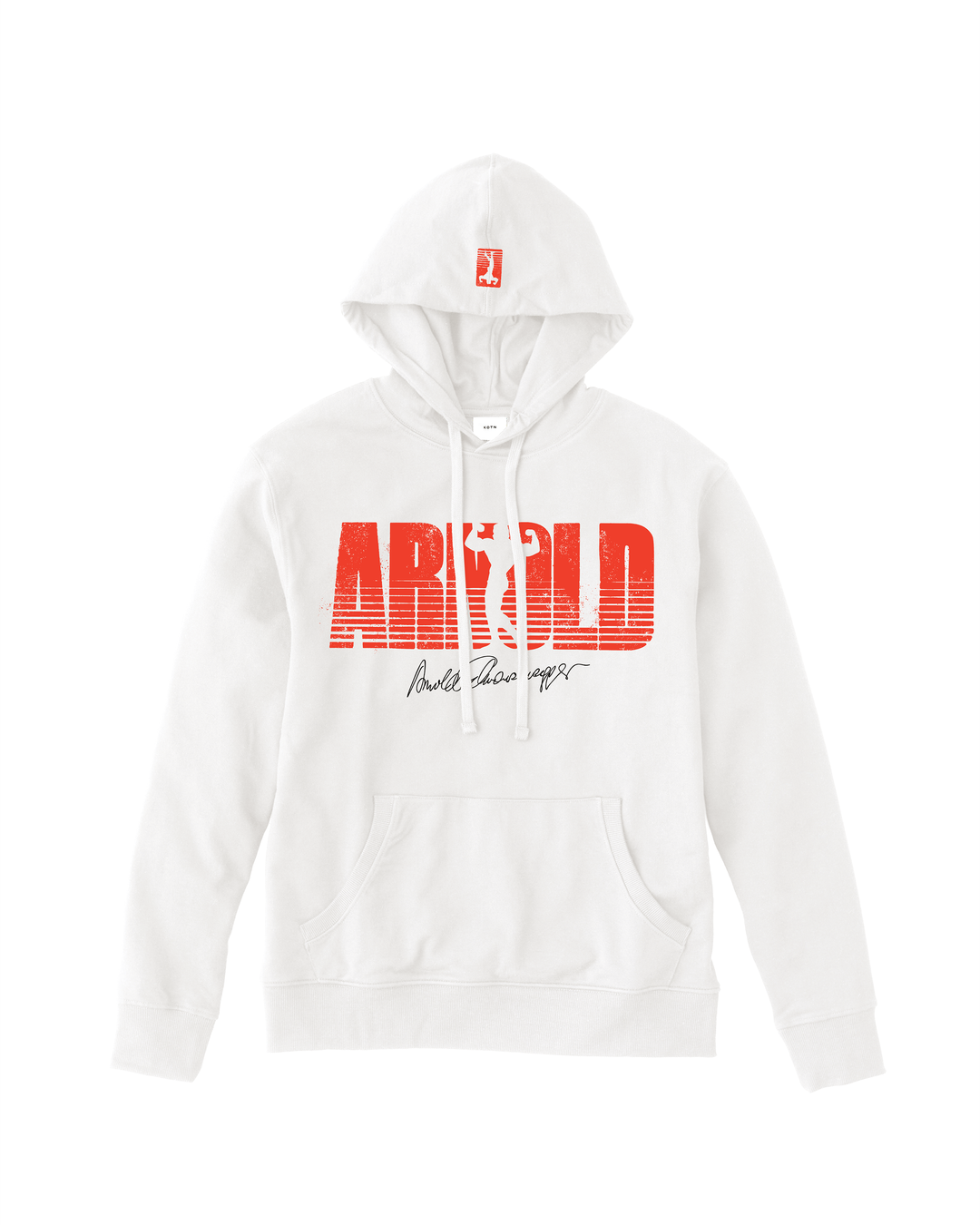
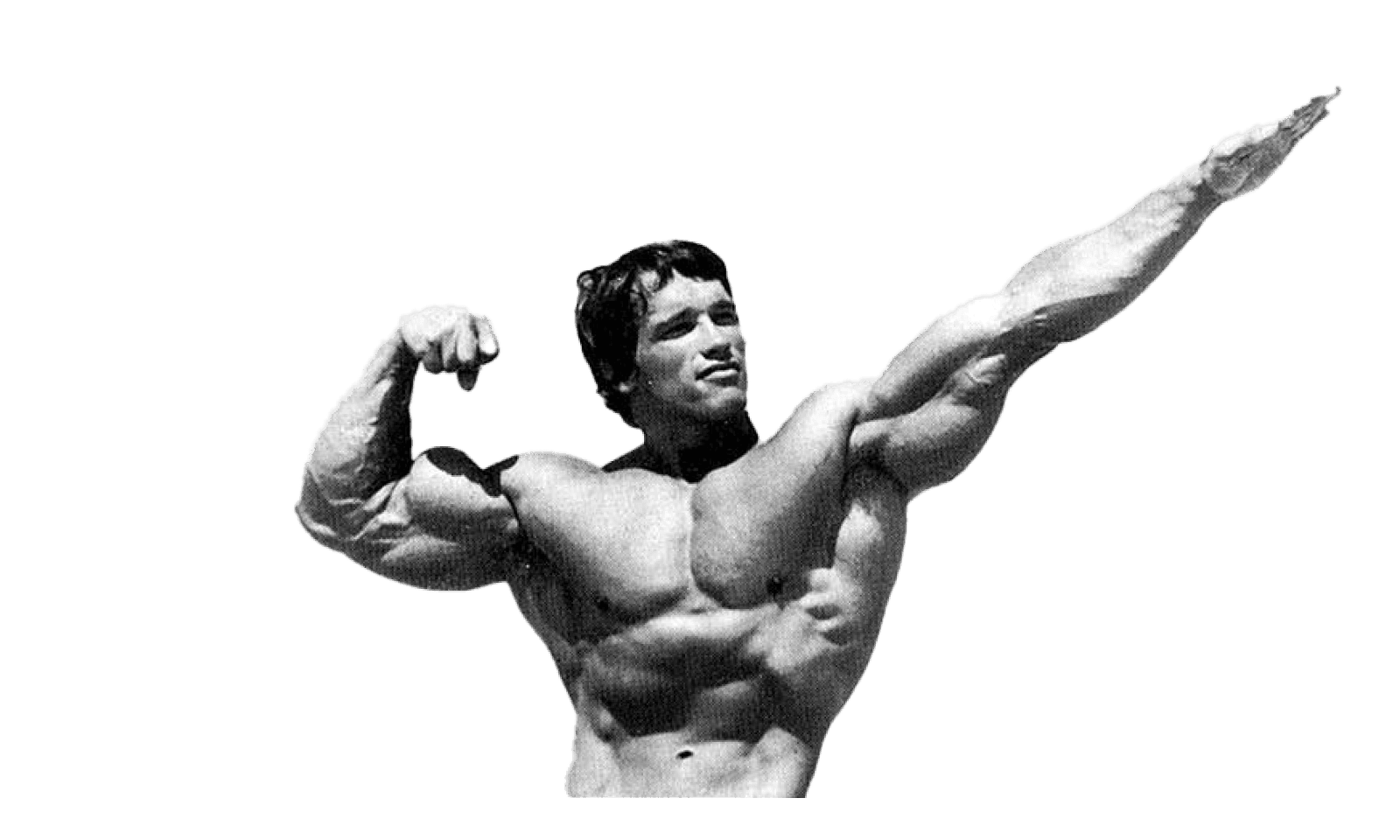
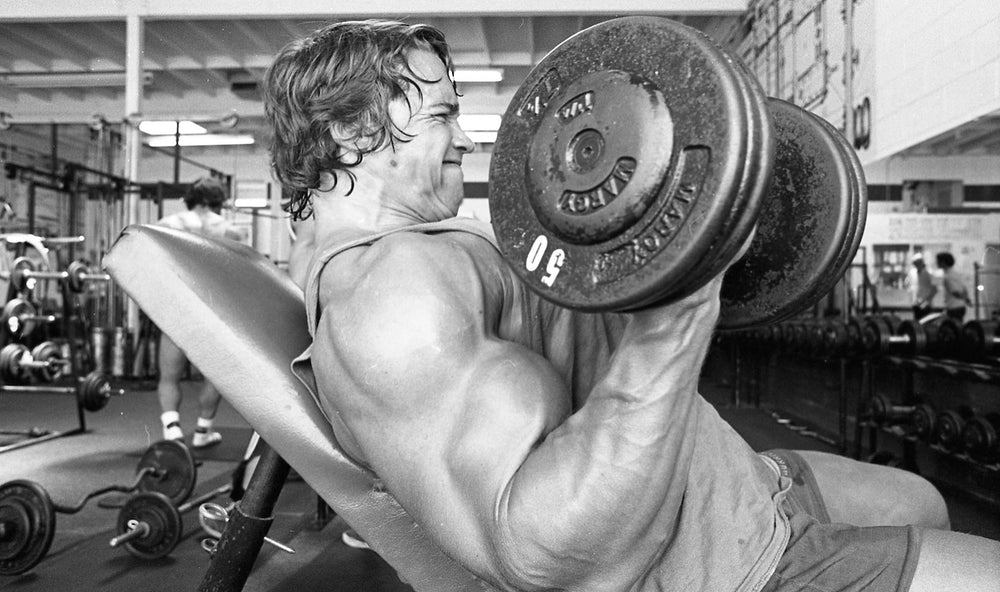
If you ever thought it’s necessary to hide your weaknesses, think about Arnold’s calves.
Early in his bodybuilding career, his calves lagged behind a body that was otherwise built to win the world. He could have hidden them. Longer pants. Clever poses. Plenty of other muscles to admire.
Instead, Arnold cut the bottoms off his pants.
He made it impossible to ignore the thing he liked least about himself.
Every time he looked down, they were there. Every time someone else looked over, there they were. So he trained them relentlessly, and the weakness became a strength.
I think about how much harder we make that process when we’re embarrassed to admit where we need work. We avoid questions, turn down help, and keep struggling with something we insist we can handle.
The things we run from tend to run our lives.
There’s a cost to always having something to hide. Part of your attention is always on whether someone might notice. Admitting the struggle gives you a chance to put that attention somewhere useful. And that alone builds your strength and frees your mind.
Most of us have a mess we’ve learned to live around.
Maybe it’s the drawer stuffed with papers you’ll deal with “this weekend.” An assignment buried under three newer ones. The box in the garage holding something you bought to build, still sealed, still waiting.
You know exactly where it is. You walk past it every day. And because it’s tucked out of sight, you never work on it.
Weaknesses work the same way.
Keep your weaknesses covered, and they don’t go away. They just sit in the drawer, building tension, taking up more room in your head than they ever would out in the open.
Rob thought being strong meant keeping the drawer shut. A lot of us were taught the same thing.
Putting it somewhere you can’t ignore won’t be easy. In fact, it can be hard and incredibly uncomfortable. But that’s how you clean up the mess.
If you’ve been avoiding, burying, or denying something, maybe it’s time to cut the bottoms off your pants and get to work. -AB
-Adam Bornstein is the co-founder and co-editor-in-chief of Arnold’s Pump Club

Better Today
Take any of these tips from today’s email and put them into action:
1. HRT Doesn’t Appear to Harm Your Brain
Starting hormone therapy near menopause has not been shown to harm the brain. The higher dementia risk in the 2003 WHIMS trial appeared only in women who started at 65 or older. A 2026 study of more than 183,000 women linked HRT use to 10% lower dementia risk, and 26% lower after surgical menopause.
2. Does Freezing a Banana Make It a Prebiotic? Ripeness Matters More
Freezing a raw banana doesn’t add resistant starch because the cook-and-cool effect (starch retrogradation) requires cooking first. For bananas, ripeness is what matters for resistant starch. Banana starch drops from about 37% of dry weight when green to 3% when fully ripe. Cooking and cooling work best on cooked starches like rice. Chilled, reheated rice has about 2.5x the resistant starch of fresh rice.
3. Why Hiding Weaknesses Keeps You Weak
Arnold cut the bottoms off his training pants so his underdeveloped calves were always visible, then trained them relentlessly until they became a strength. The lesson: real vulnerability is making it hard to avoid the things that require work and attention. Hiding a weakness protects it from being fixed.
The Positive Corner of The Internet
About Arnold’s Pump Club Editorial Standards
We do things a bit differently here, starting with transparency.
The Content: All APC emails are researched, written, and fact-checked by the APC editors (see bottom of the email), with written contributions from Arnold (noted with “Arnold’s Corner”). Links take you to original studies (not second-hand sources).
Does AI play a role? Not for the primary content, but we use it in two ways. The main items are original content written by the APC team. The summaries at the end are AI-generated based on the human-written content above. We also use an AI tool to edit and review our interpretations of the research, ensuring scientific accuracy. We don’t assume AI is right, but we use technology to hold ourselves accountable.
Yes, we have partners (all clearly noted by “Together With”). Why? Because it allows us to keep the APC emails free. We first test products, and then reach out to potential partners who offer ways to help you improve every day. The bar is set high, and to date, we have turned down millions in ad deals. (Example: we will not partner with any non-certified supplements or those without evidence in human trials). If we won’t buy the product, we won’t recommend it to you. And if there’s no evidence it works, then there’s no place for it here.
—
Publisher: Arnold Schwarzenegger
Editors-in-chief: Adam Bornstein and Daniel Ketchell