



How 30 Minutes of Morning Light Boosts Mood (And Even Matched Prozac)
In a double-blind trial, 30 minutes of morning light matched Prozac for winter depression. Two-thirds responded to each. Here’s who it fits and how to use it.
Welcome to the positive corner of the internet. We’re here to make your life healthier, happier, and less stressful. At the bottom of each email, we explain our editorial process, stance on AI, and partnership standards.
If you were forwarded this message, you can get the free daily email here.
Today’s Health Upgrade
Number you won’t forget
Should you spend money to buy time?
Weekly wisdom
The truth about multitasking
Mental Health
Number You Won’t Forget: 30 Minutes
A winter mood shift can be easy to overlook when it shows up as sleeping more, having less energy, or losing interest in things you usually enjoy. Noticing that seasonal pattern can help you recognize when something needs to change.
One option worth discussing with your doctor takes 30 minutes each morning and could dramatically improve your mood.
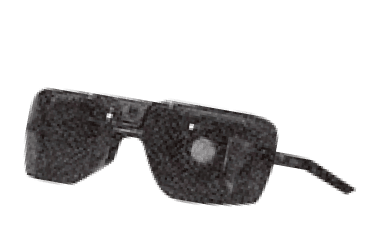
In a randomized trial, adults using a bright-light box did as well as those taking Prozac. In both groups, two-thirds saw their depression scores drop by at least half after eight weeks.
Researchers assigned adults with moderate-to-severe seasonal affective disorder (SAD) to one of two groups. One group used a 10,000-lux light box for 30 minutes each morning and took a placebo pill. The other used dim placebo light plus fluoxetine, better known as Prozac.
The light group improved more at the one-week check-in, although that advantage didn’t last. It wasn’t just mood.
Light therapy also caused less agitation, sleep disruption, and heart palpitations.
The matching results don’t prove the treatments are interchangeable. And without a group that got only placebos, the trial can’t rule out placebo effects.
However, additional evidence supports it, too. An analysis of 19 randomized trials found that people using light therapy were about 40% more likely to respond. And Canadian treatment guidelines recommend light therapy as a first-line treatment for winter depression.
If low mood returns around the same months and lasts at least two weeks, especially with changes in sleep, energy, or appetite, it might be worth asking your doctor about seasonal affective disorder.
If light therapy is appropriate, discuss a UV-filtered, 10,000-lux box used for about 30 minutes soon after waking. Follow the device’s distance instructions, and don’t stare directly into the light.
Some people notice a change within a week or two, but full benefit can take several weeks. Treatment generally continues through the darker months. Morning time outdoors may also help.
Get medical guidance before starting if you have bipolar disorder or eye disease, or take medication that increases light sensitivity. If low mood includes thoughts of self-harm, call 988 or text 988 in the U.S.
Together With Matic
Can Money Buy Happiness? If You Spend It This Way
A particular guilt shows up when you spend money to make life easier. The direct flight instead of the cheaper one with a layover. The gym 5 minutes away instead of one 25 minutes away, even though it costs more.
It feels a little lazy. Like something you should just handle yourself, because that’s what responsible adults do.
But that guilt is based on the wrong math. It treats your money as precious and your time as free. For most busy adults, it’s the other way around.
People who spend money to buy back their time tend to be more satisfied with their lives, and that habit seems to take the sting out of feeling stretched thin.
Researchers pulled together seven surveys of more than 6,000 adults across four countries. The people who regularly paid to free up their time reported higher life satisfaction, whether they earned a little or a lot. The more interesting part is what happened under pressure.
Normally, the more rushed you feel, the worse you feel about your life. Among people who bought back their time, that drag mostly disappeared.
Surveys can’t prove cause and effect, so the researchers also ran a small experiment. And that’s what really caught our attention.
Sixty working adults spent $40 on a time-saver one weekend, then $40 on a material purchase the next weekend.
Even though it was the same amount of money, spending it to earn back time left them in a better mood, mostly because they felt less rushed.
And yet almost nobody does it.
When working adults were asked how they’d spend a surprise $40, only about 2% of the purchases they named would have saved them time. Even in a separate survey of more than 800 millionaires, people who could easily afford it, nearly half spent nothing to buy back their time.
The researchers didn’t measure why, but they suspect part of it is that sense of “I’m supposed to do this myself.”
Paying for grocery delivery or a cleaner doesn’t mean you’re dodging responsibility. It’s a decision about where your limited hours go.
This assumes some room in the budget, and the benefit fades if you outsource everything. But one dreaded chore is a good place to start.
Pick the one that eats your Sunday, pay to make it go away, and spend that hour on something you’d never feel guilty about. A workout, a long walk, dinner with your kids.
Time is your most valuable asset, and protecting it can help you feel happier.
If you need a place to start, the chores most worth outsourcing are the ones that are never finished. Vacuuming is the textbook case. You do it Saturday, and by Tuesday the floor needs it again.
We’ve tested plenty of “time-saving” gadgets that turn into one more thing to manage.
Stop managing the never-ending, and start rewarding yourself with time.
Matic is the rare solution that takes work away by making a clean home a zero-effort process.
Matic maps your home, vacuums and mops all your floors on its own, and even cleans up after itself. It takes care of your floors every day instead of once a week, with no one coming into your house. If you want one spot done right now, say “Hey Matic, clean this.”
You don’t have to talk yourself into it, either, because they’ve removed the risk.
Matic comes with a 6-month risk-free trial and a full refund if it isn’t for you.
As a Pump Club reader, you also get a free Annual Bag Pass, so you don’t have to reorder for a full year. Click here to claim your Bag Pass.
Guilt was never the responsible choice. The research is pretty clear about which one is. Invest in your time, and you’ll be surprised how much better you feel.
Mindset
Weekly Wisdom
The difference between the impossible and the possible lies in a person’s determination.
You might not know Tommy Lasorda, but his story is worthy of your attention.
As a pitcher, Lasorda was a have-not. He reached the majors with the Brooklyn Dodgers, threw three wild pitches in a single inning in his first start, and a month later got sent back to the minors so the team could make room for a young lefty named Sandy Koufax.
Lasorda’s big-league pitching career ended just one year later, with an all-time record of 0-4. Koufax became one of the greatest pitchers ever.
But those who do know about Lasorda didn’t even know he was a player. They know him as one of baseball's greatest managers.
Because despite the “failure,” he didn’t quit baseball. He scouted. He managed in the minors. He coached third base.
Then he managed the Dodgers for two decades, won 1,599 games and two World Series, and walked into the Hall of Fame.
You could argue that his talent gap was real. Good enough to play pro ball, but never able to stick in the majors.
And yet, he treated his playing career as the opening chapter of his baseball career.
That’s what determination looks like up close. It’s not always pretty. And oftentimes, it can look like a path to nowhere.
But a determined person doesn’t let the present state determine the future outcomes. They see a goal not as “if,” but as “when.”
Once that shift happens, speed and ease lose most of their power over you. The only open question left is the date.
USC psychologist Daphna Oyserman spent years studying what happens the instant something feels hard.
Her research shows we can read that feeling one of two ways. Difficulty can mean this matters to me, or it can mean this isn’t for me.
In one set of experiments, college students who first read a few statements framing difficulty as a sign of importance solved more hard puzzles correctly than students nudged to see difficulty as a sign of impossibility.
The surprising part came in a follow-up with middle schoolers. Kids given no framing at all did no better than the “impossibility” group.
The researchers interpreted this to mean that without a better option, many of us may default to treating “hard” as “probably not for me.” Nobody has to talk you into quitting. Your mind can draft the resignation letter on its own.
We see this repeatedly in the Pump Club app. The people who transform their health aren’t always the most gifted. They just needed tools, support, and clarity. And then, somewhere along the way, they stopped asking whether it would work. They stopped creating excuses. And a bad week stopped registering as proof of failure. It was just a bump on the road to success.
The old line says hard work beats talent when talent doesn’t work hard. It leaves out why hard workers keep going.
They decided how the story ends before the evidence showed up.
Turn Wisdom Into Action
Pick a goal you’ve filed under “probably not for me.” Change how you talk about it by referring to when.
“When I deadlift my body weight.” “When I run a 5K without stopping.” “When I lower my cholesterol.”
Then, the next time that goal feels hard (and it will), pause and finish one sentence before you decide anything: “This is hard because…”
Write the honest answer. Usually it’s because the thing matters to you, or because you’re still early. Rarely is it because it’s impossible. (And if the honest answer is that it’s the wrong goal, that’s useful too. Sometimes hard means adjust, not quit.)
Do this every time it gets hard. You’re training the one part of determination you fully control: what you decide difficulty means.
Lasorda never won a major-league game on the mound. He won 1,599 from the dugout.
Stay in the game long enough, and you might be surprised just how much you can accomplish, even if the first few innings of your journey don’t go as you planned.
Reader Question
The Truth About Multitasking
Can anyone really multitask, or does it just feel productive?
Everyone does it, and almost everyone thinks they’re the exception.
Your brain doesn’t run two thinking tasks at once; it flips between them so fast it feels like it does.
For anything that needs real attention, multitasking is really task-switching, and every switch costs you time and accuracy.
It feels productive because you’re busy the whole time, but the work usually takes longer, has more mistakes, or both.
The real exception is pairing one thinking task with something your body does on autopilot: a call on an easy walk, or a podcast while you fold laundry. Driving doesn’t count, even hands-free.
Two things that both need your focus, like email during a meeting, don’t share well, no matter how good you feel at it.
If you want to perform your best and be efficient, multitasking is not your friend.
When you have your hardest task, give it at least one 30-minute block of undivided attention, with email closed and your phone out of sight or in another room. Then answer messages during set check-ins instead of as soon as they land.
You might not feel as busy, but you are more likely to improve your workout quality and become more productive.
—
And that’s it for this week. Thanks for being a part of the positive corner of the internet. And remember: don’t wait to make a change. Take action on your goals, don’t quit in the hard moments, and the results will come. Have a fantastic weekend!
-Arnold, Adam, and Daniel

Better Today
Take any of these tips from today’s email and put them into action:
1. Morning Light Isn’t a Wellness Gimmick. It Can Boost Mood
In a head-to-head trial, 30 minutes of 10,000-lux morning light worked as well as fluoxetine (Prozac) for winter depression, with 67% responding in each group after eight weeks. The study suggests using the light about 30 minutes after waking can provide mood-boosting benefits.
2. Can Money Buy Happiness? If You Spend It on Time
Spending money to buy back time is linked to higher life satisfaction at every income level. In a controlled test, spending $40 to save time improved mood more than spending $40 on a material purchase. Yet only 2% use extra cash that way. Paying someone or something to take a disliked task off your plate, like cleaning, delivery, or errands, is associated with those benefits.
3. Difficulty Isn’t a Stop Sign. Research Says It’s a Signal It Matters
Many people automatically read difficulty as a sign a goal isn’t for them. Experiments by USC psychologist Daphna Oyserman show that reframing difficulty as a sign of importance improves performance on hard tasks. In studies, even a brief re-framing of situations and struggles changed how people performed on hard tasks.
4. Multitasking Is Really Task-Switching, and Every Switch Costs You
Your brain doesn’t do two focused tasks at once. It switches, and switching costs time and accuracy. The multitasking that works pairs one thinking task with an automatic physical one, like taking a call on an easy walk. Otherwise, you’re better off blocking your focus. Give your hardest task one 30-minute block without distractions.
The Positive Corner of The Internet
About Arnold’s Pump Club Editorial Standards
We do things a bit differently here, starting with transparency.
The Content: All APC emails are researched, written, and fact-checked by the APC editors (see bottom of the email), with written contributions from Arnold (noted with “Arnold’s Corner”). Links take you to original studies (not second-hand sources).
Does AI play a role? Not for the primary content, but we use it in two ways. The main items are original content written by the APC team. The summaries at the end are AI-generated based on the human-written content above. We also use an AI tool to edit and review our interpretations of the research, ensuring scientific accuracy. We don’t assume AI is right, but we use technology to hold ourselves accountable.
Yes, we have partners (all clearly noted by “Together With”). Why? Because it allows us to keep the APC emails free. We first test products, and then reach out to potential partners who offer ways to help you improve every day. The bar is set high, and to date, we have turned down millions in ad deals. (Example: we will not partner with any non-certified supplements or those without evidence in human trials). If we won’t buy the product, we won’t recommend it to you. And if there’s no evidence it works, then there’s no place for it here.
—
Publisher: Arnold Schwarzenegger
Editors-in-chief: Adam Bornstein and Daniel Ketchell