

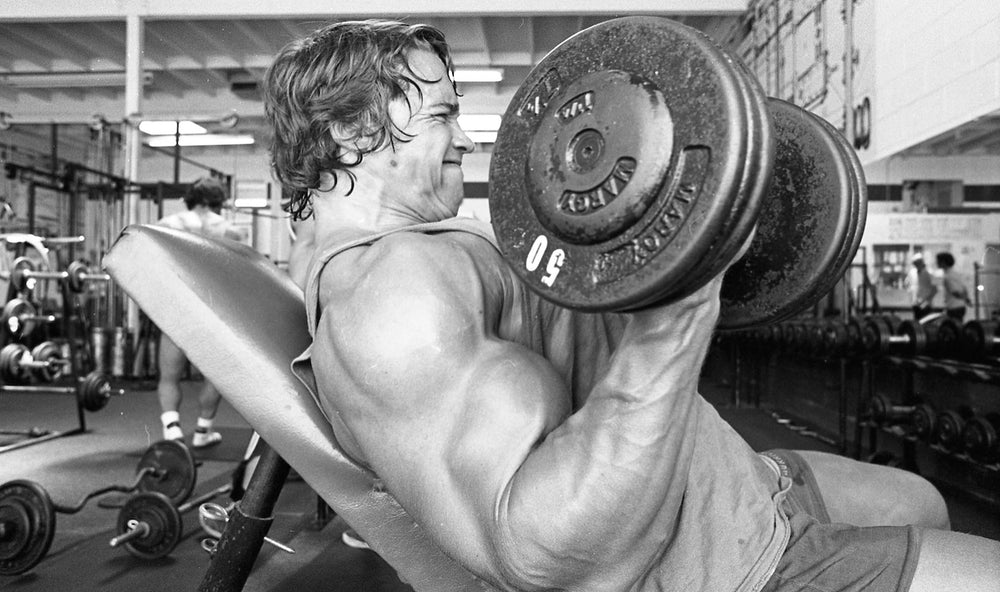

Low Muscle Mass Linked to 36% Higher Mortality (And How Often You Should Lift Weights To Cut the Risk in Half)
A study of 880,000 adults tracked for up to 32 years shows that muscle isn't just for the mirror. It's a longevity marker you don't want to ignore.
Welcome to the positive corner of the internet. We’re here to make your life healthier, happier, and less stressful. At the bottom of each email, we explain our editorial process, stance on AI, and partnership standards.
If you were forwarded this message, you can get the free daily email here.
Today’s Health Upgrade
Beyond the headline: This is NOT a reason to stop drinking coffee
Does muscle help you live longer?
How to withstand the chaos (on your hardest weeks)
Beyond The Headline
A Popular Longevity Influencer Says Coffee "Runs Your Brain." Here's What the Study Actually Found.
A new coffee and gut microbiome study hit social media last week. Longevity influencer Bryan Johnson, who preaches the philosophy “Don’t Die,” summarized it as proof you're "drinking coffee for the gut bugs that run your brain." It got our attention, so we took a closer look at the study.
Johnson's framing isn't just overstated. Several of his specific claims are factually wrong or describe things the study never measured.
The small, exploratory study found that habitual coffee consumption might lead to some changes to the gut microbiome and may affect certain cognitive and mood markers. That part is true. But the devil is in the details, and the details are where science and fiction tend to get crossed in the name of a viral post.
The intervention phase — where Johnson draws his prescriptions about caffeinated versus decaf — included just 15 people on decaf and 16 on caffeinated. The authors state directly in their paper that the study wasn't powered to detect small-to-medium effects on most of the outcomes Johnson cites. Even excellent labs publish small exploratory studies. The discipline is in not treating them as final answers.
With that in mind, here are three claims from Johnson's post that don't hold up, just in case you were rethinking your coffee habit.
Claim one: Caffeine "drove inflammation further down."
Johnson is referring to a drop in a marker called IL-10. What he doesn't mention is that IL-10 is something your body produces to fight inflammation. When IL-10 drops, that's not a sign of less inflammation. It's reduced protection against it. The direction of the finding is the opposite of what he claimed.
Claim two: Caffeine "blocked those gains by pushing food through too fast for the Clostridia bacteria to finish their work."
That's a specific mechanism about gut transit speed, and it's not in the study. The authors state directly in their limitations that transit time was never measured. Someone decided to connect the dots that weren't in the data.
Claim three: Coffee drinkers were "in the bottom 25 to 30 percent for protective gut metabolites."
Another completely made-up stat. That number does not appear in the paper. The study did find that coffee drinkers had lower levels of certain gut metabolites than non-drinkers, but the specific percentile ranking Johnson cites was invented somewhere along the way.
Some of Johnson's other claims are accurate but stripped of context. He notes that decaf raised CRP, an inflammation marker. That’s true, but coffee drinkers in this study started with lower CRP than non-drinkers, so the within-group rise during decaf is happening from an already-low baseline.
His specific prescriptions, "caffeinated in the morning for anxiety, decaf at night for memory," come from groups of 15 or 16 people across a 21-day window. That's not enough to build a daily protocol around.
Maybe most importantly, these are associations, not proof that coffee caused anything. They are interesting reactions to explore in more controlled scenarios that can more clearly determine cause and effect. And when you look at it all, the study doesn’t fit a clean "coffee feeds your brain" narrative.
What the study does support is that caffeinated coffee and decaf alike are meaningful sources of dietary polyphenols.
Habitual consumption did not appear to raise cortisol or stress reactivity in healthy adults, which genuinely complicates the "coffee spikes your stress hormones" narrative. And withdrawal symptoms in moderate drinkers largely resolved within four days.
There are reasons you might not want to drink coffee. However, nothing in this study suggests you need to change your coffee habit one way or the other.
Fitness
The Longevity Benefit of Building Muscle (That Most People Miss)
Your doctor probably checks your blood pressure, cholesterol, and weight. But there's a decent chance they've never measured your muscle mass, and that might also influence how long you live.
Low muscle mass is linked to a 36% higher risk of dying early, and lifting weights 2-3 times per week can cut that risk nearly in half.
Researchers analyzed data from nearly 880,000 adults they followed for up to 32 years and found that people with the lowest muscle mass had significantly higher mortality from all causes — heart disease, cancer, and even respiratory illness.
We know that strength is associated with a longer lifespan. However, the relationship held even after accounting for strength, meaning the muscle itself matters, not just what you can lift.
Here's where it gets more interesting: a separate analysis of 10 long-term studies found that any resistance training was associated with a 15% lower risk of early death.
And people who combined strength training with regular cardio had a 40% lower risk than those who did neither.
Muscle is a metabolic organ that regulates inflammation, blood sugar, and even brain health. It's also your reserve, the buffer that determines how well you bounce back from illness or injury.
The action here is simple: lift weights at least twice a week, hit the major movements (squat, hinge, push, pull), and — for maximum benefits — keep your cardio habit.
The muscle you build and protect now is the reserve your future self will need.
Better Questions, Better Solutions
The Risk of Hitting The Reset Button (Over And Over Again)
There's a number you'd rather not think about: how many times you've started the same habit. Is it three times? Five? More?
Most people stop counting at some point because the count starts to feel like a verdict. It isn't. But it is telling you something, and what it's telling you has nothing to do with how disciplined you are.
You don't have a discipline problem. You have a design problem.
Old Question: Why do I keep starting over?
Better Question: What expectation am I setting that guarantees failure the moment life gets busy?
Most habits don't collapse because people are weak. They collapse because the habit was built for an idealized version of the week, one with no sick kids, no late meetings, no bad sleep, no flat tires. A version of life that exists about three weeks a year.
When the real week shows up, the one with friction baked in, the habit cracks. And because it was binary (do it perfectly or skip it entirely), one missed day becomes a full reset. The bar was so high that anything short of perfect felt like nothing.
A habit that survives a hard week is one that was already designed for a hard week.
Stanford behavior researcher BJ Fogg has spent two decades studying why habits stick. His central argument: motivation is unreliable, but behavior change becomes durable when you reduce the difficulty until showing up is almost impossible to fail at. "Tiny" isn't a compromise. It's the mechanism.
Habit-formation research adds the other half. Scientists found that missing a single day didn't meaningfully delay habit formation. The cost of an imperfect day, in other words, is small.
But here's the catch her study points toward: every full restart resets the clock you've been building. One off day barely registers. Starting from zero, again and again, is what actually keeps you stuck.
Most restart cycles stem from setting the bar at "great" rather than "guaranteed." A guaranteed habit is one you can still do on your worst day — tired, busy, sick, traveling.
If your habit only fits inside your best week, it isn't a habit. It's a hobby that needs permission from your calendar.
Try this: Look at the habit you keep restarting.
Now ask: What's the version of this I could do on my worst day this month? Five push-ups. One page. A walk to the mailbox. That's your real habit. Build the floor first. The ceiling can wait.
A habit that survives the bad weeks is the one that compounds. The perfect one you keep restarting is just a story you tell yourself on Sundays.
Better Today
Take any of these tips from today’s email and put them into action:
1. The Coffee Study Bryan Johnson Got Wrong: IL-10, Gut Bugs, and What Was Never Measured (Counter-Narrative)
In a viral post, longevity influencer Bryan Johnson framed a recent 62-person coffee study as proof that caffeine "drives inflammation down," but he reversed the meaning of the key marker. IL-10 is an anti-inflammatory protein your body produces to fight inflammation, so when IL-10 drops, that's reduced protection, not reduced inflammation; the study's intervention groups had just 15 and 16 people, gut transit time was never measured despite Johnson's specific claim about it, and the authors stated directly that the study wasn't powered to detect most of the effects he cited. There are many reasons you might not want to drink coffee, but the study did not provide strong enough evidence to warrant a necessary change.
2. Low Muscle Mass Linked to 36% Higher Mortality (And How 2 Hours of Lifting a Week Cuts the Risk in Half)
A study of nearly 880,000 adults tracked for up to 32 years found that people with the lowest muscle mass had 36% higher all-cause mortality. The link held even after accounting for strength, meaning the tissue itself matters, not just what you can lift. A separate analysis of 10 long-term studies showed that any resistance training was associated with a 15% lower mortality risk, while combining strength training with regular cardio reduced that risk by 40%, with benefits plateauing around 60 minutes of lifting per week. At least two sessions a week — focusing on primary strength training patterns, squat, hinge, push, pull — is the dose your future self is counting on.
3. The Habits That Survive Your Worst Days Are the Ones That Survive And Compound
Habits don't collapse because of weak discipline. They collapse because they're built for an idealized week that exists about three weeks a year. Stanford behavior researcher BJ Fogg's two decades of work argue that motivation is unreliable, but durability comes from reducing difficulty until showing up is almost impossible to fail at. Habit-formation research separately shows that missing one day barely delays habit formation, while every full restart resets the clock you'd been building. Build the version of the habit you can do on your worst day, and let the ceiling come later.
The Positive Corner of The Internet
About Arnold’s Pump Club Editorial Standards
We do things a bit differently here, starting with transparency.
The Content: All APC emails are researched, written, and fact-checked by the APC editors (see bottom of the email), with written contributions from Arnold (noted with “Arnold’s Corner”). Links take you to original studies (not second-hand sources).
Does AI play a role? Not for the primary content, but it is used in two ways. The main items are original content written by the APC team. The summaries at the end are AI-generated based on the human-written content above. We also use an AI tool to review our interpretations of the research and ensure scientific accuracy. We don’t assume AI is right, but we use technology to hold ourselves accountable.
Yes, we have partners (all clearly noted). Why? Because it allows us to keep the APC emails free. We first test products, and then reach out to potential partners who offer ways to help you improve every day. The bar is set high, and to date, we have turned down millions in ad deals. (Example: we will not partner with any non-certified supplements or those without evidence in human trials). If we won’t buy the product, we won’t recommend it to you. And if there’s no evidence it works, then there’s no place for it here.
—
Publisher: Arnold Schwarzenegger
Editors-in-chief: Adam Bornstein and Daniel Ketchell