


The NAD+ Trial That Did Not Go The Way People Expected
Scientists gave people a popular "longevity booster" or a placebo for a full year. NAD+ went up, but it's not as good as it sounds. Here’s what happened, and what it means for the bigger picture.
Welcome to the positive corner of the internet. We’re here to make your life healthier, happier, and less stressful. At the bottom of each email, we explain our editorial process, stance on AI, and partnership standards.
If you were forwarded this message, you can get the free daily email here.
Today’s Health Upgrade
The longevity supplement that doesn’t work as it appears
The science of aging skin
Train with Ketch
How to rebuild a broken routine
Is the mind-muscle connection real?
Beyond the Headline
The NAD+ Trial That Didn’t Go As Expected
NAD+ boosters are sold as fuel for aging cells, including your brain. One just went through a big test on a big claim.
A year of the supplement raised blood NAD+, but it did nothing to slow Parkinson's.
Researchers gave people with Parkinson's either 1,000 mg of nicotinamide riboside (NR, the best-known NAD+ booster) or a placebo every day for a year. Nobody, patients or doctors, knew who got what.
NR is a vitamin that is designed to help increase NAD+. Participants who took the supplement saw NAD+ levels increase. Some who believe in the supplement claimed this as a victory.
However, the people taking the supplement didn’t do better. In fact, they did slightly worse. Their symptom scores crept up while the placebo group’s held steady, and non-motor symptoms like sleep and mood also worsened a bit more in the NR group.
To be clear, NR didn’t cause more serious side effects. It just didn’t help.
This followed research from a few years ago that suggested NR might improve Parkinson’s symptoms, and the company that makes it promoted those results.
When researchers tested the question properly, with hundreds of people for a full year, the benefit disappeared.
It’s also worth knowing that several researchers hold NR patents licensed to that company. Ties like that usually make you skeptical of a positive result. In this case, everyone involved had a reason to hope it worked, and it still didn’t.
That is why it’s important to separate mechanisms from outcomes. Moving a number in your blood isn’t the same as changing how you feel or function.
At this point, there’s no good evidence they protect healthy brains either.
If you or someone you love is living with Parkinson’s, put that money toward a physical therapist or an exercise class designed for Parkinson’s. That’s what neurologists consistently recommend.
Together With OneSkin
Science That Supports Aging Skin
Skin-care labels love the word “renewal.” But most products lack evidence to back their claims. So researchers went looking for something more specific: changes in the cells involved in skin aging.
Scientists found that a peptide called OS-01 reduced markers of cellular aging and inflammation in skin cells.
To understand why that matters, start with how skin ages. Like the rest of your body, it ages at the cellular level. Over time, stressed cells stop dividing but keep releasing inflammatory signals that affect the tissue around them. Cellular senescence is one of the most studied processes in longevity research, and your skin is the one organ where you can actually watch its effects: a weaker barrier, rougher texture, and less elasticity.
In the study, researchers screened nearly 1,000 peptides (short chains of amino acids) before selecting Peptide 14, also known as OS-01, engineered by a company called OneSkin. The scientists took donated skin at three different ages (35, 55, and 79), and five days of treatment produced several encouraging changes.
The outer skin layer became thicker, activity in genes tied to aging and inflammation declined, and a marker of cell renewal increased. A cream containing 0.01 percent of the peptide produced similar changes in donated tissue.
The peptide appears to help keep cells from progressing into that more inflammatory state. Think of it as calming their behavior rather than clearing them out.
If you’re comparing skin-care products, look for research on the finished formula and the benefit you actually want, such as hydration or smoother-looking skin. One of the biggest problems in skincare is that most finished products are never tested this way. We’ve been writing these newsletters for almost four years and have tested many products, but very few have invested in studies to back up their claims.
OneSkin is one of the few that did, and it’s the first skincare product we’ve recommended.
After the lab work, the OneSkin team ran OS-01 FACE Moisturizer through a human trial built to answer one question: is the peptide doing the work, or is it just the moisturizer?
For 12 weeks, people used OS-01 FACE on one side of their face and an identical formula without the peptide on the other. Neither the participants nor the researchers knew which side was which. That setup is the whole point. A good moisturizer works. The question is whether something works better.
The peptide side lost less water than the plain side. That’s the measured version of “my skin feels hydrated,” and participants said their skin felt more hydrated too.
On top of that, barrier strength increased, 100% of people had visibly smoother skin, and 86% had a reduced appearance of fine lines and wrinkles.
OS-01 FACE MOISTURIZER is a lightweight daily moisturizer with the OS-01 Peptide, hyaluronic acid, and niacinamide. It absorbs quickly with no residue, works for all skin types, and is fragrance-free and non-comedogenic. You get the hydration you’d expect from a good moisturizer, plus a peptide that works at the cellular level.
It’s built for how your skin ages long term, not just how it feels today. For a full skin longevity protocol, we pair OS-01 FACE with their OS-01 EYE CREAM and OS-01 FACE SPF 30.
As a Pump Club reader, you get 15% off with code PUMPCLUB.
Sleep, lifting, protein, and sunscreen still do most of the work. This is the rare skincare product with enough evidence to sit next to them.
Together With Community
Train With Ketch
If you’re up early today, join Co-CEO Daniel Ketchell for the Short On Time Foundation Workout.
We shared the workout he’ll perform in Monday’s email if you want to follow along or try it yourself.
Or just show up, say hi, and ask him questions while he tries to power through his workout.
If nothing else, you’ll learn about some Pump Club principles like “first set mindset,” how to make any workout harder, and why you don’t need long to get a great workout.
The workout starts at 5 am PST, and you can join and watch here.
Better Questions, Better Solutions
When Life Breaks Your Routine
The frustrating part of losing a routine is knowing how well it used to work.
A 6 a.m. workout might have fit your life before a baby changed your nights. Setting the same alarm won’t bring back the extra hours of sleep that made it possible.
When life changes, the familiar cues that helped you stick with your habits can disappear. Sometimes that makes established routines harder to maintain. And it may also create an opening to build new ones.
The Old Question: How do I get back to my old routine?
The Better Question: What could I start now that fits the life I have now?
A routine depends partly on what happens around it. The kitchen where you prepared meals, or the friend who expected you at the gym, helped you repeat those behaviors without deciding each time. After a major change, something that once felt almost effortless can require planning again.
Researchers studied changing habits by following students who transferred to a new university.
Established habits held up when important parts of the setting stayed similar. When those circumstances changed, the habits were disrupted.
So if your routine collapsed after a major life change (a move, a new job, or a divorce, for example), that’s how habits can work. Sometimes, you hit a wall.
That helps explain why wanting to work out just as much as before often isn’t enough.
Think about your old routine. Maybe the gym was on your drive home, or you had a co-worker who would always join you. Once the plan was established, you didn’t have to decide much. Your surroundings made the decision for you.
When life changes, those prompts disappear. Every workout or home-cooked meal turns into a fresh decision, and decisions wear you down fast when you’re already stretched thin.
There’s an upside, if you can recognize the opportunity.
Your old routine came as a package. The morning workout ran on autopilot, and so did the late-night scrolling and the drive-thru stop on busy days.
When the routine breaks, it all breaks together. That means you get to decide which pieces come back, and you can add something new while everything is up for grabs.
Researchers saw this with people who had just moved. In one experiment, recent movers who got simple tips for changing everyday habits, like taking shorter showers or walking short distances instead of driving, made more changes than people who hadn’t moved.
Those were household habits, so nobody tracked workouts or meals. The lesson still applies. When your surroundings change, you get a chance to set things up differently.
Try This: One New Anchor
A shake-up to your habits isn’t easy. And while it’s hard to let go, if the old system isn’t working, it’s often best to stop forcing the old routine into a life it no longer fits.
Keep the pieces that still work and let the rest go.
Choose one small behavior and attach it to something that already happens regularly in your current day.
Pick something manageable enough to repeat when the day gets busy. If even five minutes feels difficult, start with the setup. Put the dumbbells somewhere visible, or move fruit to eye level in the fridge. Choose the reminder and the small action you’ll take when you encounter it.
But be patient and give it time to become familiar. Your old good habits didn’t form overnight, and your new ones won't either.
Reader Question
Is The Mind-Muscle Connection Real?
The Question: Does the “mind-muscle connection” build more muscle?
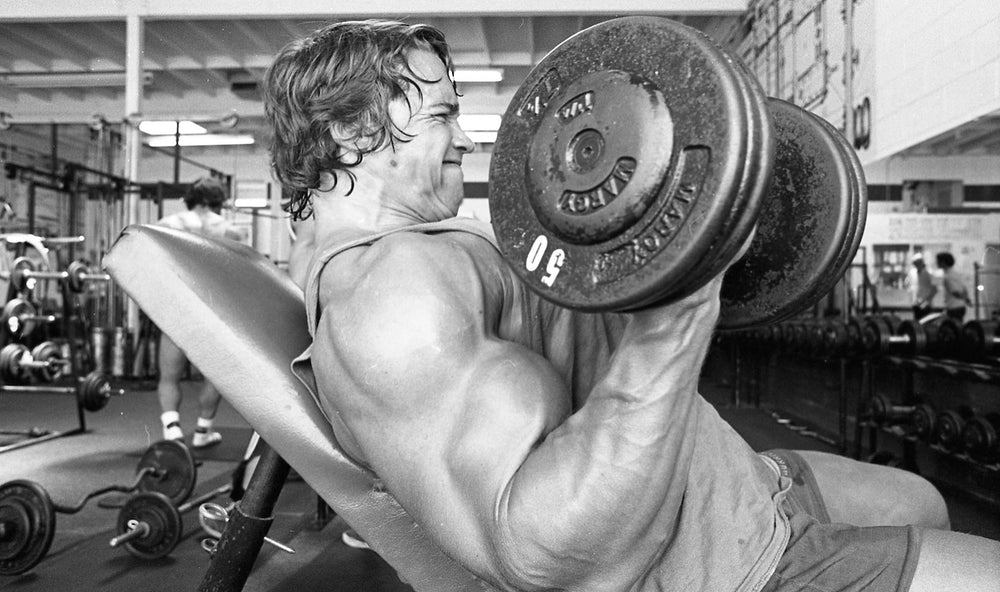
The mind-muscle connection means deliberately focusing on the muscle you’re training, feeling it stretch and squeeze, instead of just moving the weight from point A to point B.
The mind-muscle connection looks real, and it can make a difference, but it’s smaller and more specific than gym lore makes it sound.
In the only long-term trial, young untrained men who focused on squeezing the working muscle grew their biceps nearly twice as much in 8 weeks (12.4% vs 6.9%) as men who focused on moving the weight. Their quads grew about the same either way, even though leg extensions are an isolation move too. Strength gains didn’t differ meaningfully.
Focus seems to make the target muscle more active at light-to-moderate weights, and in one study, that boost vanished at heavy loads.
However, it’s just one trial with 30 untrained men. Other research also suggests that what you focus on matters.
When the goal is lifting the most weight, scientists found that focusing on the bar beats focusing on the muscle. A meta-analysis of 10 studies found that an external focus gives a small but consistent strength boost.
As a rule of thumb, thinking about the muscle working during moderate-weight sets (6-12 reps) could help you achieve full range of motion—the stretch and flex—and, as a byproduct of better form, intensity, and focus, you’ll get better results.
It could work on your biggest lifts. But as an alternative, on heavy squats, deadlifts, and bench, focusing on driving the weight could help unlock more strength.

Better Today
Take any of these tips from today’s email and put them into action:
1. The NAD+ Booster Changed Blood Levels But Didn’t Help Parkinson’s
A year-long trial found that NR (a NAD+ supplement) does not help Parkinson’s, and symptoms were slightly worse than on placebo, despite blood biomarkers changing. Serious side effects were not more common. It just didn’t help. There’s no good evidence NR supplements help protect your brain, once again showing that raising a blood marker isn’t the same as delivering a better health outcome.
2. Your Skin Ages Cell by Cell. Here’s What the Research Supports
Skin ages at the cellular level, as stressed “senescent” cells stop dividing but keep releasing inflammatory signals that weaken the skin barrier and reduce elasticity. Researchers are now testing whether skincare ingredients can calm those cells. In lab studies, a peptide called OS-01 reduced markers of cellular aging in donated human skin.
3. Why Habits Break After Big Life Changes (And How to Rebuild)
If your workout routine fell apart after a new baby, job, or move, it’s not a willpower problem. Habits depend on cues like location, timing, and the people around you, and big life changes erase them. Research shows disruption can also open a window to build better habits. The key is to anchor one small new behavior to something already in your day.
4. Mind-Muscle Connection: Does It Really Build More Muscle?
The mind-muscle connection, or focusing on the muscle you’re training, can help you build more muscle, but mostly on lighter isolation lifts. In an 8-week study, lifters who focused on squeezing their biceps grew them much more than those who focused only on moving the weight. On heavy lifts like squats, deadlifts, and bench press, focusing on driving the weight tends to produce more strength.
The Positive Corner of The Internet
About Arnold’s Pump Club Editorial Standards
We do things a bit differently here, starting with transparency.
The Content: All APC emails are researched, written, and fact-checked by the APC editors (see bottom of the email), with written contributions from Arnold (noted with “Arnold’s Corner”). Links take you to original studies (not second-hand sources).
Does AI play a role? Not for the primary content, but we use it in two ways. The main items are original content written by the APC team. The summaries at the end are AI-generated based on the human-written content above. We also use an AI tool to edit and review our interpretations of the research, ensuring scientific accuracy. We don’t assume AI is right, but we use technology to hold ourselves accountable.
Yes, we have partners (all clearly noted by “Together With”). Why? Because it allows us to keep the APC emails free. We first test products, and then reach out to potential partners who offer ways to help you improve every day. The bar is set high, and to date, we have turned down millions in ad deals. (Example: we will not partner with any non-certified supplements or those without evidence in human trials). If we won’t buy the product, we won’t recommend it to you. And if there’s no evidence it works, then there’s no place for it here.
—
Publisher: Arnold Schwarzenegger
Editors-in-chief: Adam Bornstein and Daniel Ketchell