


Before You Optimize, Simplify
Arnold shares his thoughts on why "optimizing" is a form of procrastination and distraction, and the "secrets" that the builders and doers understand.
Welcome to the positive corner of the internet. We’re here to make your life healthier, happier, and less stressful. At the bottom of each email, we explain our editorial process, stance on AI, and partnership standards.
If you were forwarded this message, you can get the free daily email here.
Today’s Health Upgrade
Arnold’s Corner: Monday motivation
What bad sleep does to your body and brain
Book of the month
Workout of the week
Arnold’s Corner
Monday Motivation: Don’t Optimize, Simplify
Last week’s discussion of rest time got me thinking.
No, it didn’t get me thinking about changing my program, where I barely rest between sets.
It got me thinking again about how many of you struggle with overthinking.
We say we read all the emails we get in response to the newsletter and all the comments in the app, and we aren’t joking.
We respond to some of you to dig deeper.
Here’s what we find, over and over:
Someone who endlessly searches for information and doesn't put it into practice. Someone who is so worried about the right direction to go that they aren’t going any direction at all. Someone who is stuck in analysis paralysis by all of the information they’re ingesting, trying to “optimize.”
Let me just say, I dislike that word.
Optimist, I love.
Optimize…I have had enough already.
Everyone these days is listening to five podcasts and reading twenty books to find the “optimized” way of doing things.
But you end up only listening instead of doing things.
Most of the time, optimizing is really procrastinating. It’s an excuse to research. To read. To listen to podcasts.
Listen, I’ve got news for most of you. Don’t take this the wrong way, but you are not a professional athlete. You are not perfecting your final 1%. Most of you aren’t perfecting your final 10%. Many, many of you aren’t working on your last 50%.
“Optimizing” isn’t what you need.
So let’s go ahead and replace it right now with a new word: “Simplify”.
Do you need to worry about whether you’re resting the optimal amount of time between sets for muscle growth?
Or any of the studies you hear about on social media or podcasts about the absolute best way to get that 1% edge?
Let’s answer some questions about your week first:
Did you eat fast food or fried food?
Did you stay up too late any night watching Netflix or Amazon?
Did you skip any of your workouts?
Did you go a day without walking or moving outside the gym?
Did you eat a meal or snack with no protein and no fiber?
If the answer is yes to any of these for the week, nothing is wrong with you.
You’re normal. We all do those things occasionally.
If you answer yes to any of these daily, great. There is your playbook! You’re going to work on turning your answer to “no” more often before you ever work on optimizing.
I just want you to realize how silly it is to worry about optimizing and not worry at all about the basics.
Most of the time, optimizing is really procrastinating. It’s an excuse to research. To read. To listen to podcasts.
Our brains love hearing what might work best, even when deep down, they know we aren’t working at all.
I started my career in real estate. In architecture, there’s something called a paper architect. You don’t go to them if you want to build a building.
They design. They know the theories better than anyone. They draw the most beautiful plans.
They never build.
Optimizing turns people into paper architects. You keep designing the life you imagine. You never build it.
That’s why I want you to simplify.
Optimizers design.
Simplifiers build.
Let’s start by simplifying one part of your life, so you can see the benefits and then extend it to everything else.
Take a week off from all of the analysis and information about fitness.
Just do one thing.
If you’re the person staying up late watching TV, this week you’re switching to reading a book. No phone. No TV. Let’s see how much faster you fall asleep.
If you’re the person stopping for fast food every day, pack a lunch with a vegetable, some fruit, and protein every day. Carbs too. Good bread, rice, or pasta. Drive past those drive-throughs every day. Don’t say it’s forever. At the end of the week, Saturday or Sunday, give yourself a cheat meal. Until then, no junk. Let’s see how much better you feel with good fuel in your engine.
If you’re one of those people who can’t make working out a habit, we’ve got an app for that. Our favorite thing to hear from Pump Club members is that we allowed them to stop thinking and just click “Start Workout.”
That’s the vision. It’s why so many people in our app reviews say we are the first thing that worked.
If you train regularly but can’t seem to make progress, I want you to do two simple things most people skip: stick to a program and turn your intensity up.
People figure out what to do every day in the gym or go to a class with different exercises and then wonder why they aren’t progressing: how do you progress something you don’t repeat?
A real program handles that for you. I’d love to say there is magic in the Pump Club app that makes people say they had better results in three months than the previous three years, but it’s probably just that we made them stick to a program, and that’s why they finally saw progress.
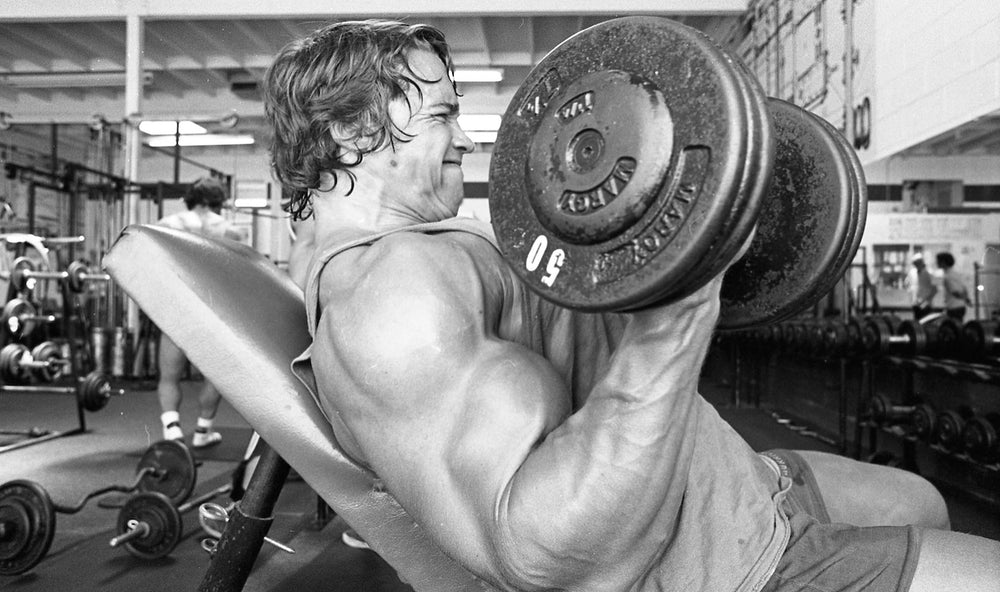
If you are sticking to a program, then it’s time to turn the intensity up. No thinking. No complicating. Just push yourself as hard as you can every single set. I want you stopping to catch your breath for a second before you get that last rep. I want you working so hard you can’t think.
All of you ask me about RPE and RIR. I had never heard of those things when I was winning Mr. Olympia every year. I just knew what hard reps looked like, and I chased them relentlessly.
There were a lot of bodybuilders who read a lot more studies than me. They won fewer trophies, and most of you don’t know their names.
Intensity. It’s that simple. I look around the gym and see 10% of people making the ugly faces that I know mean they’re making progress.
Simplify everything this week. Stop optimizing.
That’s the whole goal for this week.
Don’t think.
Build.
Next week, I want you to tell me how this goes.
I’ll make a bet with you: 99% of you never worry about optimizing again.
Together With BEDGEAR
A Bad Night Of Sleep Does More Than You Think
One bad night of sleep is not a big deal. We all have them. But that doesn’t mean it doesn’t affect your body.
Multiple analyses have found that sleep deprivation affects you both physically and mentally. And you might be underestimating how much it reduces your performance.
The impact of sleep deprivation can be easy to feel during a workout. The weight moves slower. Hard efforts feel harder. But sleep loss also weakens a mental skill that’s much easier to overlook: the ability to stay focused long enough to catch what’s right in front of you.
A 2022 meta-analysis compared physical performance after more than six hours of sleep with performance after six hours or less.
Short sleep reduced power, sprint speed, endurance, high-intensity performance, and skill execution. In other words, almost everything got worse.
Timing mattered, too. Performance fell for every additional hour participants were awake before testing, with larger declines later in the day.
That doesn’t mean you can’t train after a bad night of sleep. There’s something to building grit and resilience.
When you train after a lousy night, schedule the hardest work earlier. The longer you’re awake, the more that lost sleep is likely to show up.
The mental effects follow a different pattern. A meta-analysis examined 70 studies, 147 cognitive tests, and six areas of mental performance. Reasoning was largely preserved.
The biggest decline appeared in sustained attention: the less you sleep, the harder it is to stay locked onto a task, respond quickly, and notice mistakes.
That distinction explains why a tired brain can still solve a difficult problem but struggle to follow a long meeting, monitor a screen, or catch an error before hitting send.
Here’s the thing: a bad night happens. But if you’re sleeping poorly every night or most nights, the effects compound.
That’s where it becomes less about working around your poor sleep to help you perform and more about solving the cause.
A cause of poor recovery is hiding under your head every night.
Wake up stiff, and most of us blame how we slept. Usually the problem is what we slept on. Your pillow holds your head, and if it's the wrong height, it spends the whole night pulling your spine out of line.
When your head sits too high, it's pushed forward for hours, and the muscles in your neck and upper back stay under tension. If it’s too low and your head drops out of line, those same muscles work overtime to compensate. Either way, the muscles that should power down and recover while you sleep stay quietly switched on. You log a full night and still wake up tight and a step behind.
Neutral alignment is when they finally get to rest. Head, neck, and spine in one straight line, nothing holding a position it shouldn't have to. That's when the overnight repair the studies keep pointing to can actually happen.
A pillow won't rescue a night wrecked by stress or a late espresso, and one rough night isn't the thing to fix anyway.
But if you struggle with sleep quality or wake up stiff most mornings, the solution is hiding in plain sight. Your pillow could be the wrong height for your body, and neutral isn't the same height for everyone. A broad-shouldered side sleeper and a smaller back sleeper need very different support to land in that same straight line.
That's the whole idea behind BEDGEAR pillows. Each comes in four heights, matched to your body type and sleep position, so your spine stays neutral all night instead of fighting the pillow.
We tested six different pillows with 5 different testers, including four people with no working relationship with Arnold’s Pump Club. And the one that delivered the best sleep was BEDGEAR.
As an Arnold’s Pump Club reader, you get 20% off BEDGEAR pillows and bedding when you use the code PUMPCLUB20.
If nothing else, we recommend BEDGEAR's PillowID quiz (it’s free) because it matches you to the right profile for how you actually sleep. Then you can choose what’s right for you.
Don’t let one bad night turn into many bad nights. You have more say over your sleep than you think.
Pump Club Recommendations
Book Of The Month: Protocols
The Pump Club book of the month is Protocols by Dr. Andrew Huberman.
If you read Arnold’s column above, you might be surprised and think, “You just told us not to optimize.”
Here’s the great thing about Protocols.
You might only know Professor Huberman for his deep-dive podcasts — which we also listen to — because simplifying doesn’t mean we stop learning. It means we learn AND we build.
Protocols is a playbook for building. It’s filled with simple actions. You don’t even have to read it in order.
Say your issue is sleep. Skip ahead and pick one thing to do in that section. Do it every night this week.
Diet? Skip ahead and pick one thing.
Moving outside of workouts? Skip ahead and pick one thing.
Not two things. Start with one protocol.
If you’re looking to build and take action, don’t get tied up with having to read the entire book all at once. Start with the foundational issues you know you need to attack. One at a time. And then keep building from there.

Protocols author Dr. Huberman (middle) with Pump Club Editors-in-Chief Daniel Ketchell (left) and Adam Bornstein (right)
Fitness
Workout of the Week: Pick Things Up, Put Them Down
In honor of yesterday’s Pump Club meetup in Los Angeles, today’s workout gives you a taste of some strongman carries, mixed with some timeless exercises.
The workout is as simple as it is effective. You’ll perform farmer’s walks, overhead presses, and walking lunges. Do each for time, rest, and repeat.
How to do it
You’ll need dumbbells or kettlebells for this workout. Perform each exercise as a circuit, resting as little as possible, and use the heaviest weight you can for each exercise. Perform each exercise for 30 seconds, move to the next one, repeat for another 30 seconds, and then take a 2-minute rest after you complete the third exercise (that’s one round).
Yes, this workout requires strength, but it also takes endurance, as each circuit is 1.5 minutes of non-stop work.
Exercise 1: Heavy farmer’s carries
Exercise 2: Dumbbell overhead press
Exercise 3: Heavy walking lunges
Rest for 2 minutes and repeat. Complete a total of 3-5 rounds
Give it a try, and start your week strong!
Better Today
Take any of these tips from today’s email and put them into action:
1. Arnold's Rule: Simplifiers Build, Optimizers Only Design
Your results come down to the actions you take. Consistency and intensity are the bedrocks of change and improvement. If you know all the theories but can’t apply them, all the knowledge in the world won’t do much. Many people over-emphasize the details they understand more than the actions they take.
2. Sleep Loss Does More To Your Mental And Physical Performance Than You Realize
One short night measurably lowers next-day physical performance and, mentally, damages sustained attention far more than reasoning. When sleep is poor, schedule demanding, detail-critical work for early in the day. Mentally, you’ll feel the biggest reduction in attention, not your reasoning. So expect more missed details, not worse logic.
3. The Small Message You're Afraid to Send Means More Than You Think
People consistently underestimate how much others value an unexpected check-in, and that underestimate is largest when the message is surprising, or the relationship is more distant. And there’s no need to overthink or spend much time. Something plain like "thinking of you" or "saw this and thought of you." You don’t have to be clever, but you do need to reach out. You're one text away from making someone’s day (or yours) a little better.
The Positive Corner of The Internet
About Arnold’s Pump Club Editorial Standards
We do things a bit differently here, starting with transparency.
The Content: All APC emails are researched, written, and fact-checked by the APC editors (see bottom of the email), with written contributions from Arnold (noted with “Arnold’s Corner”). Links take you to original studies (not second-hand sources).
Does AI play a role? Not for the primary content, but it is used in two ways. The main items are original content written by the APC team. The summaries at the end are AI-generated based on the human-written content above. We also use an AI tool to edit and review our interpretations of the research, ensuring scientific accuracy. We don’t assume AI is right, but we use technology to hold ourselves accountable.
Yes, we have partners (all clearly noted by “Together With”). Why? Because it allows us to keep the APC emails free. We first test products, and then reach out to potential partners who offer ways to help you improve every day. The bar is set high, and to date, we have turned down millions in ad deals. (Example: we will not partner with any non-certified supplements or those without evidence in human trials). If we won’t buy the product, we won’t recommend it to you. And if there’s no evidence it works, then there’s no place for it here.
—
Publisher: Arnold Schwarzenegger
Editors-in-chief: Adam Bornstein and Daniel Ketchell