


The Hyped Longevity Drug That Failed Its Big Test
A randomized trial in older adults found that a placebo outperformed rapamycin across all fitness measures tested.
Welcome to the positive corner of the internet. We’re here to make your life healthier, happier, and less stressful. At the bottom of each email, we explain our editorial process, stance on AI, and partnership standards.
If you were forwarded this message, you can get the free daily email here.
Today’s Health Upgrade
A popular longevity drug fails a test
The ancient exercise that’s fertilizer for the brain
Can a drink help with dementia prevention?
Adam’s corner: The cup test
On Our Radar
One Of The Most Hyped Longevity Drugs May Have a Major Flaw
If you spend any time in longevity circles, you've heard the pitch: rapamycin, a drug that extends lifespan in mice, might do something similar in people. Some doctors are already prescribing it off-label. Some biohackers swear by it.
But a brand-new human trial just tested it alongside exercise, and the results weren't what believers hoped.
In the first randomized, placebo-controlled trial to combine rapamycin with a structured exercise program in older adults, every fitness measure trended better in the placebo group.
Sedentary adults aged 65 to 85 took either 6mg of sirolimus (rapamycin's generic name) or a matched placebo once weekly for 13 weeks while both groups completed the same home-based resistance and endurance training three times per week. Chair-stand performance, six-minute walk distance, and grip strength all trended in favor of placebo. The drug group also logged more adverse events (99 versus 63), including one serious infection.
The working theory had been that once-weekly dosing would avoid interfering with the muscle-building signals that exercise triggers.
The problem: Rapamycin's roughly 62-hour half-life likely kept those signals partially suppressed into the next training week anyway.
This was only 40 people over 13 weeks using a low-intensity program. It’s early-stage data, and it doesn’t mean the drug is worthless. For example, we don’t know if longer trials or different dosages could have different outcomes.
The trial was funded by an author who believed in rapamycin's potential. And even he publicly stated that, “Rapamycin didn't help. Instead, it may have made things worse.” (This is the sign of a good scientist; accepting the data for what it is, rather than his own personal beliefs or biases.)
And it’s not the first time a longevity drug has had an issue with suppressing the benefits of exercise. Similar outcomes were also found with metformin, which also prevented exercise adaptations.
If you want to promote longevity, your best bet is a combination of resistance training and aerobic exercise. No experimental drug required.
Fitness
The Overlooked Exercise That Does More for Your Brain
When you think about the best exercise for your brain, two activities typically come to mind: cardio and resistance training. But there might be another option that could help feed your brain what it wants.
A meta-analysis of 10 randomized controlled trials found that ancient forms of Chinese exercise were associated with significant increases in a protein linked to memory, mood, and brain cell health.
Researchers pooled data from participants in their 50s, 60s, and 70s. All three major traditional Chinese exercise forms (Tai Chi, Baduanjin Qigong, and Yijinjing Qigong) showed meaningful associations with higher BDNF levels.
BDNF (brain-derived neurotrophic factor) is sometimes described as fertilizer for the brain. It supports neuron growth and maintenance, and plays a role in how well your memory and mood systems function.
The researchers believe the benefit may come from the combination of movement and mindfulness, rather than from physical effort alone. Earlier research on low-to-moderate exercise without a meditative component showed weaker BDNF responses.
The scientists believe that breathwork and focused attention reduce stress hormones that suppress BDNF production while simultaneously activating the neural pathways that promote it.
If you already practice Tai Chi or Qigong, this adds to the case for keeping it. If you don't, the programs studied used beginner-accessible 8- and 10-form sequences easily found on YouTube or in community center classes, no equipment required. Two to three sessions per week covered the range of what was studied, with no evidence that dramatically higher volumes improve results.
If you’re already exercising consistently, you don’t need to replace your current routine. Instead, think of the research as one more reason to try something you might have overlooked.
Together With Pique
The 43-Year Case for Your Caffeine Habit
If your daily caffeine routine ever feels like a guilty pleasure — too much, too dependent, not "healthy" enough — there's a growing pile of evidence suggesting it might be better than you think (assuming you don’t have negative side effects). In fact, your morning cup might be working overtime in ways you'd never expect.
A 43-year Harvard study of more than 131,000 people found that drinking 2 to 3 cups of caffeinated coffee per day was linked to approximately an 18 percent lower risk of dementia compared to those who rarely drank it.
Researchers tracked U.S. health professionals and collected detailed dietary data every 2 to 4 years. Those who drank moderate amounts of caffeinated coffee — and, separately, 1 to 2 cups of tea per day — consistently showed lower risk. Higher intake didn't add extra benefit, but it also didn't cause harm. The association held regardless of genetic predisposition to dementia, meaning people with higher genetic risk saw similar patterns.
Here's where it gets interesting: decaffeinated coffee didn't show the same relationship. That suggests caffeine itself may play a role, though other compounds in coffee and tea (polyphenols, antioxidants) likely contribute too.
Researchers believe caffeine may help reduce neuroinflammation and the buildup of proteins associated with cognitive decline, though the exact mechanisms remain under investigation.
This is observational research, meaning it shows a link, not proof that caffeine directly prevents anything. And let’s not get it twisted: Caffeine isn't a replacement for exercise, sleep, and social connection when it comes to brain health.
But if your morning cup is already part of your day, consider this one more reason to enjoy it without second-guessing yourself.
The study mentions something worth noting: it wasn't just coffee. Tea drinkers who had 1 to 2 cups a day showed a similar pattern. As we mentioned above, the benefits are linked to caffeine, but there are also benefits from catechins — the class of polyphenols found in both coffee and tea — that may reduce neuroinflammation and help clear the proteins associated with cognitive decline.
That detail matters because not all tea delivers catechins equally.
When you brew a traditional bag or steep loose leaf, heat exposure and oxidation can degrade a significant portion of the active compounds before they ever reach your cup. Most of what made the tea leaves valuable doesn't survive the process.
We recommend Pique because their patented Cold Brew Crystallization process steeps organic tea leaves at low heat for up to 8 to 10 hours, which is long enough to extract the full spectrum of catechins without degrading them. The result preserves up to 12x the nutrient content of conventionally brewed tea, with no bags, no steeping, and no prep beyond adding water.
Every batch is also triple toxin screened — tested for pesticides, heavy metals, and toxic mold — and sourced from certified organic family farms. If you're going to build a daily tea habit, it makes sense to make it count.
As an APC reader, you get 20% off for life and a free starter kit. (when you spend more than $100). No codes. No hoops. Your lifetime discount is automatically applied at checkout. Just make sure you visit piquelife.com/pumpclub to activate it.
Small daily habits, compounded across years, are where health is actually built.
Adam’s Corner
The Cup Test
Brian Chesky was recently reflecting on the best day of his life.
He’d taken Airbnb public. A hundred billion dollar valuation. The kind of number that doesn’t feel real when you say it out loud, which is maybe why what he said next is the part that stayed with me.
The next day, he got on a Zoom call.
It was like it never happened.
“I got all this adulation,” Chesky said, “and I don’t feel any different.”
My first instinct — I’ll be honest — was the obvious one.
Oh, how I’d love to have a $100 billion problem.
I kept listening.
Because the more he talked, the more I realized this had nothing to do with an unfathomable amount of money. It had everything to do with a feeling most of us know, even if we’ve never had a reason to name it.
Half-Full Or Half-Empty Is The Wrong Question
We might not always say it, but most people spend their lives chasing happiness and meaning. The hope is that we find it. But for many, it feels like a hamster wheel. The harder you push, the less you go anywhere, and the more exhausted you feel.
And while it might feel like a cruel trick of life, the reality is that many of us feel that our happiness depends on whether we see a cup as “half full or half empty.” But instead of looking at what’s in the cup, it might help to examine the cup itself.
Chesky explained, “Adulation is like a cup with a hole at the bottom. You keep filling it in, thinking it’s love, except it just keeps coming out the bottom.”
You don’t need a hundred billion to know that cup.
The promotion you worked toward for three years. The race you finally finished. The number on the scale you chased for a decade. The degree, the house, the relationship you thought would make you feel like yourself.
They all matter. They’re worth celebrating. But if the feeling dissolves before the champagne is flat — if you’re already scanning the horizon before you’ve landed from the last climb — that’s not ingratitude. That’s information.
It’s telling you something about why you were chasing it.
The things we pursue only for external reasons are more likely to leave an opening at the bottom of the cup. No achievement can fill what was never a fit for it in the first place.
Chesky’s conclusion wasn’t that success is meaningless.
And it’s not a reason to stop chasing new peaks.
Nor is it an explanation for finding the finish line to end all finish lines.
Chesky’s answer was much simpler: “I want to do things for pure intrinsic reasons. Make stuff. Make it for yourself.”
The question isn’t whether the big moments matter. They do. The question is why you’re pursuing them, and what you’re carrying when you arrive at them.
The Compass
I’m a workaholic. I’ve built six businesses. I know what it feels like to chase.
And for a long time, I chased things that mattered, mostly. But the filter I used was blurry. I couldn’t always tell you why I wanted something — whether it was mine, or someone else’s definition of success I’d absorbed without realizing it.
Getting married and having kids changed that filter.
Not in the soft way it gets talked about. Not as a bumper sticker. I mean, it structurally changed how I make decisions. My kids gave me a North Star, and once I had it, everything else got easier to sort.
Not easier to do. Easier to evaluate.
Almost every decision I make now passes through the same two questions: Is this something worth making? And will it bring me to people I actually want to be around?
It created a value system: people and experiences. Find great people, and you’ll have great experiences. Search for great experiences, and you’ll find great people.
That simple framework became my compass. And once you have a compass, you stop filling a cup with a hole at the bottom because you know before you start whether the cup is the right shape for what you’re carrying.
Building The Pump Club is the hardest thing I’ve ever done. No work has demanded more of me. Some days I fall short. Some days I get it wrong. But I can’t remember a day when I questioned whether it was worth doing.
Because the fuel is different.
I created the newsletter, app, and podcast with one of my best friends (Ketch) and an incredible mentor (Arnold). But it goes much deeper.
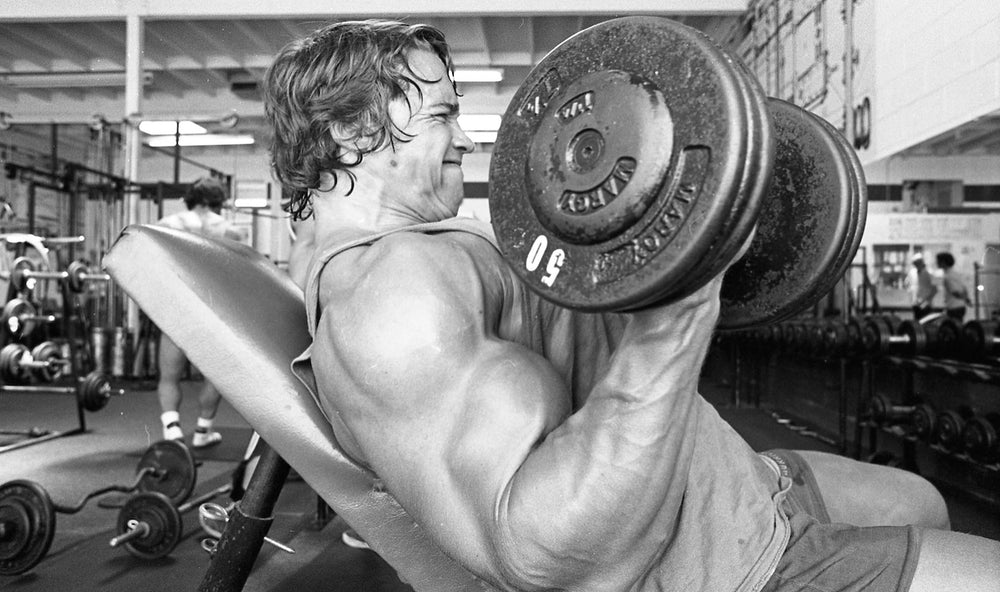
When we fly a Pump Club member out to train with Arnold — when I watch someone walk into that gym carrying every doubt they’ve had about themselves, and walk out later as something shifted inside them — it’s jet fuel to do the same for so many more.
That’s Chesky’s lesson, without the hundred billion and the Zoom meeting.
The things that fill you don’t send press releases. They arrive and feel right, regardless of what the rest of the world sees. Because it’s not about what they think. It’s about what you feel.
Think about how kids approach the things they love. No strategy. No calculation about whether their joy is productive or impressive.
The naivety is pure: find what lights you up and move toward it without apology, without stopping to ask if it adds up to anything.
That’s what Chesky was reaching for. After the investor meetings and the years of sacrifice and the number that finally hit, he sat on the other side of all of it and said: Do the work like you used to when you were a kid. Just make stuff. Make it for yourself.
He wasn’t being sentimental.
Because the work he did was real. The sacrifice was real. What he built is real. But what was driving him — the adulation, the validation, the external proof that it all meant something — couldn’t hold the weight he put on it. No cup with a hole can.
Most of us won’t get the billion-dollar exit. Which makes this more urgent, not less.
If Chesky, with all of it, still ended up staring at an empty cup, the question isn’t whether that can happen to you. It’s whether you’re already somewhere in the middle of it.
This isn’t about having a job that fills your day with deep meaning. It’s great if it does, but not everyone has that situation or opportunity, and that’s okay. It’s about finding the things — anything — that fill you for the right reasons. A hobby. A person. A pursuit that nobody else needs to understand or validate.
The chase isn’t the problem. Wanting things isn’t the problem. The problem is spending years pouring into a cup that was never designed to hold what you actually need.
Life can oftentimes feel like a chase for more. But it’s really figuring out what fills you.
Not perfectly. Not every day. But in the way a kid knows, before they’ve had time to think about it, analyze it, or be convinced otherwise by opinions that probably don’t matter.
When you find that — when the answer comes before you've finished asking — something changes about how you measure days.
Brian Chesky was talking about the best day of his life. But when you have the right cup, there is no single best day. The moment doesn't arrive once and drain away. It returns. In different sizes, at different speeds, more often than you'd think.
A life built around the right cup doesn't feel like a chase that constantly leaves you empty. It feels like something that keeps giving. -AB
Better Today
Take any of these tips from today’s email and put them into action:
1. A Placebo Outperformed One of Longevity Medicine's Most Hyped Drugs
In the first randomized, placebo-controlled trial to pair rapamycin with structured exercise, 40 sedentary adults aged 65 to 85 took either 6mg of sirolimus weekly or a placebo for 13 weeks while both groups completed the same resistance and endurance program. Every major fitness measure, including chair-stand performance, six-minute walk distance, and grip strength, trended in favor of the placebo group. The likely mechanism is rapamycin's 62-hour half-life, which appears to have kept mTOR — the cellular signaling pathway exercise activates to build muscle and improve fitness — partially suppressed into each subsequent training week, blunting the very adaptations the exercise was designed to produce. The takeaway is the same one this research keeps reinforcing: resistance training and aerobic exercise remain the most evidence-backed tools for longevity, and stacking experimental pharmacology on top may work against them, not with them.
2. A Meta-Analysis of 10 Trials Found Tai Chi and Qigong Significantly Raise the Brain Protein Linked to Memory and Mood
Researchers found that Tai Chi, Baduanjin Qigong, and Yijinjing Qigong were each associated with significant increases in BDNF — the protein that supports neuron growth, memory function, and mood regulation — among adults in their 50s, 60s, and 70s. Critically, earlier research on low-to-moderate exercise without a meditative component produced weaker BDNF responses, pointing to a specific mechanism: the combination of focused breathwork and intentional movement appears to reduce stress hormones that suppress BDNF production while simultaneously activating the neural pathways that promote it, meaning physical intensity alone isn't the active ingredient. Two to three sessions per week using beginner-accessible 8- and 10-form sequences cover the studied range.
3. The Harvard Study That Justifies Your Morning Coffee or Tea Habit
A 43-year Harvard study tracking more than 131,000 health professionals found that drinking 2 to 3 cups of caffeinated coffee daily was associated with approximately 18% lower dementia risk compared to those who rarely consumed it — a pattern that held regardless of participants' genetic predisposition to the condition, meaning people at higher inherited risk saw similar associations. Decaffeinated coffee didn't show the same relationship, and higher intake didn't add benefit, pointing to caffeine itself as a probable active factor. The scientists believe it might reduce neuroinflammation and inhibit protein accumulation associated with cognitive decline, while polyphenols called catechins, found in both coffee and tea, appear to contribute through overlapping but distinct mechanisms. This is observational evidence, not a prescription, but for anyone who already drinks coffee or tea daily, the data makes a reasonable case for keeping the habit without second-guessing it.
4. Why Achieving Your Goals Doesn't Always Leave You Satisfied
Brian Chesky took Airbnb public at a $100 billion valuation and described the next day, on an ordinary Zoom call, as feeling completely unchanged — a response that illustrates what happens when external validation carries the weight of fulfillment: no achievement can hold what it was never designed to contain. The psychological distinction the piece draws is between goals pursued for external reasons — recognition, status, proof of worth — and goals that emerge from genuinely intrinsic motivation, where the fuel is already present in the doing rather than dependent on the outcome. The practical frame that follows is a two-question filter: is this worth making, and will it bring me to people I actually want to be around — a structure that, once in place, tends to make both the pursuit and the arrival feel different.
The Positive Corner of The Internet
About Arnold’s Pump Club Editorial Standards
We do things a bit differently here, starting with transparency.
The Content: All APC emails are researched, written, and fact-checked by the APC editors (see bottom of the email), with written contributions from Arnold (noted with “Arnold’s Corner”). Links take you to original studies (not second-hand sources).
Does AI play a role? Not for the primary content, but it is used in two ways. The main items are original content written by the APC team. The summaries at the end are AI-generated based on the human-written content above. We also use an AI tool to review our interpretations of the research and ensure scientific accuracy. We don’t assume AI is right, but we use technology to hold ourselves accountable.
Yes, we have partners (all clearly noted). Why? Because it allows us to keep the APC emails free. We first test products, and then reach out to potential partners who offer ways to help you improve every day. The bar is set high, and to date, we have turned down millions in ad deals. (Example: we will not partner with any non-certified supplements or those without evidence in human trials). If we won’t buy the product, we won’t recommend it to you. And if there’s no evidence it works, then there’s no place for it here.
—
Publisher: Arnold Schwarzenegger
Editors-in-chief: Adam Bornstein and Daniel Ketchell