


Welcome to the positive corner of the internet. We’re here to make your life healthier, happier, and less stressful. At the bottom of each email, we explain our editorial process, stance on AI, and partnership standards.
If you were forwarded this message, you can get the free daily email here.
Today’s Health Upgrade
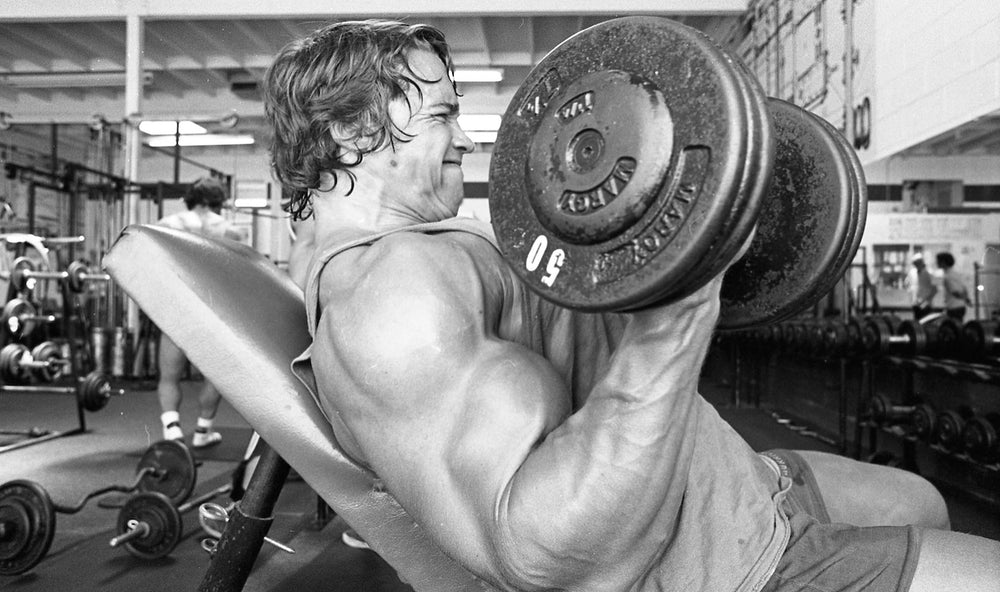
Arnold’s Corner: Monday motivation
Redefine your limits
How to bounce back faster from your workouts
Why your brain likes to wait till Monday (And why you should ignore it)
Workout of the week
Arnold’s Corner
Monday Motivation: You Can
We got thousands of responses when we asked all of you for feedback on the newsletter.
I want to start by giving you credit.
99.2% of your emails were positive. That’s unheard of. We really are the positive corner of the internet.
We are going to begin answering your biggest questions, but I wanted to start right away with the most common response I saw.
What’s the training plan for ME to get stronger?
What’s the diet for ME to lose fat?
After this, the writer would tell us their challenges that are different from everyone else.
They’re a woman. They’re a 72-year-old man. They’re in menopause. They’re in college. They’re busy. They’re fighting depression. They’re parents.
I need you to know something.
It’s not your program or your diet you have to change. It’s your mind.
You have convinced yourself that you are the only person who could possibly have these challenges holding you back from your goals, and that’s just not true.
I know it because I’ve seen it over and over.
There was not a single email we received that listed issues holding them back I haven’t seen someone else overcome.
I’ve seen women in menopause get stronger and lose weight.
I’ve seen busy moms and busy dads get stronger and lose weight.
I’ve seen people in their 70s and 80s get stronger and lose weight.
I’ve seen people battling clinical depression get stronger and lose weight.
I’ve seen people dealing with chronic pain who were told to stop training, get stronger, and lose weight.
I’ve seen college students get stronger and lose weight.
Hell, I’ve seen people fighting cancer, people living with cerebral palsy, people dealing with autoimmune diseases, people with arthritis, people with hips and knees replaced…
You get the idea. I’ve seen almost every kind of person get stronger and lose weight.
There is a program for you. There is a diet for you.
You have to stop treating yourself like a rare, valuable artifact you keep in a safe and start doing it.
Let yourself out of the safe. Start with simple goals
Find 30 minutes, three days a week, to train with resistance from your body at home or with weights in a gym.
Increase your protein intake. The vast majority of people don’t eat enough protein.
Increase your fiber intake. 95% of people don’t eat enough fiber.
Here’s how: your new rule is every meal has to have both. Greek yogurt and berries. Sourdough and eggs. Salad with chicken, fish, or tofu. Vegetables and lean protein for dinner with lentils. Supplement if you’re still short.
You’re going to find out quickly that this rule either makes snacking impossible or makes it really healthy. Those chips? No protein or fiber. Candy? No protein or fiber. Wine? Better get some high-protein cheese and berries to go with it.
Get outside for a walk or some non-training movement every day.
These aren’t complicated. They don’t require a perfect diet or an hour a day. They just require you to start.
I promise you that no matter what your challenges are, if you train 3 days a week, eat protein and fiber at every meal, and walk, you will make progress.
I know it because I have seen it over and over.
There is no story you can tell me that I haven’t heard in 6 decades of promoting fitness.
Your story isn’t rare. That’s the good news. People just like you are succeeding right now.
Here’s our commitment to you:
We will continue to share studies about all of these demographics to help you see that science shows your success is possible.
We will also share more stories. At least once a week. Until you find yourself in one of them.
Part of the magic of the Pump Club app is that I hear these stories every week.
The busy mom who found her strength. The 73-year-old man lifting new PRs. The menopausal woman who rediscovered herself. The man with cerebral palsy using training to make life easier. The student who transformed himself and saw it leak into his whole life.
That’s why I wanted it to be a village, not just a workout you do every day. That’s the magic.
When you want to complain about your arthritis keeping you from training, there’s a comment from someone else with arthritis getting their workouts in by swapping an exercise.
So we’ll share studies, but we will also share success stories. Until you realize it’s possible for you.
That’s our commitment to you. But you won’t change unless you make your own commitment to yourself.
Here’s what I want from you, for the entire week:
Fiber and protein at EVERY meal.
Resistance training three days a week, 30 minutes minimum.
Movement like walking outside daily, even for 10 minutes.
That’s all. We will have a reminder every day.
It’s time to redefine yourself by what you can do, instead of by what you think you can’t do.
Pump Club Success Stories
Redefine Your Limits
Real People. Real Stories. Real Limits Overcome.
“I’m 64 years old and have been a fan of Arnold since I was a teenager. I was diagnosed at the Mayo Clinic with a pancreatic tumor in spring 2024. I had the full Whipple procedure that June, followed by complications that kept me in the hospital at Mayo for 3 months. After 13 surgeries and 34 interventional radiology procedures, last spring I was able to say “I’m cured” — really, cured!” I weighed 205 pounds going into the surgery and 135 pounds when I came home in the fall 2024.
I’ve worked hard this past 10 months to get my strength back and up to 160. I was able to start the Pump Club in January. I still have an 8” long incisional hernia and have to be very careful with abdominal exercises, squats, deadlifts, etc. But I can do most of the weight training exercises. The Pump Club has been a game-changer for me.
You also need to hear how important and impactful the “positive corner of the internet” is to people like me. This world today is full of strife and division. Given what I’ve been through, I’m seeking positivity, motivation, goals, and advice. You give all that and more in a highly credible and positive reinforcing environment.” -Phil
Together With Momentous
Creatine Speeds Up Recovery. Just Not the Way You Expect.
Ask most people why they take creatine, and they'll say the same things: more muscle, more strength, better performance. When the recovery angle comes up, some people assume it either does nothing or takes the edge off post-workout soreness. The research has a different story.
A randomized controlled trial found that four weeks of creatine supplementation accelerated recovery after intense training, restoring strength and reducing swelling more quickly, but had no significant effect on how sore participants actually felt.
Researchers assigned 20 healthy participants either 3 grams of creatine monohydrate daily or a placebo for 28 days, then had both groups perform a standardized eccentric exercise protocol designed to produce measurable muscle damage. Recovery was tracked across strength output, range of motion, arm swelling, muscle stiffness, subjective fatigue, and soreness.
The creatine group bounced back faster in functional categories. Strength returned more quickly, with measurable differences at 48, 96, and 168 hours post-exercise. Swelling was lower from 48 hours onward. Muscle stiffness resolved faster in the later recovery window.
But soreness didn't differ significantly between groups at any time point. Neither did a structural biomarker measuring muscle fiber breakdown, indicating that the muscles sustained similar damage regardless of supplementation.
Scientists believe the results could result from creatine's role in energy metabolism and anti-inflammatory signaling. More available phosphocreatine means your muscles’ repair machinery can work more efficiently, accelerating how quickly your body is ready to push hard again.
In other words, you won’t necessarily feel the difference, but creatine can help you get back to training capacity sooner. For someone training multiple days a week or pushing the intensity, that's a meaningful difference.
Participants experienced recovery benefits with as little as 3 grams of creatine monohydrate. As we’ve previously shared, if you’re going to use creatine, make sure you select a third-party certified brand. In an analysis of 175 creatine brands, 88% used a form of creatine with limited or no evidence of effectiveness or safety.
That’s why we recommend Momentous Creatine. Not only is Momentous NSF Certified and Informed Sport Certified, but it also uses Creapure Creatine, which meets the strictest lab standards to ensure all creatine is at least 99.9% pure.
If you want to try Momentous Creatine, all APC readers receive 35% OFF their first purchase subscription, or 14% off a one-time purchase. Just use the code “PUMPCLUB” to receive your discount.
Mindset
Your Brain Has a Good Reason to Wait Until Monday. Don't Listen to It.
Today is Monday. A fresh start. A chance to capture momentum and make things happen this week.
But, at some point, you might make a deal with yourself. The workout gets pushed, the eating goes sideways, and somewhere in the back of your mind, a voice says: just reset on Monday.
It feels rational. Almost strategic. The problem is it's a trap, and understanding why your brain does it is the fastest way to stop falling for it.
Research suggests the "fresh start" impulse is a real psychological phenomenon, but the lesson isn't to wait for one. It's that you can create one anytime.
Wharton researchers analyzed three datasets of gym records, focusing on 400 days of real gym attendance and 66,000 goal commitments from 43,000 people. The same pattern emerged across all three.
People initiate goals at the start of new time periods: Mondays, the first of the month, and after a birthday. Bigger landmarks produced bigger spikes, with each day of the week declining in motivational pull as it moved further from Monday.
When a new time period begins, the brain treats past setbacks as belonging to a previous chapter. That psychological distance lowers the barrier to starting, so your failures feel like someone else's. It's not a weakness. It's how human cognition actually works.
Here's what the researchers didn't find: evidence that waiting for a landmark produces better outcomes.
The spike is in initiation, not results. And that means giving yourself a reason to start is all that it takes. That means, every week and every day, you can decide that something is a beginning.
So don't wait for Monday. The same mental shift that makes Monday feel different is available at any time. The next time you feel like stalling and waiting, create a moment and a reason to start and keep going. That's the action the science supports.
Fitness
Workout Of The Week
The word is spreading about the effectiveness of full-body workouts.
Ever since we shared the study showing that full-body workouts lead to more fat loss and less soreness, we’ve seen a significant increase in app members choosing (and sticking with) full-body plans and achieving better results.
But many have asked: Does it work for bodyweight training too?
This bodyweight workout will give you a sense of how well a bodyweight plan can challenge your body. This sample workout includes three blocks, each combining two or three exercises you’ll complete with little rest while alternating between movements that challenge different body parts. In less than 30 minutes, you’ll have targeted every muscle for an incredible full-body blast.
Block 1: 8 minutes
Set a timer for 8 minutes. Perform the first exercise, then the second, and finally the third. Rest only as needed, and continue alternating between the exercises until the time is up.
Block 2: 6 minutes
Set a timer for 6 minutes. Perform the first exercise, then the second. Rest only as needed, and continue alternating between the exercises until the time is up.
Alternating lunges: 8-12 reps per leg
Pushups:10-20 reps
Block 3: 8 minutes
Set a timer for 8 minutes. Perform the first exercise, then the second, and finally the third. Rest only as needed, and continue alternating between the exercises until the time is up.
Inverted row: 10 reps
Hamstring walkout: 8-10 reps
Bodyweight triceps extension: 8-12 reps
Give it a try, and start your week strong!
Editor’s Note: We’ll never stop giving you a free Workout of the Week. Because we believe everyone should have access to exercise.
But there’s a difference between a workout and a program.
A “Workout of the day” feels great — you sweat, you’re sore — but soreness isn’t the goal. Exhaustion doesn’t make you better. Your body adapts best when workouts build on each other with intention, not when every session stands alone.
This workout will challenge you today; but a program is what changes you over weeks, months, and years. If you need help, you can try our customized programs free for 7 days. We do the thinking, giving you access to the best coaches, and provide accountability, so you see the improvements.
Better Today
Take any of these tips from today’s email and put them into action:
1. Your Circumstances Aren't What's Holding You Back
Arnold Schwarzenegger, drawing on six decades of promoting fitness, says the most common barrier to getting stronger and losing weight isn't a person's age, health condition, schedule, or circumstances — it's the belief that their challenges are uniquely disqualifying. He's watched people with cancer, cerebral palsy, clinical depression, autoimmune diseases, and joint replacements make real progress, and not a single reader response named an obstacle he hasn't seen someone else overcome. The prescription he keeps returning to: 30 minutes of resistance training three days a week, protein and fiber at every meal (95% of people fall short on fiber alone), and daily movement — nothing more complicated than that.
2. Creatine Accelerates Recovery (But It Doesn't Necessarily Reduce Soreness)
A 28-day randomized controlled trial found that 3 grams of creatine monohydrate daily significantly accelerated functional recovery after intense eccentric exercise — restoring strength measurably at 48, 96, and 168 hours post-workout and reducing arm swelling from 48 hours onward. However, it had no significant effect on muscle soreness or structural markers of muscle fiber damage. The distinction matters: creatine appears to support the energy metabolism and anti-inflammatory signaling that determines when muscles are ready to train hard again, not the subjective pain experience that follows a punishing session. For anyone training multiple days a week, that gap — between feeling ready and being functionally ready — is exactly where creatine earns its place.
3. The Fresh Start Effect Is Real. And the Data Shows You Don't Have to Wait for Monday
Wharton researchers analyzed 66,000 goal commitments from 43,000 people across three datasets — including 400 days of real gym attendance records — and confirmed that people initiate goals at temporal landmarks (Mondays, the first of the month, after birthdays), with each day further from Monday producing a measurable decline in motivational pull. The critical finding wasn't that the fresh start impulse exists — it does, and the brain's tendency to treat the past as a previous chapter is a documented cognitive mechanism, not a character flaw. What the data didn't find was any evidence that waiting for a landmark produces better outcomes: the spike is in initiation, not results, and the same psychological distance that makes Monday feel different is available the moment you decide any moment counts as a beginning.
The Positive Corner of The Internet
About Arnold’s Pump Club Editorial Standards
We do things a bit differently here, starting with transparency.
The Content: All APC emails are researched, written, and fact-checked by the APC editors (see bottom of the email), with written contributions from Arnold (noted with “Arnold’s Corner”). Links take you to original studies (not second-hand sources).
Does AI play a role? Not for the primary content, but it is used in two ways. The main items are original content written by the APC team. The summaries at the end are AI-generated based on the human-written content above. We also use an AI tool to review our interpretations of the research and ensure scientific accuracy. We don’t assume AI is right, but we use technology to hold ourselves accountable.
Yes, we have partners (all clearly noted). Why? Because it allows us to keep the APC emails free. We first test products, and then reach out to potential partners who offer ways to help you improve every day. The bar is set high, and to date, we have turned down millions in ad deals. (Example: we will not partner with any non-certified supplements or those without evidence in human trials). If we won’t buy the product, we won’t recommend it to you. And if there’s no evidence it works, then there’s no place for it here.
—
Publisher: Arnold Schwarzenegger
Editors-in-chief: Adam Bornstein and Daniel Ketchell