


On A GLP-1? Lifting Cut Muscle Loss 25% and Made People Stronger
Two groups lost 50 pounds on tirzepatide. One lifted three times a week. The difference in lean mass and strength after 40 weeks was hard to ignore.
Welcome to the positive corner of the internet. We’re here to make your life healthier, happier, and less stressful. At the bottom of each email, we explain our editorial process, stance on AI, and partnership standards.
If you were forwarded this message, you can get the free daily email here.
Today’s Health Upgrade
Number you won’t forget (shifting weight loss)
The key to more restorative sleep
Weekly wisdom
Health
Number You Won’t Forget: 25%
Losing muscle is a reasonable concern when you’re taking a GLP-1. But, as we’ve discussed, it’s not the drug itself. It’s the result of losing a significant amount of weight. Lose a lot of weight, and some of it will be muscle (whether on medication or not) — unless you do something about it.
A new trial tested what happens when you strength train during massive weight loss.
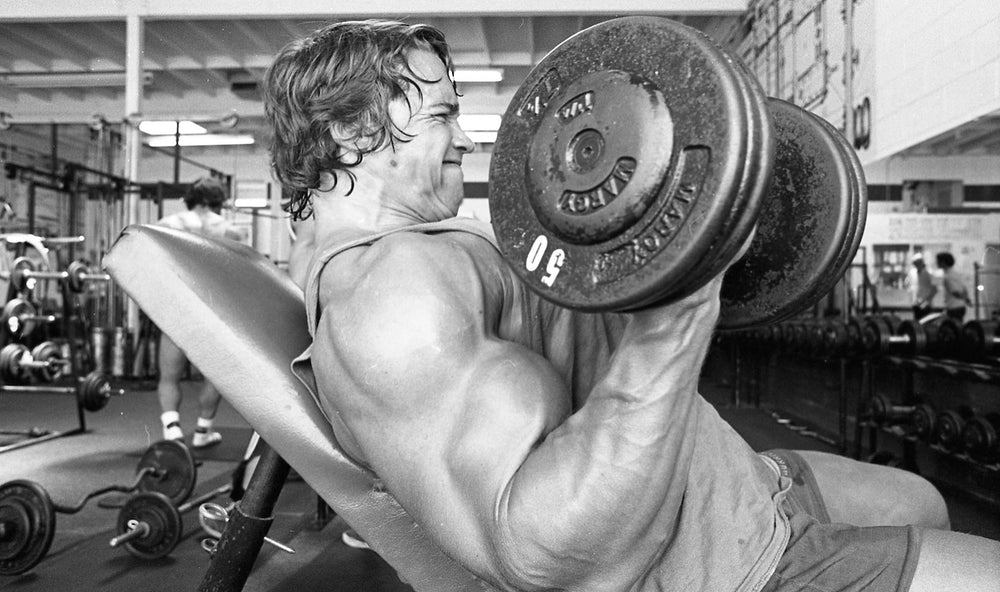
Two groups taking tirzepatide (Mounjaro and Zepbound) lost about 50 pounds each. Those who lifted cut lean-tissue loss (muscle) by about 25 percent. Those who were pumping iron also got 10% stronger, while those who didn’t became 10% weaker.
Scientists studied adults aged 50 to 70, evenly split between men and postmenopausal women. None had diabetes. Everyone received tirzepatide, and about half were assigned to supervised strength training three times a week for 40 weeks. The others continued their usual activities and attended weekly visits.
Lifting reduced lean-tissue loss, but it didn’t prevent the loss entirely. As you might hope, lifting weights helped people maintain more muscle, despite the significant fat loss.
To be clear, lean tissue includes water and organs as well as muscle, so those pounds weren’t all muscle.
And tirzepatide is not uniquely hard on muscle. A recent analysis found that the proportion of weight lost as lean mass was broadly comparable to dietary weight loss.
If you’re focused on weight loss, prioritize at least two full-body strength sessions a week, covering pushing, pulling, and leg exercises.
Together With Eight Sleep
Your Deepest Sleep Runs on Temperature
Most people grade a night of sleep by the clock. Seven hours, eight hours, done. But the hours aren’t equal.
A lot of what sleep does for you happens in one stage, and it’s the easiest one to lose.
That stage is slow-wave sleep. It’s when your brain does its heaviest maintenance, and your body does most of its physical repair. Shortchange it, and you feel it, even after a “full” night.
Your deep sleep is sensitive to temperature. Your core body temperature drops as you fall asleep, and a cooler body helps your brain settle into deep sleep.
A warm bedroom, a partner who sleeps hot, or a heavy comforter at 2 a.m. all work against that. You might not remember waking up. You just spend more of the night in lighter sleep and less of it where it counts.
Researchers tested this by having participants sleep in their own bedrooms for a week without temperature control, then for a week on a temperature-controlled mattress cover. That added up to more than 300 nights of home sleep testing.
Total sleep time didn’t change, but sleep quality improved in meaningful ways.
Men who kept the bed cooler early in the night got about 14 more minutes of deep sleep, and women got more REM. People said falling asleep was easier and rated their sleep calmer and more comfortable. Two of the best signs of recovery (heart rate and HRV) improved significantly.
In transparency, the study was funded by Eight Sleep, but we think that deserves credit. Most companies never test their products on people. Eight Sleep did it in real homes and measured sleep with brain-wave sensors instead of a wristband estimate.
Then it published the results in a peer-reviewed journal for anyone to pick apart. A company betting on its own product and showing its work is the standard every brand should meet.
The best part of the research is that better sleep took only one change: the temperature.
You can’t will your bed cooler at 3 a.m. That’s why technology is creating better rest without a 27-step nighttime routine.
We tested six different cooling options, and Eight Sleep was the only one with peer-reviewed research behind it and results that made a real difference.
The Pod is a smart cover that fits your existing mattress. It cools or heats each side of the bed separately, anywhere from 55°F to 110°F, and adjusts through the night as your sleep changes. It also tracks your sleep, heart rate, and HRV from the cover.
Pod 6 is the newest version, with 9x more sensors than the last generation. It’s also the most accessible the Pod has ever been
For a limited time, the Pod starts at $1,999, the lowest Eight Sleep has ever offered. And for the next 2 weeks, you can use code PUMPCLUB for up to $400 off Pod 6 (the highest discount we’ve ever shared).
Eight Sleep offers monthly plans from $50/mo, 0% APR for up to 36 months (US), and you may qualify for HSA/FSA through Truemed (US).
You know your sleep is important. And even if you can’t get more sleep, you can do something to make sure you sleep better. And it’s the time of change you’ll feel (in a good way) every day.
Mindset
Weekly Wisdom: The Deadline Nobody Gave You
Comparison is the thief of joy.
You won’t find many people who disagree with this quote. It’s on coffee mugs and in yoga studios, and you probably believe it, too.
But many of us would be surprised by how often we still let it happen.
When we think about comparison, the obvious moments usually stand out, like reacting to highlight reels on social media.
But most comparisons don’t happen on a screen. They hide in your goals and (sometimes misleading) expectations. Ten pounds by the wedding. A pull-up by spring. Nobody handed you that number. You picked it up from a before-and-after photo or a program that promised results in eight weeks, and now it’s the standard you think you’re falling short of.
Your partner started the same plan on the same Monday and is already buying smaller jeans. A friend took up running in March and just signed up for a half marathon. Then there’s the 28-year-old version of you, the one who could sleep five hours and could squat more. You might compare today’s workouts to that version.
Comparison is patient. It plants a false expectation early, then waits for week five, when your results look smaller than the timeline you borrowed.
The conclusion feels obvious: this doesn’t work for me. So you stop, usually right around the time it was starting to work.
The line sticks because comparison hands you the wrong scoreboard. You end up grading yourself on someone else’s curve.
Researchers watched this play out in the HERITAGE Family Study, one of the largest exercise trials ever run. Previously sedentary adults all followed the same 20-week endurance program, and a computer set and tracked the intensity of every session.
When scientists looked at participants across seven health markers, including aerobic fitness and deep belly fat, only one person landed at the top or bottom on everything. Almost half were among the strongest responders on one marker and among the weakest on another.
The same work produced wildly different results, and nearly everyone was winning somewhere.
Your stalled scale and your partner’s new jeans might be the same story. Your progress could be showing up somewhere you haven’t checked yet, like your resting heart rate or the stairs that used to leave you winded.
We’ve had versions of this conversation with Pump Club app members more times than we can count. Someone has been going strong for 6 weeks and is ready to quit. We ask how many workouts they missed, and the answer is almost always zero. They did everything right. They just didn’t look like the person they’d been measuring against, so they decided they had failed.
The only thing broken was the measuring stick.
Everyone progresses differently. But when you do the work, the changes will come. You just have to stick with it, especially because doing what’s good for you will always beat avoiding the work altogether.
When results are so, reinforce and judge the process.
Did you do what the plan asked? Did you give it what you had that day?
String enough of those days together and you have consistency. Keep that up long enough and progress becomes nearly impossible to avoid, even if it comes on its own schedule and in places you weren’t looking.
Turn Wisdom Into Action
Find the borrowed deadline
On paper, finish this sentence: “By now, I should be ____.” Then ask where that expectation came from. If it came from a friend, an ad, a program’s promise, or a younger you, cross it out. It was never yours.
Then switch scoreboards
Write your plan in one line, something like “three workouts this week and protein at every breakfast.” Each night, give yourself a yes or no for whether you did what that line says.
When the urge to compare shows up, judge your consistency.
After two weeks, read the card from top to bottom. That’s the evidence you can trust, because you’re the one who wrote it.
And that’s it for this week. Thanks for being a part of the positive corner of the internet. And remember: don’t wait to make a change. Take action on any goal, don’t quit in the hard moments, and the results will come. Go be better every day.
-Arnold, Adam, and Daniel

Better Today
Take any of these tips from today’s email and put them into action:
1. On Tirzepatide? Lifters Got 10% Stronger. Non-Lifters Got 10% Weaker.
Strength training doesn’t fully stop lean-tissue loss on tirzepatide, but it cuts it by about 25% and raises strength. In the 40-week T-REx trial, lifters gained 10% strength while non-lifters lost 10%, with similar overall weight loss.
2. A Cooler Bed Added More Deep Sleep Without More Time in Bed
Researchers found that cooling the bed was linked to more high-quality restorative sleep. In the study, men gained more deep sleep while women saw an increase in REM. Cooler temperatures tend to help because your core temperature needs to drop as you fall asleep.
3. Why You’re Not Seeing Results Yet (And Where to Look)
People respond to the same training in different ways, and almost everyone improves in some way. In the HERITAGE Family Study, only one person was a high- or low-responder on all seven markers. The lesson: Most people’s gains showed up in some markers and not others. If you’re being consistent and compliant, then don’t quit. Focus on the process, and you will see positive changes.
The Positive Corner of The Internet
About Arnold’s Pump Club Editorial Standards
We do things a bit differently here, starting with transparency.
The Content: All APC emails are researched, written, and fact-checked by the APC editors (see bottom of the email), with written contributions from Arnold (noted with “Arnold’s Corner”). Links take you to original studies (not second-hand sources).
Does AI play a role? Not for the primary content, but we use it in two ways. The main items are original content written by the APC team. The summaries at the end are AI-generated based on the human-written content above. We also use an AI tool to edit and review our interpretations of the research, ensuring scientific accuracy. We don’t assume AI is right, but we use technology to hold ourselves accountable.
Yes, we have partners (all clearly noted by “Together With”). Why? Because it allows us to keep the APC emails free. We first test products, and then reach out to potential partners who offer ways to help you improve every day. The bar is set high, and to date, we have turned down millions in ad deals. (Example: we will not partner with any non-certified supplements or those without evidence in human trials). If we won’t buy the product, we won’t recommend it to you. And if there’s no evidence it works, then there’s no place for it here.
—
Publisher: Arnold Schwarzenegger
Editors-in-chief: Adam Bornstein and Daniel Ketchell