


Do Walnuts Boost Serotonin and Mood?
A new trial found walnuts improved mood scores. But the serotonin in walnuts can’t reach your brain. Here’s what’s really going on.
Welcome to the positive corner of the internet. We’re here to make your life healthier, happier, and less stressful. At the bottom of each email, we explain our editorial process, stance on AI, and partnership standards.
If you were forwarded this message, you can get the free daily email here.
Today’s Health Upgrade
Can your wearable tell you how fast you’re aging?
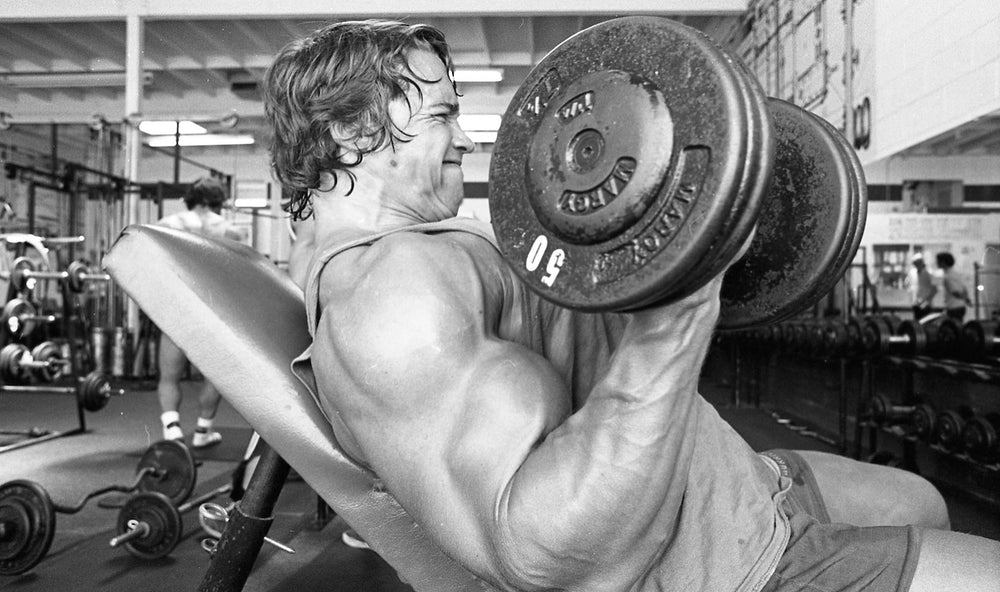
Fact or fiction: light weight training
The real reason walnuts might boost your mood
On Our Radar
Can Your Smartwatch Tell How Fast You’re Aging?
Your watch already grades your sleep and reminds you when you’ve barely moved. Now, researchers are exploring whether those numbers might reveal how fast you’re aging.
Before you give your wrist another reason to judge you, there’s a catch.
Right now, your watch isn’t a longevity clock. But if it measures your movement, heart rate, and sleep, it can pick up behaviors associated with better aging.
Researchers compared Garmin smartwatch readings with DunedinPACE, a blood test that uses chemical markers on DNA to estimate the pace of biological aging.
People who walked more, had lower resting heart rates, and slept with fewer interruptions tended to score as slower agers on a blood test.
However, the study was just a snapshot of data. The researchers didn’t have people change their habits and then measure whether aging slowed. So it’s possible (and honestly, likely) that people who are already healthier simply find it easier to move more and sleep better.
Most importantly, whether it’s a watch or any other technology, an aging score isn’t the same as tracking who develops disease or lives longer.
We find wearables helpful as long as they help you take action, not overthink and get stuck.
For example, use the numbers to pick a habit you can improve. If your steps are low, try adding 500 to 1,000 steps per day.
Walking is a good place to start because the evidence extends beyond aging tests. A meta-analysis of 15 studies linked more daily steps with lower mortality risk, with the biggest gains at the low end. The benefits leveled off around 6,000 to 8,000 steps for adults over 60 and 8,000 to 10,000 for those under 60.
Together With Sundays For Dogs
Your Dog Deserves the Best
Arnold’s love for animals is no secret. From dogs to horses and even a pig named Schnelly Schwarzenegger, his home is full of beloved companions.
And just like with his own diet, Arnold believes animals deserve the best food to fuel their health (though he’s been known to sneak his pets an oatmeal cookie or two).
That’s why Arnold’s Pump Club spent two years testing different options to find the ultimate dog food for animal lovers. After all, your pup deserves food as good as yours.
Other dog foods force you to choose. Cheap kibble? Easy, but it’s full of fillers and lacks nutrients. Fresh meals? Nutritious, but it means freezing, thawing, and cooking.
Sundays For Dogs does it all, with air-dried, human-grade ingredients that are shelf-stable and ready to pour. It stood out for:
Superior Nutrition: Sundays beats traditional kibble 39-0 in a third-party taste test, featuring recipes with short lists of meats, fruits, and veggies you’d recognize.
Being Easy to Serve: No fridge, no prep, no cleanup. Just scoop it into a bowl and watch your dog devour it.
Having Better Ingredients: Air-dried low and slow in the USA, Sundays retains maximum nutrition while delivering jerky-style pieces your dog will love.
Sundays For Dogs raised the bar for your best friend’s diet. This isn’t just dog food; it’s human-grade nutrition made simple.
Try the Sundays Challenge: Let your dog decide. Put Sundays next to your current food, and see which one wins.
As an Arnold’s Pump Club reader, use code PUMPCLUB to get 50% off your first order and give your dog the food it deserves.
Fact or Fiction
Light Weights Build “Slow-Twitch” Muscle
Any time a new study pokes a hole in an old gym belief, it’s worth a look.
For decades, it’s been suggested that lighter weights train your slow-twitch fibers, and heavy weights train your fast-twitch fibers.
Slow-twitch fibers are designed for endurance and low-to-moderate intensity exercise. The fast-twitch fibers are for speed, strength, and explosive power. Both are important.
But a new study suggests that slow-twitch fibers grow the same from both light and heavy loads.
A recent meta-regression analyzed people who had thigh-muscle biopsies before and after about 10 weeks of heavy or light training. The fibers grew about the same regardless of load.
Several studies have found that both heavy and light weights build muscle when you take sets close to failure. So it’s not that one is better at building muscle than the other; it’s just hard for people to tell when they are close to failure, meaning they don’t hit the reps that trigger the most growth.
The biopsies let scientists take a closer look at fiber type, and the idea that “low weights favor slow-twitch muscle fibers” didn’t hold up.
Fast-twitch fibers trended toward more growth as weight increased. At the very light end (20 to 30% of your max), slow-twitch only looked better because fast-twitch grew less.
So the idea isn’t quite right. Light weights grow slow-twitch just fine, but heavy lifting does too. And that means light weights may fall short for fast-twitch.
The likely reason is how your body recruits muscle. It calls on slow-twitch fibers first and brings in fast-twitch as effort climbs. Light sets taken to failure eventually get there. Heavy sets may get there sooner and keep those fibers working longer.
In fairness, the fiber-type differences were small. The trials were small, and the researchers call the results exploratory.
But we’re sharing this because the research adds another piece to the puzzle about why everyone needs to push heavier weight, relative to their own strength, at least once or twice per week.
Fast-twitch fibers tend to shrink first as we get older, which means if you don’t go heavier, they don’t grow the same, leaving your body vulnerable.
So if your training is all bands, high-rep classes, or light dumbbells, keep it. Add a couple of heavier sets each week, too. If you don’t want to think about it and just need a program that works, we have you covered.
Nutrition
Is The “Walnut Serotonin Boost” Real?
The walnut headlines of the past couple of months have been...well…a little nuts.
“A daily handful lifts your mood and boosts serotonin.”
Many of you asked if you should start “walnut maxxing,” so we went to the source of the latest buzz.
Walnuts might make you feel a little better, but it’s not from a serotonin boost.
In a new crossover trial, healthy adults ate one and a half handfuls of walnuts (40 grams) a day with dinner for eight weeks, then went eight weeks with no nuts. During the study, the researchers used a questionnaire to determine “total mood disturbance.”
During the walnut weeks, mood improved about 5 points. This seems like something, and it is, but it’s not as dramatic or magical as it appears.
When you dig into the specifics, stress, well-being, and depressed mood didn’t change. And the biggest issue might be the high likelihood of the placebo effect. Participants knew when they were eating walnuts, rated their own mood, and got no replacement snack during the no-nut weeks.
Walnuts are one of the richest food sources of serotonin, but this is not the cause of the mood boost (as many people suggest) because serotonin from food doesn’t reach your brain.
The mood shifts can result from the domino effect of eating better.
When people add nuts to their diet, they usually eat less of something worse, and better overall eating patterns improve low mood in larger trials. Walnuts also feed your gut bacteria, and the gut-brain connection is real, even if no one has tied it to a walnut mood effect yet.
From a practical standpoint, there are many good reasons to eat walnuts beyond a potential mood boost. They also benefit your cardiovascular health.
Across 26 controlled trials, adding walnuts lowered cholesterol without causing weight gain. In two large observational cohorts, people who ate walnuts five or more times a week were 25% less likely to die of heart disease.
Just remember that walnuts, like any nut, are calorically dense.
So your best bet is to aim for a small handful as a daily snack that acts as a healthy swap. You could swap them for your afternoon chips or granola bar.

Better Today
Take any of these tips from today’s email and put them into action:
1. Your Smartwatch Isn’t a Longevity Clock, But It Tracks 3 Habits Linked to Slower Aging
A smartwatch can’t measure aging directly, but the habits it tracks (daily steps, resting heart rate, and uninterrupted sleep) were associated with slower DunedinPACE scores, a blood test that reads chemical tags on DNA to estimate aging speed. If you’re looking for one activity to improve, many studies link steps to better aging.
2. Light Weights Grow Slow-Twitch Muscle Just Fine. Fast-Twitch Is the Problem.
When you lift weights close to failure, light and heavy loads build similar overall muscle size. But building muscle isn’t the only reason to lift weights. Light and heavy weights also build slow-twitch muscle fibers. But lighter weights don’t do the same for fast-twitch, which tend to shrink first as you get older. That means 1-2 days per week of focusing on heavier weights (relative to your strength) can help fight the aging process.
3. Walnuts Lift Mood (But It’s Not Through Serotonin)
Walnuts may slightly improve mood, but not by raising brain serotonin because it can’t cross the blood-brain barrier. In an 8-week trial, about 1.5 handfuls (40 grams) a day lowered mood-disturbance scores. It may be because eating walnuts instead of less healthy foods improves your diet, which can boost mood.
The Positive Corner of The Internet
About Arnold’s Pump Club Editorial Standards
We do things a bit differently here, starting with transparency.
The Content: All APC emails are researched, written, and fact-checked by the APC editors (see bottom of the email), with written contributions from Arnold (noted with “Arnold’s Corner”). Links take you to original studies (not second-hand sources).
Does AI play a role? Not for the primary content, but we use it in two ways. The main items are original content written by the APC team. The summaries at the end are AI-generated based on the human-written content above. We also use an AI tool to edit and review our interpretations of the research, ensuring scientific accuracy. We don’t assume AI is right, but we use technology to hold ourselves accountable.
Yes, we have partners (all clearly noted by “Together With”). Why? Because it allows us to keep the APC emails free. We first test products, and then reach out to potential partners who offer ways to help you improve every day. The bar is set high, and to date, we have turned down millions in ad deals. (Example: we will not partner with any non-certified supplements or those without evidence in human trials). If we won’t buy the product, we won’t recommend it to you. And if there’s no evidence it works, then there’s no place for it here.
—
Publisher: Arnold Schwarzenegger
Editors-in-chief: Adam Bornstein and Daniel Ketchell