


Why Arnold Schwarzenegger Doesn't Train Alone (And Why You Shouldn't Either)
Arnold has a full home gym he rarely uses. Here's why he rides to a crowded gym every morning, and why finding your "village" is a competitive advantage.
Welcome to the positive corner of the internet. We’re here to make your life healthier, happier, and less stressful. At the bottom of each email, we explain our editorial process, stance on AI, and partnership standards.
If you were forwarded this message, you can get the free daily email here.
Today’s Health Upgrade
Arnold’s Corner: Monday Motivation
Does your brain have a hydration problem?
How to prevent weight regain
Workout of the week
Arnold’s Corner
Monday Motivation: Find Your Village
I have a gym at home with everything I could ever need.
It sits empty unless I'm doing a second workout in the evening.
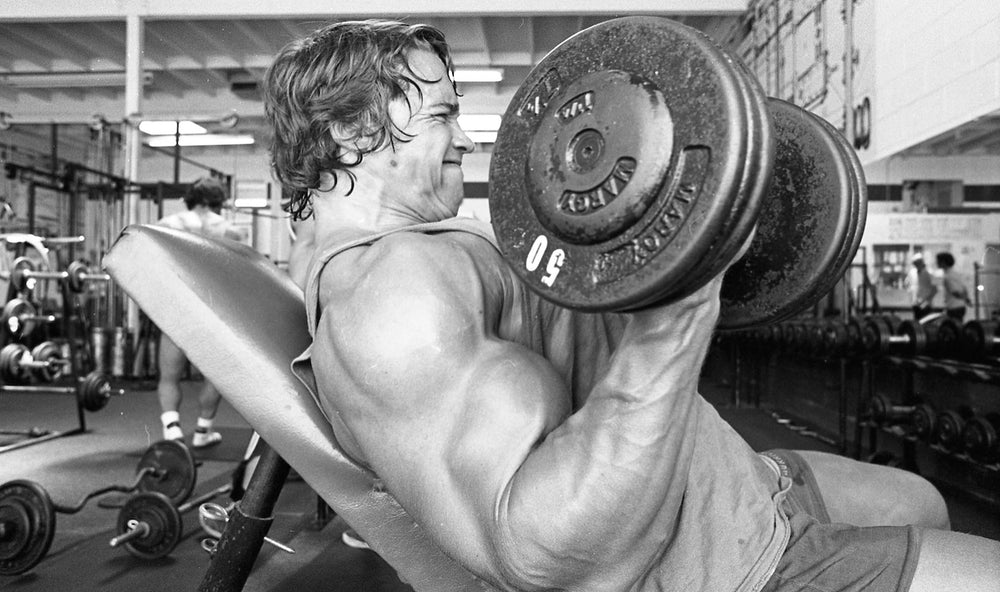
Every morning I get on my bike and ride to the gym. And when I walk in, my friends joke that it takes me about 30 minutes to get from the front desk to my first set.
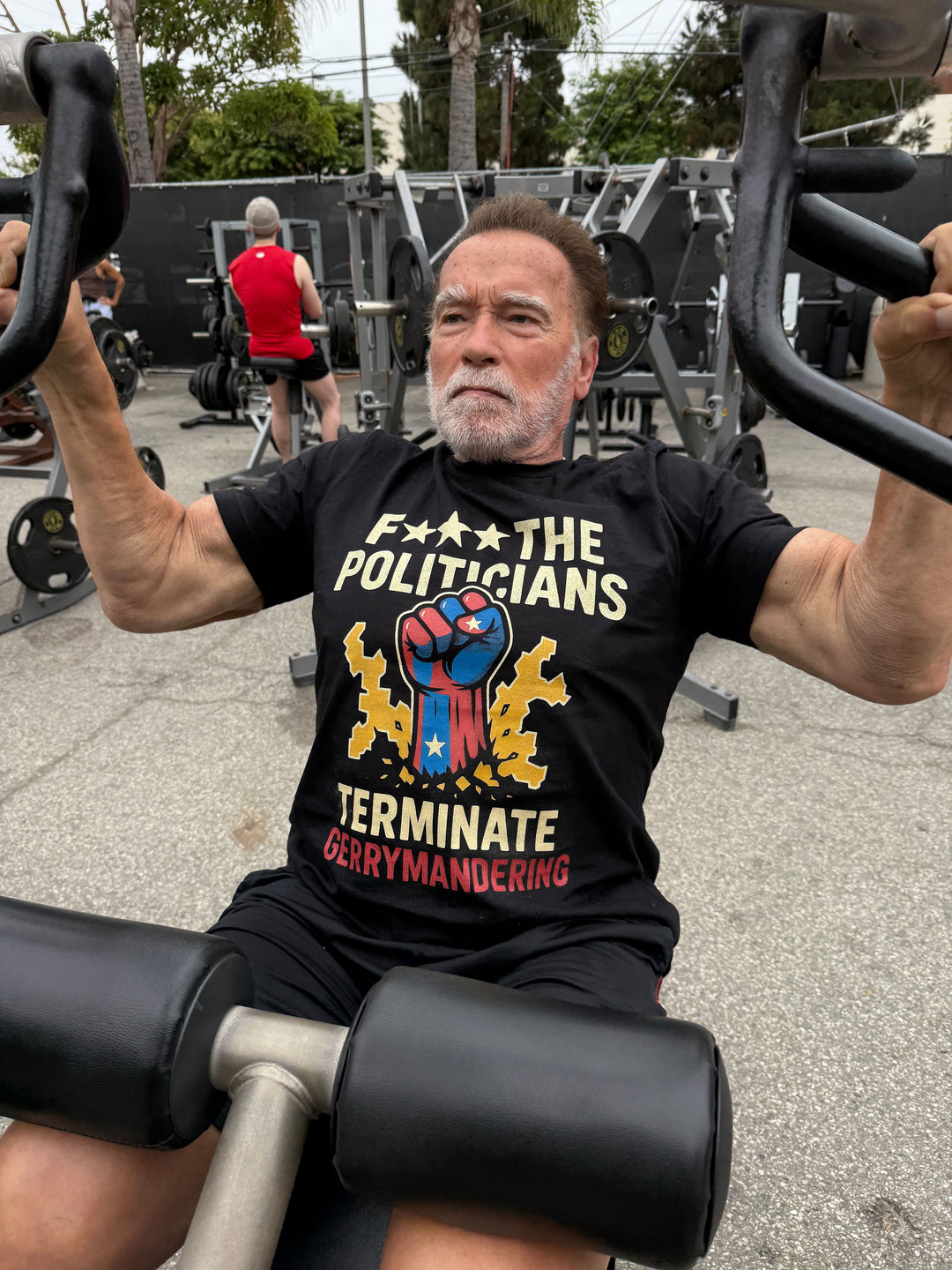
There's someone who wants to tell me about a new personal record. There's someone who wants to give me a hard time for wearing a shirt with my own face on it. There's someone who just started and wants to know if they're doing it right.
People ask me why I don't have my security clear a path straight to the bench.
Because that would ruin the whole thing.
I don't wear headphones either. I never have. I don't listen to music when I train, and I don't want anything tuning out the people around me. They're the whole point.
I love people. I love the schmoozing. The laughing between sets, the guy who pushes me for one more rep, the crew that notices when I don't show up. That energy is half the reason I'm still training every day at 79.
There's a myth in fitness that the most serious people do it alone.
You know the type. The Lone Wolf.
Headphones on. Hood up. Nobody talks to them, and they like it that way. They think support is for people who are weak. They think needing anyone is a crack in the armor.
When I was competing, there were a lot of guys like that. They trained alone in gyms that looked like dungeons because they thought they were so intense they needed to be isolated to win.
Meanwhile, I surrounded myself with my crew and laughed through my workouts.
The trophies didn’t end on the lone wolves’ shelves.
A few years ago I gave the commencement speech at the University of Houston, and I told the graduates something I tell everyone. You can call me Arnold. You can call me Schwarzenegger. You can call me the Austrian Oak. You can call me Arnie.
But don't ever, ever call me a self-made man.
Yes, I trained five hours a day. Nobody lifted the weights for me. The vision was mine, and the fire was mine.
But I didn't do it alone. Not even close.
Yes, I have always had insane vision and drive. That was my engine. The people around me were my fuel.
A lifeguard and a few bodybuilders at the lake where I grew up taught me my first chin-up on the branch of a tree. They brought me to the weightlifting club in Graz, where the coaches pushed me, and the lifters around me made me want to be better.
When I came to America, I had $20 in my pocket and sweaty clothes in my gym bag.
On Thanksgiving, the bodybuilders from Gold's Gym showed up at my little apartment with pillows, dishes, silverware, a black-and-white TV, and a transistor radio.
I still have that radio. It sits on the table next to my bed.
It’s a reminder.
Yes, I have always had insane vision and drive. That was my engine. The people around me were my fuel.
So when I say not to try to do it alone, it is not about being humble. It's about being smart.
The people who think they're best as lone wolves are leaving their biggest advantage on the table. We are all better together. Every one of us.
People always ask me why my app isn't just workouts. Why build a community into a fitness app? Isn't that a little strange?
To me, it would be strange not to.
I wanted people to have the same schmoozing and fun I've always had in the gym. People to push you to a personal best, laugh with you, and be there when you fail.
The best workouts in the world don't do much if you quit in week three because nobody noticed you were gone.
I'm not a tech guy, so whenever we sat down to plan, I called it the village. The guys laughed and told me I sounded like a boomer. The word on the internet is "community." I could never remember it.
But the idea was never a joke. I couldn't build a fitness app without a village. So we built one.
And now, every weekend, thousands of people leave comments celebrating each other's wins. Thousands. On the internet. Building each other up instead of tearing each other down.
I read them. Let me tell you about two from this weekend.
Josh lives in a different city from his siblings.

After every workout, he sends his youngest brother a screenshot to celebrate.
One day work destroyed him. He was bone tired. He was supposed to train, and he told himself he could do it tomorrow.
Then his brother texted: "No gym today?!"
That was it. Two grown men turned back into kids winding each other up. Josh had his gym clothes on and was out the door in under two minutes. He said he had a fantastic workout.
And he wrote something I love: "Sometimes that village is a younger brother who knows exactly how to press your buttons to get you into the gym."
Your village doesn't have to be in the same room. It doesn't have to be in the same city.
One text from a brother far away did what no amount of willpower could do that night.
Then there's Peggy. She met up with Sandip, who came all the way from Philadelphia, and the two of them hiked along the edge of the coast at Land's End in San Francisco. Two people who met as strangers on the internet, hiking together like old friends.
On the way back, they ran into Stan and Iryna, two more people from our village, out walking their dogs.
Four people who never would have met, standing together at the edge of the continent.

Peggy wrote: "Together, we have the strength to lift up the world."
She's right.
So here's my challenge for this week.
Find your people. A training partner, a brother, a coworker, a neighbor who walks the same route you do. Someone you text after a workout. Someone who texts you when you skip one.
And if you think you don't need support, then you're exactly the person who should be giving it. If you think you’re best as a lone wolf, try leading a pack.
Be the one who sends the "No gym today?!" text. Be the one who takes 30 minutes to get from the front desk to the first set because you stopped to pump people up.
Here's the secret. Once you become the kind of person who lifts other people up, it gets a lot easier to lift yourself up.
None of us made it alone. None of us has to.
Hit reply and tell me who's in your pack. How do you inspire your village?
Together With LMNT
Can a Small Water Shortfall Hurt Your Focus?
Dehydration usually brings to mind a scorching day or a workout that leaves you drenched.
Some research suggests it takes much less for your body to lack the water it needs, and that it could affect how your brain performs on harder tasks.
Researchers tested healthy women to see how much water affects cognition. On one day, the participants purposely drank as little as possible. On another day, they consumed about 10 cups of water.
The easier mental tasks, like simple reaction-time and recognition tests, showed no difference.
On tests that challenged visual and working memory, the participants made about 16% fewer errors when they were well hydrated. The low-water day reduced their body weight by only about 1 percent.
That's around the point where thirst usually starts to kick in, so it's an easy shortfall to brush off, especially on a busy day.
The study didn't test why performance changed. One possibility is that the brain can compensate during simple work, and the cost becomes visible only when a task requires more mental horsepower.
It was a small study and funded by PepsiCo, which has a reason to push hydration. But we’re sharing this because other bigger studies have found similar outcomes when you don’t hydrate.
A 2018 meta-analysis reviewed 33 studies and found that mental performance suffered most on tests of attention, executive function, and coordination, particularly once losses exceeded 2 percent.
Dehydration probably won't make you feel like your brain is falling apart. But it may chip away at your focus, especially as the deficit grows.
The most real-world evidence comes from a recent study on older adults. Researchers followed 78 adults with an average age of about 60, testing their blood and cognitive performance three times over three months without asking them to change their habits.
At any visit, about one-third were dehydrated (based on their blood measurements), suggesting it may be more common than people think.
Being dehydrated was linked to noticeably worse scores on a 14-minute test of sustained attention.
If your hardest afternoon work feels a little foggy, it won't hurt to make sure you're hydrated. The supplement aisle is filled with expensive products promising to light up your brain, but all it might need is to not run low on water.
Simple enough. Unless you don't like water. Plenty of people fill the bottle with good intentions, and at 4 pm it's still sitting on the desk, half full and room temperature.
For many, that's not a discipline problem. It's a taste problem.
And taste matters more than most people give it credit for. In a study by U.S. Army researchers, men reluctant to drink during exercise in the heat drank more and ended up less dehydrated when their water was flavored or cooled. The effect seems to show up most in the people who struggle to drink in the first place.
You don't need electrolytes to be hydrated. You need fluid. If a little flavor is what gets the fluid in, your brain gets what it needs either way.
That's where LMNT has earned a spot in our routine. It's a flavored electrolyte mix with zero sugar and zero calories, so you're not trading one problem (not drinking enough) for another (drinking soda). Tear a stick into a big bottle of water, and it becomes something you'll actually finish.
On days you sweat a lot, like a long run or a hard training session, it pulls double duty. Each stick has a mix of sodium, potassium, and magnesium to replace what sweat takes out. It's salty on purpose.
APC readers get a free LMNT Sample Pack filled with 8 different flavors with any drink mix purchase. It's automatically added to your cart. No code needed.
Nutrition
The Habit That Protects Your Weight Loss
This is the part of dieting that never makes it into a before-and-after photo. In a classic analysis of 29 long-term studies, more than half the weight people lost was back within two years. By year five, about 80 percent had returned.
This isn’t to discourage you, but to make an important point: Most people have an idea of how to lose weight. And have done it many times. The challenge for most is not gaining it back.
While nutrition is the primary driver of weight loss, your exercise routine plays a key role in keeping it off.
Most people think of exercise as a way to burn weight off, and it does contribute, but not as much as many people believe. Research suggests the bigger value shows up later, after you’ve already started losing weight and dropping body fat.
Across nine trials, with different people and completely different workouts, the results lined up almost perfectly: people who kept exercising after losing weight regained less weight.
Researchers analyzed 11 randomized trials focused on overweight or obese adults. Everyone had already lost weight through dieting or bariatric surgery. Some kept exercising for 3 to 12 months (routines included walking, cycling, lifting, and even deep-water running), while others didn’t.
In the analysis, exercise consistently protected weight loss to varying degrees. On average, those who kept exercising regained 6 pounds less than those who didn’t, and for some people it was much more than that.
After weight loss, your body pushes back. A smaller body burns fewer calories, while hunger often rises. That makes the eating pattern that produced the higher weight more likely to create a surplus that causes the weight to return.
Exercise adds breathing room by raising how many calories you burn, and resistance training also helps preserve muscle.
That’s why other observational studies have also found that successful weight-loss maintainers tend to burn more through activity. The lesson: Food intake usually drives weight loss. Regular movement makes the lower weight easier to defend.
This study can't tell you how much exercise you need. The programs were too different. So start with whatever you'll actually keep doing, add strength training to hold onto muscle, and focus on more protein and fiber to help with fullness, which will make it easier to manage changes in your hunger.
If you need some help getting started, try the workout of the week below.
Fitness
Workout of the Week
A note for Pump Club app members: every week, we get questions about the workouts you see here and those in your program. These are generic workouts designed with many of the principles and methods you see in the app. But a one-off workout is not the same as a customized program. Your app programs are designed for your goals, workout experience, and schedule. These programs are free for everyone, as part of Arnold’s crusade to make fitness accessible for all.
—
Oftentimes, the hardest workouts don’t consist of many exercises or anything new or innovative. It’s as simple as picking up a weight, pushing yourself to the limit, and focusing on movements that hit all the major muscle groups. The magic is in the exercise selection and progression. And the rest depends on your effort and consistency. This workout shows you just how challenging a workout can be with only three movements.
How to do it:
This workout is a ladder, which means you’ll do one set of each exercise for 3 reps, then another set of each exercise for 4 reps, and so on. Set a timer for 20 minutes and rest as necessary. If you don’t need rest, keep going. The workout is over when the time is up. If you can do more than 3 rounds in 20 minutes, keep going and add a fourth set of 6 reps.
Choose a weight you can normally lift for about 8 reps on your weakest exercise, which—for most people—is the squat + overhead press.
Exercise 1: Dumbbell squat + overhead press: 3, 4, 5
Exercise 2: Dumbbell Stiff-leg deadlift: 3, 4, 5
Exercise 3: Dumbbell bent-over row: 3, 4, 5
Give it a try, and start your week strong!
Better Today
Take any of these tips from today’s email and put them into action:
1. Workout Partner Benefits: Why Arnold Doesn’t Train Alone
For decades, Arnold has relied on his training partners to be part of his workout routine. Training with others helps most people stay consistent. Accountability and enjoyment make you more likely to show up. And your partner doesn't have to be in the room. A text after each workout, or an online community, can do the same job of keeping you connected, competitive, and pushing yourself to become better and have fun in the process.
2. Even Mild Dehydration Can Cost You Focus on Hard Mental Tasks
Dehydration affects your brain, especially during more complicated tasks. The deficits can start with as little as 1% body-weight loss in water, and they're more consistent past 2%. Before you look for cognitive enhancers or caffeine, drinking water consistently could improve your overall processing and performance.
3. Exercise Won't Just Burn Off All Your Weight, But It Helps Keep The Weight Off
Most lost weight returns within five years. A review of 11 trials found people who kept exercising regained about 6 pounds less, with the range being more for others. All forms of exercise apply, so once you’ve lost the weight, that is not the time to get complacent. It’s the time to invest in regular exercise, including resistance training.
The Positive Corner of The Internet
About Arnold’s Pump Club Editorial Standards
We do things a bit differently here, starting with transparency.
The Content: All APC emails are researched, written, and fact-checked by the APC editors (see bottom of the email), with written contributions from Arnold (noted with “Arnold’s Corner”). Links take you to original studies (not second-hand sources).
Does AI play a role? Not for the primary content, but it is used in two ways. The main items are original content written by the APC team. The summaries at the end are AI-generated based on the human-written content above. We also use an AI tool to edit and review our interpretations of the research, ensuring scientific accuracy. We don’t assume AI is right, but we use technology to hold ourselves accountable.
Yes, we have partners (all clearly noted by “Together With”). Why? Because it allows us to keep the APC emails free. We first test products, and then reach out to potential partners who offer ways to help you improve every day. The bar is set high, and to date, we have turned down millions in ad deals. (Example: we will not partner with any non-certified supplements or those without evidence in human trials). If we won’t buy the product, we won’t recommend it to you. And if there’s no evidence it works, then there’s no place for it here.
—
Publisher: Arnold Schwarzenegger
Editors-in-chief: Adam Bornstein and Daniel Ketchell