


Welcome to the positive corner of the internet. We’re here to make your life healthier, happier, and less stressful. At the bottom of each email, we explain our editorial process, stance on AI, and partnership standards.
If you were forwarded this message, you can get the free daily email here.
Today’s Health Upgrade
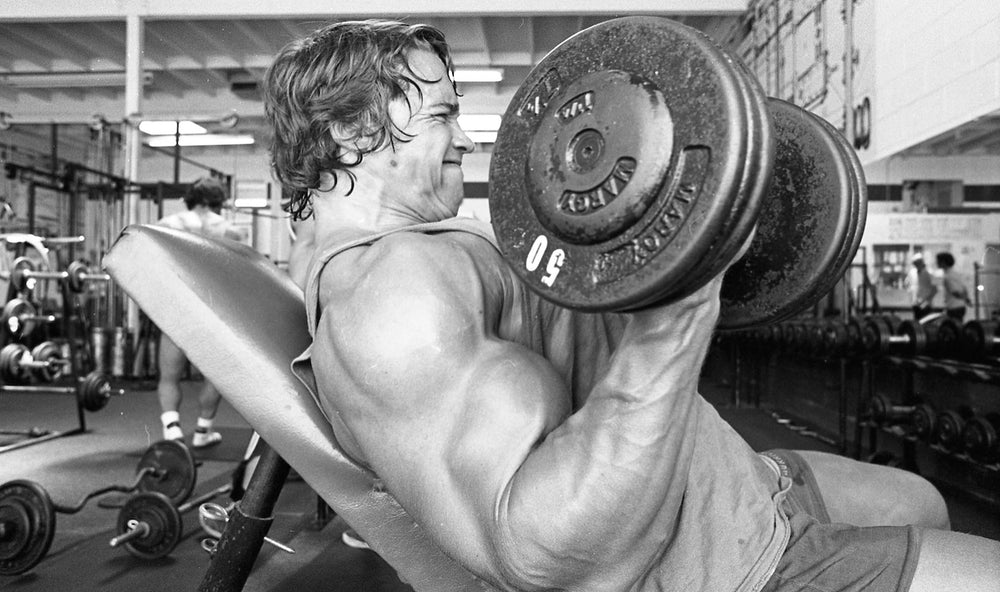
Arnold’s Corner: Monday motivation
How to lower your cholesterol (without a complete diet overhaul)
Start your week right: The strength booster (no supplements or caffeine needed)
Workout of the week
Arnold’s Corner
Monday Motivation: Forget The Finish Line
It started when I was 70.
People began asking me why I still trained.
When was I going to stop? Wasn’t I done?
I’m almost 79 now. The questions come more often, not less.
And after almost a decade of being confused about what the hell they were talking about, I finally understand what they’re really saying.
They’re not asking about me. They’re telling me something about themselves. To them, fitness isn’t for life. It’s for a goal they have right now.
A number on a scale. A summer. A wedding. And once you reach it, or give up on it, you stop.
That’s the only way they know. So when they look at me, still training every day at 78, they genuinely can’t make sense of it.
I don’t say this to criticize them. The fitness industry built that model. It sold it to them. Six-week challenges. Twelve-week transformations. Before-and-after photos.
Every product, every program, every advertisement points to a finish line. The problem is that finish lines don’t exist with our health. And the numbers prove it.
About 80 percent of people who lose weight gain it all back. Think about what that means. We’re not talking about people who gave up. We’re talking about people who did the work, who hit the number, who crossed the tape. And then lost everything they had built, because they thought it was over.
The science tells you why. A study spent years looking at how long it took to form a habit. The answer wasn’t 21 days like a lot of people say. That number is a myth. The research found the average was 66 days, and the real range ran from 18 to 254 days. For some people, a single habit takes the better part of a year to fully stick.
Meanwhile, about 50 percent of people who begin an exercise program quit within the first six months.
They’re stopping right in the middle of the window when the habit is still forming. They decide it’s not working. That they’re not cut out for it. That something is wrong with them. When what’s actually happening is they’re deep in the hard part - the part you have to push through, not escape from.
They don’t know that the real win is creating a habit that lasts for a lifetime.
A Harvard study analyzed nearly 12,000 diary entries looking for what actually drives motivation on a daily basis. What it found was that the single most powerful driver of positive emotions and motivation was making progress - even seemingly minor steps forward. Not the big breakthrough. Not the finished product. The small step forward.
I love seeing this research because it proves things I’ve learned in the real world, myself, over decades of promoting fitness.
It’s why in the Pump Club app, every weekend, I ask everyone to share their tiny wins from the last week. It’s not some foo-foo thing. I know people need the fuel of seeing progress, and if I can train them to find it before they quit, I’m doing my job.
I’ve always believed you have to learn to see the wins, and not the big ones you see on social media. The small ones, the quiet ones, the ones that don’t show up in a before-and-after photo.
Starting your program is a win. Training when you wanted to stay in bed is a win. Getting your three workouts in is a win. Hitting your protein three days in a row is a win.
Most people walk right past these on their way to giving up.
They’ve been trained to only recognize the finished product. So when they look at their week and can’t see a transformation, they conclude that nothing is working. That’s when they quit.
So, back to the question: Why do I keep training?
Because it works. Every single day, in ways that compound over time into something most people never get to experience.
It’s why I can still ski at 78. It’s why my mind stays sharp. It’s why I recover from setbacks — surgeries, hard days, hard years — faster than I have any right to. It does everything I talk about in this newsletter and more, and the research backs all of it up.
I also believe that the day we stop working to upgrade ourselves is the day we start to become obsolete.
Imagine software that stopped upgrading. We upgrade the Pump Club app so often I can barely keep up, so I have learned about this now. If you stop the constant daily work, little problems become big problems that explode. If you stop pushing for the big upgrades that take time, customers realize you’ve given up on them, and they walk away from you.
Our body is the software. We are the customer. We have to work every day to keep things fine-tuned.
But I’ll be honest with you about something else. Something I don’t talk about as much.
I keep going because no matter what, no matter how much I ache, no matter what’s weighing on me, no matter what’s going wrong, I get a win every single day.
And I cannot tell you how valuable that win can be.
Some days, the win is a great workout. Some days, the win is that I showed up when I didn’t want to. But it’s there. Every single day, without fail, if I show up, I get at least one tally mark in the win column of my day.
That is not a small thing. That is the thing.
When people ask me why I still train at 78, that’s the real answer. Not the skiing. Not the science. The daily win. The proof, every single morning, that I am still moving forward.
I’m addicted to that daily win.
Once you understand there is no finish line, you stop losing. You stop starting over. You stop asking when it ends.
You just keep going. Week after week. Win after win.
That’s not a six-week transformation. That’s a life transformation.
That’s the Pump Club Way.
This week, at the end of each day, find one thing you did that moved you forward. It doesn’t have to be big. It just has to be real.
Learn to see it.
That’s how you keep going.
Together With Momentous
The Cholesterol-Lowering Intervention (Without Meds or Overhauling Your Diet)
If your last blood test came back with a note about cholesterol, your doctor probably suggested eating better, exercising more, and maybe mentioned a prescription. What often gets skipped in that conversation is how much a single, cheap dietary habit can do.
An analysis of 181 clinical trials found that adding soluble fiber to your diet consistently lowered bad cholesterol, and the more you added, the greater the improvement.
The research is one of the most thorough examinations of fiber and cholesterol. The average drop in bad cholesterol across all studies was meaningful enough for a doctor to see a difference on a follow-up lab report.
The scientists found that every 5 grams of soluble fiber added per day was linked to a drop of roughly 5-6 points in LDL. Most Americans currently get about 3-5 grams of soluble fiber daily, well below the 25-38 grams of total fiber recommended.
And the benefit isn’t a fixed ceiling. Every additional daily serving of the right fiber helps lower cholesterol, giving you a dial to turn rather than a box to check.
The fibers that did the most work are the kind that dissolve in water and thicken into a gel in your gut. That's psyllium husk, oats, barley, beans, lentils, and pectin (the fiber in apples and citrus).
That gel helps remove cholesterol from your body. It traps bile acids in your digestive tract, and since your body uses cholesterol to make bile, it pulls cholesterol from your bloodstream to replenish the supply. The result is less cholesterol circulating in your body. People who started with elevated triglycerides — a separate blood fat your doctor tracks alongside cholesterol — also tended to see those numbers improve.
A bowl of oats in the morning, an apple as a snack, and a serving of beans at lunch gets you into the range where the evidence is clearest.
The food-first approach works. The science says so clearly. The harder question is whether you'll hit the right dose consistently enough — across enough weeks — that your next blood test tells a meaningfully different story.
If you want a daily win like Arnold described above, that’s why we created Fiber+. To help you close the fiber gap and keep you healthy.
Psyllium husk is the foundation, with 4 grams per serving, right in the effective range tested in the trials above. That's the gel-forming fiber that traps bile acids and pulls LDL from your bloodstream. The mechanism the research describes. We didn't reinvent it. We started with it.
But here’s what we did differently: we looked at the other jobs your gut is doing while the psyllium handles cholesterol, and added the other fibers most supplements skip entirely.
Resistant starch — the ingredient almost no competitor includes — feeds the bacteria that produce butyrate, the compound your gut lining depends on to stay intact, and your cells need to process insulin effectively. Rice bran hull supports long-term gut barrier protection.
The combination won’t just support better cholesterol, but also support a healthier microbiome, improve blood sugar, lower inflammation, and help protect against cardiovascular disease.
Three fibers. Forty calories. Unlike so many other fibers, no artificial sweeteners that are known to cause GI issues.
As an APC reader, you get 35% off your first subscription or 14% off a one-time purchase with the code PUMPCLUB.
The oats, the apple, and the beans still matter. Fiber+ helps you stay in the range where the evidence is clearest, even on the days when life doesn't cooperate.
Start Your Week Right
Your Pre-Lift Ritual Isn't Superstition. It's Science.
Most of us have watched someone stalk around the platform, slam their chest, or get ammonia waved under their nose before a big lift. You might have wondered: Do the antics actually work, or is this just theater?
Now we have an evidence-based answer.
New research involving 200 competitive strength athletes found that intentional mental preparation improved performance. Maybe more relevant to you: the specific strategy used didn't matter.
Researchers had competitive powerlifters and strongmen and strongwomen complete a deadlift under two conditions: psyching up versus passive rest. To ensure accurate measurement of performance, barbell velocity was measured with a research-grade tool that eliminates the guesswork in determining output.
When athletes chose any intentional form of mental preparation, barbell velocity increased nearly 20%. And it’s not just speed. That led to a 4% increase in predicted 1-rep max.
The number might seem small, but this is a higher-level strength where every percentage point matters. If someone were trying to deadlift 600 pounds, that would be the equivalent of adding nearly 25 pounds to the bar.
When researchers then compared eight different psyching-up strategies head-to-head, none outperformed the others. Screaming, self-talk, visualization, controlled breathing — statistically indistinguishable.
Interestingly, matching your personality with a pre-lift strategy could help you see a boost.
Athletes with higher trait aggression and lower anxiety sensitivity reached for arousal-enhancing approaches: pacing, aggression cues, ammonia. Those with higher anxiety sensitivity trended toward calmer, task-focused techniques: technical self-talk, cueing, and deliberate breathing. Both groups improved. The fit just looked different.
Physiology likely explains the boost. Intentional mental preparation elevates physiological arousal — heart rate, focus, neuromuscular tension — priming your body for a maximal effort. The key is intentional. Passive rest doesn't do the same thing.
Before your heaviest set, take 60 to 90 seconds and do something deliberate. If you're naturally high-energy, lean into it — move, cue up, let the adrenaline build. If you're more anxiety-prone, try focused breathing or a technical cue you trust.
Either way, you're not picking a ritual because it looks good. You're preparing your nervous system for what you're about to ask of it.
Fitness
Workout Of The Week
This workout consists of just 2 exercises. You’ll do all sets of the first exercise and then move to the second exercise. Each exercise is a 10-minute set using a heavy weight to help build muscle, increase strength, and burn calories.
The first exercise will build your legs and backside muscles. The second exercise will leave your shoulder and upper body feeling more defined with every rep.
How To Do It
Warmup
Perform 1 set of each of the following movements. Do one movement after another, resting as little as possible.
Superman “W”: 8 reps
Inchworm: 8 reps
Hip raise: 12 reps
Lateral Lunge: 6 reps/leg
Workout
For each exercise, perform 2-3 work-up sets. The goal is to build up to a weight that you can lift for about 6-8 reps. Then, set a timer for 8 minutes. You’ll be doing 4 reps every minute on the minute. That means, you’ll do 4 reps of the first exercise, check the clock, and rest for the remainder of 60 seconds. Let’s say it takes 15 seconds to do 4 reps. You’ll rest for another 45 seconds, and then do another set of 4 reps. Keep following this one set per minute approach until 8 minutes are up (so you’ll do 8 sets).
Then, rest for 4-5 minutes. And then repeat the same approach with the second exercise for another 8 minutes. And that’s it.
Two exercises, 16 minutes of work. One lower body movement, one upper body movement. One exhausting workout.
Exercise 1: Dumbbell Romanian Deadlifts 4 reps per set (every minute on the minute for 8 minutes)
Exercise 2: Seated Dumbbell overhead press: 4 reps per set (every minute on the minute for 8 minutes)
Give it a try, and let us know what you think!
Editor’s Note: We’ll never stop giving you a free Workout of the Week. Because we believe everyone should have access to exercise.
But there’s a difference between a workout and a program.
A “Workout of the day” feels great — you sweat, you’re sore — but soreness isn’t the goal. Exhaustion doesn’t make you better. Your body adapts best when workouts build on each other with intention, not when every session stands alone.
This workout will challenge you today; but a program is what changes you over weeks, months, and years. If you need help, you can try our customized programs free for 7 days. We do the thinking, giving you access to the best coaches, and provide accountability, so you see the improvements.
Better Today
Take any of these tips from today’s email and put them into action:
1. Arnold Schwarzenegger at 78: Why He Never Stopped Training, and the Science That Proves He Is Right
A Harvard analysis of nearly 12,000 diary entries found that small daily progress — not major breakthroughs — is the single most powerful driver of motivation and positive emotion. Separately, habit formation research shows that the average habit takes 66 days to form (range: 18 to 254 days), not the commonly cited 21, meaning 50 percent of people who quit exercise within six months are stopping in the middle of the window while the habit is still being built. Arnold's answer to why he still trains every day at 78 isn't the skiing or the surgeries he's recovered from; it's that showing up guarantees at least one win in the column, every day, without exception, and that compounding record is what a life built on fitness actually looks like.
2. Every 5 Grams of Soluble Fiber Drops LDL by 5-6 Points (And Why It Matters For Your Health)
An analysis of 181 clinical trials found that every 5 additional grams of soluble fiber per day reduces LDL cholesterol by roughly 5–6 points. It’s a dose-response relationship that works like a dial, not a ceiling, meaning each additional daily serving continues to push numbers lower. Soluble fiber like psyllium husk, oats, and pectin bind to bile acids in the gut, forcing the body to pull cholesterol from the bloodstream to make more, directly reducing circulating LDL — and in people with elevated triglycerides, those numbers dropped as well. A bowl of oats in the morning, an apple mid-day, and a serving of beans at lunch gets you into the evidence-backed range; the people with the most room to improve saw the largest reductions. If you need help, Fiber+ is an innovative 3-in-1 fiber supplement that provides the soluble fiber your body needs, plus more to support overall gut health.
3. Your Pre-Lift Ritual Doesn't Have to Look Dramatic to Work. But Research Confirms A Deliberate Strategy Can Make You Stronger
A study of 200 competitive strength athletes — powerlifters and strongmen and strongwomen — found that any intentional mental preparation before a heavy deadlift increased barbell velocity by nearly 20%, translating to a 4% improvement in predicted 1-rep max, the equivalent of adding roughly 25 pounds to a 600-pound deadlift. When researchers compared eight specific strategies head-to-head — screaming, visualization, self-talk, controlled breathing, and others — none outperformed the rest; what separated the improvement from no improvement was deliberate preparation versus passive rest. The practical split falls along personality lines: athletes with higher trait aggression responded better to arousal-enhancing approaches like pacing and aggression cues, while anxiety-sensitive athletes saw equal gains from focused breathing and technical self-talk. Choose what fits your wiring, not what looks most intense.
The Positive Corner of The Internet
About Arnold’s Pump Club Editorial Standards
We do things a bit differently here, starting with transparency.
The Content: All APC emails are researched, written, and fact-checked by the APC editors (see bottom of the email), with written contributions from Arnold (noted with “Arnold’s Corner”). Links take you to original studies (not second-hand sources).
Does AI play a role? Not for the primary content, but it is used in two ways. The main items are original content written by the APC team. The summaries at the end are AI-generated based on the human-written content above. We also use an AI tool to review our interpretations of the research and ensure scientific accuracy. We don’t assume AI is right, but we use technology to hold ourselves accountable.
Yes, we have partners (all clearly noted). Why? Because it allows us to keep the APC emails free. We first test products, and then reach out to potential partners who offer ways to help you improve every day. The bar is set high, and to date, we have turned down millions in ad deals. (Example: we will not partner with any non-certified supplements or those without evidence in human trials). If we won’t buy the product, we won’t recommend it to you. And if there’s no evidence it works, then there’s no place for it here.
—
Publisher: Arnold Schwarzenegger
Editors-in-chief: Adam Bornstein and Daniel Ketchell