


Welcome to the positive corner of the internet. We’re here to make your life healthier, happier, and less stressful. At the bottom of each email, we explain our editorial process, stance on AI, and partnership standards.
If you were forwarded this message, you can get the free daily email here.
Today’s Health Upgrade
The longevity trait you’re probably forgetting
Weekly wisdom
You’ll never think of tea time the same way
Feel stuck with your progress? This can help.
Longevity
Number You Won’t Forget: 6-7X
Do you train for muscle power? Here’s why you should.
You might think being strong is the best way to protect your health as you age. But new research suggests that how fast you can move with strength is even more important than how much you can lift.
People with low muscle power face roughly 6 to 7 times the risk of early death compared to those with the highest power levels, even after accounting for age, body composition, and chronic disease history.
Scientists tracked nearly 4,000 adults for more than 10 years to determine whether muscle strength or muscle power predicted better longevity. They measured power using an explosive upper-body rowing movement adjusted for body weight, and strength using a handgrip test.
When researchers sorted participants into groups based on their relative muscle power, those in the lowest-performing group had roughly 6 times the risk of death among men and 7 times the risk among women compared to those with the highest power levels. Muscle strength, by contrast, did not reach statistical significance as a predictor of mortality after full adjustment for other health factors.
This matters because muscle power declines faster with age than strength does, and it's what you rely on every time you react quickly, stabilize yourself, or move dynamically. Having adequate power can help you avoid falls, recover your balance, and move with more confidence, which translates into a lower risk of injuries and chronic diseases.
The reminder: You can't just be strong, you need to be fast and powerful.
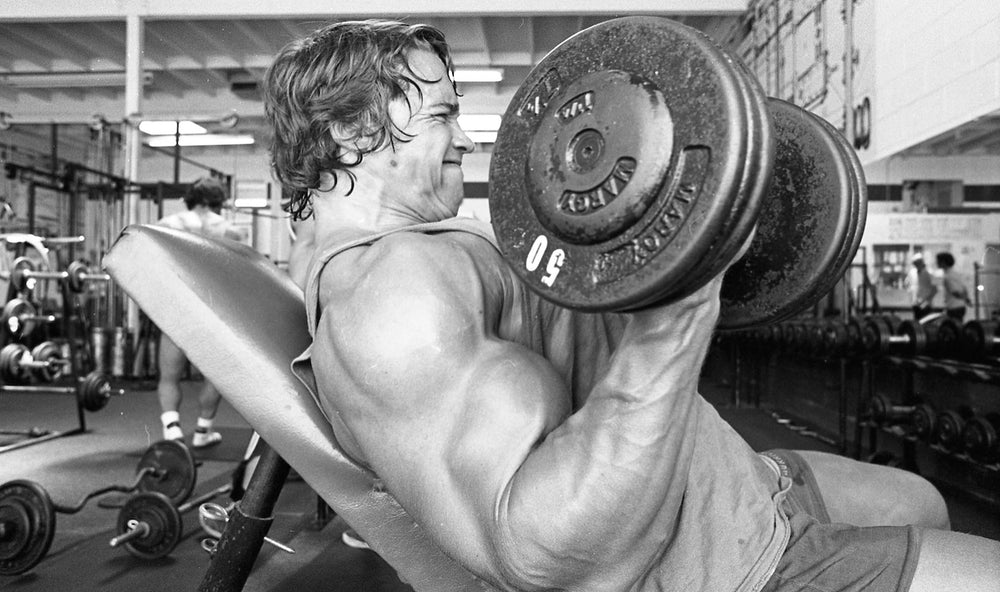
To improve muscle power, you don't need to train like an Olympic athlete, and you don’t have to focus on maximum weights either (that’s more related to strength). But you do need to move with intent and speed: think explosive squats, presses, and rows; medicine ball throws; kettlebell swings; or speed push-ups.
Research suggests that lighter loads (think 30–40% of your max effort) moved with the intention of moving as fast as possible can be as effective, or even better, for developing power than heavy, slow lifting. What matters most is the intent. Even if your actual movement speed is limited, trying to move explosively still trains your neuromuscular system to produce force more quickly.
If you want to age well, you have to move like you mean it.
Mindset
Weekly Wisdom
You snap at someone you love. You eat the thing you said you wouldn't. You check your phone the moment you wake up — again — and wonder why the morning already feels like it's happening to you.
It doesn't feel like a choice. It feels like gravity.
That's the trap of reactivity. Not that we're weak or undisciplined. But that we've collapsed the distance between what happens and what we do next.
Stimulus arrives. Response fires. No pause. No deliberation. Just the feeling, afterward, that someone else was driving.
Frankl wasn't writing about willpower. He was writing about freedom: the last freedom, he argued, that no external force can take. He knew this firsthand.
As a psychiatrist imprisoned in Nazi concentration camps, he watched everything he loved stripped away. What he found, in the wreckage, was that the one thing no one could confiscate was the sliver of space between what was done to him and how he chose to meet it.
Most of us will never face what he faced. But the principle holds at every scale: at the dinner table, in traffic, in the middle of an argument, in front of the refrigerator at 10 PM.
The space is always there. We've just stopped noticing it.
Here's what makes reactivity so seductive: it feels efficient. The emotion arrives, and the behavior follows. An autopilot that saves you from the friction of deciding. But that efficiency has a cost.
You lose authorship of your own life, one small reaction at a time.
The person who can't stop stress eating isn't weak. They've built a zero-gap reflex: stress appears, food appears. The person who always escalates in conflict isn't cruel. They've trained themselves to close the space before anything else can enter it.
What Frankl is offering isn't just a lesson in stoicism. It's a design principle. If you want different outcomes, you don't need more motivation. You need more space.
We've seen this play out in coaching more times than we can count. Someone convinced they have no self-control. Turns out they have plenty, but they've just never given it room to operate. One breath. One step away from the kitchen. One text drafted but not sent. That's the whole practice. Not erasing the stimulus. Not suppressing the feeling. Just inserting a gap.
Turn wisdom into action
Pick one pattern where you feel like you're always reacting: a food trigger, a person, a situation that reliably derails you. When it shows up, don't try to respond differently yet. Just pause for five seconds first. Not to think. Not to strategize. Just to create the space. That's it. You're not fighting the feeling. You're making room for a choice to exist.
Frankl's insight survived conditions most of us can't imagine. What makes it remarkable isn't its complexity. It's how small and meaningfully effective it is.
Together With Pique
Your Tea Habit Might Be Protecting Your Heart in More Ways Than One
Coffee gets all the research attention. But if your morning (or afternoon, or evening) belongs to tea, a new study of more than 188,000 people suggests you've been collecting health benefits that rarely make headlines.
Drinking up to 3 cups of tea per day was associated with a significantly lower risk of developing multiple cardiometabolic conditions simultaneously, including type 2 diabetes, heart disease, and stroke, according to a 12-year prospective study.
Researchers followed healthy adults and tracked who developed "cardiometabolic multi-morbidity,” which was the presence of at least two of the following conditions: type 2 diabetes, coronary heart disease, or stroke.
Tea showed a protective association, with benefits increasing up to three cups of tea per day, and then leveling off. To be clear, this is observational data, and it’s good to remember that association is not causation.
Two things in tea appear to be doing the work. The first is polyphenols, which are the compounds that give tea its color and slightly bitter edge. Think of them as internal housekeepers: they reduce oxidative stress, which is essentially the cellular wear-and-tear that accumulates over time and contributes to arterial damage and metabolic dysfunction.
Tea is one of the richest dietary sources of these compounds, and the research suggests that the combination of different polyphenols working together produces a stronger protective effect than any single one would alone.
The second mechanism involves caffeine, and here's where tea gets an honest asterisk. Caffeine appears to block a protein in the liver that would otherwise break down LDL receptors, the very receptors responsible for pulling "bad" cholesterol out of your bloodstream. Fewer functional receptors mean more LDL circulating, and more receptors mean better clearance.
Caffeine helps keep those receptors active. The catch: a cup of tea tends not to contain as much caffeine as coffee, which is why you also see impressive results with coffee. Tea's benefits likely lean more on the polyphenol side of the equation than on the caffeine side.
If you already drink tea, 2-3 cups daily appears to be the range worth maintaining. If you've been looking for the lowest-barrier health habit possible, a cup at lunch or dinner is a simple addition.
That's why we recommend Pique tea, which offers both Pu'er green tea and matcha, both of which have higher catechin levels. Their Cold Brew Crystallization process — which cold-brews organic tea leaves for up to 8 hours, then removes the water through low-temperature dehydration and preserves up to 12x the catechins and antioxidants compared to conventional tea. That way, you get a more concentrated dose, like what’s used in the research, but in a form you can actually enjoy every morning.
Every batch is triple-screened for heavy metals and harmful microbes. And because it dissolves instantly in hot or cold water, hitting 2-4 cups a day actually becomes something you do, not something you intend to do.
As an APC reader, you get up to 20% off and a free starter kit on subscriptions of $100+. No code needed, and your discount applies automatically at checkout.
Better Questions, Better Solutions
You Think You're Stuck. But Here’s Why You're Not.
Old Question: Why does it feel like I'm not improving?
Better Question: What skill or behavior do I now take for granted that I couldn't do a year ago?
Progress doesn't disappear. It hides inside everything you've stopped noticing.
This is the cruel math of getting better at something: the moment a skill becomes automatic, it stops feeling like an achievement. Your brain files it under "normal" and immediately starts measuring you against the next frontier.
What used to be hard becomes invisible. What remains is only the gap.
Psychologists call this adaptation: the brain's tendency to recalibrate what's baseline after any significant change. It's useful for survival. It's terrible for motivation.
The real problem isn't a lack of progress. It's that progress is erased by familiarity the moment it arrives.
Research on goal pursuit supports this. When people focus only on what's left to accomplish, they underestimate how far they've come, leading to reduced effort, lower satisfaction, and a creeping sense that nothing is working. But when the same people were prompted to reflect on their past progress before setting new goals, motivation and follow-through both increased significantly.
The finish line blinds us to the distance already covered.
But looking back is only half of it. Researchers, after analyzing thousands of daily work diaries, found that the single biggest driver of motivation wasn't reaching a milestone — it was the feeling of moving forward, no matter how small.
The brain doesn't wait for outcomes to register progress. Completing a behavior triggers a neurological signal that reinforces the habit. The outcome — the weight lost, the PR hit, the goal achieved — is just confirmation of work the brain already logged.
Which means there are two ways to fight progress amnesia.
One is looking backward and recognizing what's now automatic. The other is tracking forward and recording behavioral wins before outcomes arrive to validate them.
Not "did I lose two pounds this week?" but "did I show up?" Those are different questions with very different emotional effects. One leaves you at the mercy of a number. The other puts you in charge of the only thing you actually control.
This weekend, write down three things you do automatically now that required real effort twelve months ago. Not goals. Behaviors. Maybe you sleep seven hours most nights. Maybe you don't skip the gym when you're tired. Maybe you eat protein at breakfast without thinking about it. Then, starting tomorrow, track one behavior daily. Not the outcome it's building toward, just whether you did the thing.
Those aren't small things. Those were once hard things. They just stopped feeling that way, which means they worked.
Progress doesn't always feel like acceleration. Sometimes it feels like standing still while the ground beneath you rises. One question. One reframe. One thing to try.
And that’s it for this week. Thanks for being a part of the positive corner of the internet. Remember, you have endless opportunities to get better every day. Don’t overthink it, do something, and repeat. Have a fantastic weekend!
-Arnold, Adam, and Daniel
Better Today
Take any of these tips from today’s email and put them into action:
1. A 10-Year Study of Nearly 4,000 Adults Found This Predicts Longevity Better Than Strength
Scientists found that those with the lowest muscle power had roughly 6 times the mortality risk among men and 7 times among women compared to the highest-performing group. While muscle strength showed no statistically significant effect on mortality after accounting for age, body composition, and chronic disease history. Power, measured by explosive output relative to body weight, declines faster with age than strength does and governs the reactive, dynamic movements — balance recovery, rapid stabilization, fall prevention — that most directly predict functional independence and injury avoidance. To build it, move lighter loads (30–40% of your max) with explicit intent to move as fast as possible: explosive rows, kettlebell swings, medicine ball throws, speed push-ups — because the neuromuscular signal that develops power comes from the intention to accelerate, not from the weight on the bar.
2. The Behavioral Principle That Explains Why You Keep Overreacting
Viktor Frankl's core insight — that between every stimulus and response exists a space, and that space is where human freedom lives — is the most direct behavioral tool for anyone trapped in reactive eating, conflict escalation, or stress-driven habits. Reactivity isn't weakness; it's what happens when that gap collapses into a zero-gap reflex, where stimulus fires response with no room for deliberation, and autopilot runs the outcome. The practice is simpler than it sounds: identify one reliable trigger, and when it appears, pause for five seconds — not to strategize, just to reopen the gap between what happens and what you do next.
3. Tea's Cardiometabolic Protection: The 12-Year Study
A 12-year prospective study tracking more than 188,000 adults found that drinking up to 3 cups of tea daily was associated with significantly lower risk of cardiometabolic multimorbidity — the simultaneous development of at least two conditions among type 2 diabetes, coronary heart disease, and stroke — with protective benefits increasing up to three cups per day before leveling off. Two mechanisms appear responsible: polyphenols reduce oxidative stress and arterial damage through their combined action across multiple compounds, while caffeine helps preserve LDL receptors in the liver, maintaining the body's capacity to clear "bad" cholesterol from the bloodstream, though tea's advantage leans more heavily on the polyphenol side than caffeine alone. Two to three cups daily is the research-supported target.
4. You're Not Stuck. Your Brain Just Filed Your Progress Under "Normal."
Research on goal pursuit shows that people who focus primarily on what remains to be accomplished consistently underestimate how far they've already come — and that simply prompting reflection on past progress measurably increases both motivation and follow-through. This happens because the brain adapts: skills that once required deliberate effort get recalibrated as baseline the moment they become automatic, a process that is useful for survival but quietly corrosive to perceived progress and sustained motivation. The fix is two-part: write down three behaviors that now happen automatically but required real effort twelve months ago, then track one behavior daily going forward, not for the outcome it's building toward, but simply for whether you showed up.
The Positive Corner of The Internet
About Arnold’s Pump Club Editorial Standards
We do things a bit differently here, starting with transparency.
The Content: All APC emails are researched, written, and fact-checked by the APC editors (see bottom of the email), with written contributions from Arnold (noted with “Arnold’s Corner”). Links take you to original studies (not second-hand sources).
Does AI play a role? Not for the primary content, but it is used in two ways. The main items are original content written by the APC team. The summaries at the end are AI-generated based on the human-written content above. We also use an AI tool to review our interpretations of the research and ensure scientific accuracy. We don’t assume AI is right, but we use technology to hold ourselves accountable.
Yes, we have partners (all clearly noted). Why? Because it allows us to keep the APC emails free. We first test products, and then reach out to potential partners who offer ways to help you improve every day. The bar is set high, and to date, we have turned down millions in ad deals. (Example: we will not partner with any non-certified supplements or those without evidence in human trials). If we won’t buy the product, we won’t recommend it to you. And if there’s no evidence it works, then there’s no place for it here.
—
Publisher: Arnold Schwarzenegger
Editors-in-chief: Adam Bornstein and Daniel Ketchell