


Every weekday, we help you make sense of the complex world of wellness by analyzing the headlines, simplifying the latest research, and providing quick tips designed to help you stay healthier in under 5 minutes. If you were forwarded this message, you can get the free daily email here.
Today’s Health Upgrade
Number you won’t forget: 60 seconds
How to build a starter home gym (for as little as $300)
Weekly wisdom
From hope to action
Longevity
Number You Won’t Forget: 60 Seconds
The 1-Minute Habit That Could Add Years to Your Life
You can hit the gym religiously and still be quietly undermining your health the rest of the day. Researchers call it the "active couch potato" effect — people who exercise regularly, then sit for hours on end. But the fix is smaller than you might imagine.
Standing up and moving for 1 to 2 minutes every hour may reduce your risk of dying early, even if you already exercise.
Researchers followed nearly 8,000 adults aged 45 and older for about four years, using accelerometers to track sedentary behavior. This wasn't a survey or memory test; it was real movement data. They measured total daily sitting time and how that time was distributed (short bouts versus long, uninterrupted stretches).
People who sat the most (13+ hours per day) had a 2.6 times higher risk of death compared to those who sat least. But here's what made the difference: those who broke up sitting into shorter bouts had lower mortality risk, even when total sitting time was similar. Risk climbed when people sat for longer stretches, and regular exercise didn't fully offset it.
When you’re stuck in a chair and not moving, your muscles go quiet, especially the large ones that regulate blood sugar and fat metabolism. That can lead to poor glucose control, reduced insulin sensitivity, and slower circulation. You don’t need to hit the gym to correct this. Brief movement reactivates these systems. Even light activity, such as standing or stretching, triggers a metabolic reset signal.
We know that not every job allows for movement. But this doesn’t have to be dramatic. It can be as simple as standing up and shaking out your legs. If you find yourself sitting for long stretches, set a reminder every 30 to 60 minutes. Stand up. Walk for 60 seconds or do some light stretches. Sit back down and keep on doing a great job.
Exercise is powerful. And tiny bits of movement spread throughout the day can be protective in ways a single workout can't be.
Together With Rogue
How To Build A Starter Home Gym (For Any Workout Preference)
A home gym is one of the best investments you can make. We love a gym full of toys. However, you don’t need a garage full of machines (or a second mortgage) to train well at home.
The truth is, most great workouts aren’t limited by equipment. They’re limited by options.
When you have a few versatile tools that can be mixed and matched and progressed, you can build strength, improve conditioning, and stay consistent without ever setting foot in a commercial gym.
Arnold Sports Festival visitors are familiar with Rogue because they have provided all the equipment for Strongman and other competitions for years. It’s the type of partnership that Arnold insists on: completely organic. Like we always say, we only partner with companies we use, and those of you who have gone to Pump Club app meetups — from LA to Austria to Columbus — know that we have members set their PRs on Rogue trap bars. Those of you in the app know that Ketch’s outdoor gym is almost a Rogue museum.
So when we recommend using their equipment to build out a home gym, it’s coming from a team that’s spent a fortune on this stuff already. Because we love it.
If you’ve ever thought of training at home, we’ll show you how to build a high-functioning home gym for as little as $300 (or a little more than $1,500), with different setups depending on how you like to train, whether that’s dumbbells and kettlebells, bodyweight and conditioning, or a smart blend of both. Each option provides a solid foundation you can use immediately and expand over time.
The Resistance Basics (Under $300)
You don’t need a full rack of dumbbells to start building strength. This combination gives you a few items (including bands) to add resistance to any movement you can imagine.
35lb Rogue Kettlebell ($75)
The kettlebell is the Swiss Army knife of strength training: swings, goblet squats, rows, presses, and carries all from one piece of iron. Thirty-five pounds hits the sweet spot for most people because it’s challenging enough to build real strength, but light enough for conditioning work.
35LB Rogue Rubber Hex Dumbbells ($135)
Hex dumbbells don't roll away mid-set (surprisingly annoying and more important than you'd think), and the rubber coating protects your floors. A pair of 35s opens up dozens of movements and can anchor an entire training program.
Rogue Monster Bands Pull-up Package 2 ($71)
Bands add resistance to push-ups, squats, and presses while also assisting pull-ups until you build the strength to do them unassisted. Multiple resistance levels mean you can progress for years without buying new gear.
The Bodyweight Kit (Under $400)
Your body can be your barbell. This home gym puts bodyweight training into hyperdrive, so you can maximize relative body strength, and the bands allow you to incorporate every traditional gym movement without the added iron.
Echo Weight Vest ($145) + Weight Vest Plates ($80)
A weight vest turns every bodyweight movement into a strength exercise. Walks become loaded carries, pull-ups become significantly harder, and bodyweight squats get loaded and more intense without a bar. One of the easiest ways to add progressive overload without touching a weight.
SR-3 Speed Rope ($23)
One of the most underrated forms of cardio. Jump rope builds coordination, improves foot speed, and gets your heart rate up in seconds. There's no excuse not to have one hanging in your home gym.
PV-5 Pullup system ($145)
Pull-ups are one of the best upper body bodyweight exercises, and this system can be anchored to any stable wood stud/ceiling joist or concrete wall at the height of your choosing.
Dumbbell Dominance ($1,200)
Lots of resistance, very little space required. This setup provides more than 100 pounds of dumbbell resistance and an adjustable bench that offers the variety of exercises you need.
Rogue loadable dumbbells ($185) + Dumbbell bumper set ($405)
These replace a dumbbell rack with a much smaller footprint. Adjust the weight in seconds and go from light lateral raises to heavy rows without switching equipment. These plates give you 100 pounds of total resistance, and the bumper material is durable and less likely to damage your floors.
Adjustable bench ($595)
An adjustable bench transforms dumbbells from "solid workout" to "complete gym." Incline presses, chest-supported rows, step-ups, hip thrusts—the bench unlocks dozens of movements you can't do standing.
Rogue Monster Bands Pull-up Package 2 ($71)
The Barbell Builder ($1,500)
So you want to master the barbell lifts? These four pieces of high-quality equipment will help you do it safely and effectively.
Rogue SML-2C Squat Stand w/ Pull up bar ($515.00)
The anchor of any barbell setup. You need a safe way to handle any lift, from squats to bench presses. The built-in pull-up bar means you need one less item to train your entire body.
Flat Utility Bench ($195)
Simple, solid, built to last. Handles bench presses, rows, and step-ups, hip thrusts, box squats, and tucks away easily when you're done.
The Ohio Bar ($295)
The gold standard for multipurpose barbells. Stiff enough for heavy squats and deadlifts, versatile enough to handle whatever else you throw at it. It's our favorite bar and a must-have.
260-pound weight plate set ($520) + Rogue OSO Barbell Collars 2.0 ($55)
Enough iron to keep most people progressing for years. The mix of plate sizes lets you make small jumps as you get stronger.
Mindset
Weekly Wisdom
When progress doesn’t show up fast, doubt fills the gap. It can be with health, work, or even relationships.
We assume the plan is wrong, that we’re wrong, and we reach for something different, faster, or more extreme.
But the real mistake is a distorted timeline.
This mindset works because it flips the pressure and offers a perspective that reflects the realities of life.
One year is noisy and emotional: missed days, false starts, life getting in the way.
Ten years is quiet and powerful. That’s where consistency compounds, skills stack, and identity changes.
The people who win long-term aren’t more motivated; they’re more patient and more committed to showing up when nothing dramatic is happening.
Progress rarely announces itself. It accumulates.
Turn Wisdom Into Action
If you want to achieve greater success and avoid quitting before results show, it helps to narrow the window and extend the vision. Here are a few techniques that can help:
Pick a long-term direction
Some people feel the need for a “10-year plan” that outlines every step along the way. Instead, ask yourself: Who do I want to be known as a decade from now? This allows you to choose the direction and skip the perfection. You’re focused on the end goal vision and the habits that will get you there, without needing to perfectly curate every step along the way.
Define a 12-week “boring win.”
What’s the smallest habit that supports that direction and feels almost too easy to matter? Walk after dinner. Lift twice a week. Write one page. Consistency beats intensity here.
Score yourself on reps, not just the results.
Did you show up today? Did you show up when you didn’t want to? Did you push back against excuses? Were you consistent for longer than you’ve been before? Did you bounce back after a struggle or loss?
All of these are wins. Results lag. Reps don’t. And when you log enough reps, the good follows.
Make impatience a signal, not a verdict.
When you feel the urge to quit or switch, pause and say: This feeling means I’m being impatient. Why am I working towards this in the first place?
Frustration and quitting aren’t good. Don’t negotiate with those options. However, that feeling signals that you care about the goal. You care so much that it makes you angry or frustrated. Instead of giving in to the emotion, ask yourself why you cared in the first place, and then double down on the effort so you can see it through.
Ten years from now, you won’t be built by endless breakthroughs. You’ll be built by a thousand ordinary days you didn’t quit on.
The Positive Corner
From Hope To Action: Meet Christian
On Monday, Arnold promised to share stories of people who turned hope into action and inspired him. All week, we’ve been sharing incredible turnarounds from real people who changed their lives with the Pump Club.
Tell us about yourself:
I’m a 42-year-old husband and father of three who has struggled with weight since college. After gaining over 100 pounds through years of extreme dieting, overtraining, injuries, travel, and binge cycles, I reached 266 pounds by my wedding in 2019. My A1C climbed to 6.3, putting me on the edge of diabetes, yet I still felt stuck in the same pattern of losing and regaining weight.
In May 2024, a hospital scare after sudden arm numbness forced me to confront my future. While the cause was harmless, the fear was real. My sister visited me in the hospital and asked me if I had seen "A Christmas Carol." When I responded yes, she said to me, "Well, you're Scrooge, and I'm the ghost of Christmas Future, and if you don't lose weight, this is going to be your real future." She then introduced me to the Pump Club App, and I committed to change.
Through the app, the podcast, and Adam Bornstein’s book, I learned to stop chasing short-term goals and start living like a healthy person. I built sustainable habits, embraced balance, and focused on lifelong progress.
After nearly 90 weeks, I’ve lost over 80 pounds, dropped below 170 for the first time in 20 years, lowered my cholesterol, and reduced my A1C to 5.3.
How long did you hope things would get better?
Before: For the last 20 years, I've gone on crash diets, Paleo, low carb, etc., and would try to run. The fatter I got, the more wear and tear that would occur as I tried to run myself back into better health. Whether my knees wore out, or whether I went away for a work road trip, snowstorms, or bear encounters, at some point my routine would be interrupted and I'd spiral out of control, binge eating, and gaining even more than I lost, which led me to go from 148 pounds as a high school hockey player to 266 pounds at my wedding at 36 years old.
After: After a health scare where I thought I was having a stroke, I started sustainable workouts 3 days a week with the Pump Club app, where I focused on small incremental improvements. The result is that I've lost over 80 pounds, reducing my A1C from 6.3 to 5.3. I've done this by shifting my focus from losing weight to lifelong health, which has given me greater flexibility in my diet. I'm aiming to be healthy for a lifetime rather than to lose weight in the near future.
What actually made it get better?
Before: My focus was on losing weight. Losing weight is actually not that hard on its own. The issue is that losing weight is a sprint if not done correctly, and your life is a marathon. I'd lose the weight, but never in a sustainable way, which led to even more weight gain.
After: I've been able to slowly chip away at my weight over time, and I don't feel burnt out, hungry, or worn down. This has allowed me to gradually drop weight while feeling full, because I'm eating satisfying meals instead of starving myself. This has prevented binge eating or "falling off the wagon."
What was your plan?
Before: My plan for losing weight was to start running, cut all of the carbs out of my diet, and eat very little. As soon as something got in the way, like a work trip, injury, weather, or bear encounter, I'd spiral out of control and would quickly start to gain weight. Even though I could see it happening, I couldn't stop.
After: I eat carbs, but in a responsible way. I value healthy food and take cooking as a challenge. I also use the app, which offers well-designed workouts that don't burn you out, tire you out, or cause injury. As I go forward, I challenge myself a little bit more, and all of the rest days are built in, preventing burnout, and helping to create sustainable success.
How did you show up on days you didn't feel like it?
Before: I didn't. Once I got to the point where the routine was broken, or I got burnt out, I would stop. Once I stopped, I would feel like it was pointless and I'd start eating garbage, take-out, ice cream, etc., and I would spiral out of control, often blaming genetics or other excuses.
After: Now I take pride in my discipline. The days I don't want to work out are the most satisfying because the actual act of completing the workout on days that I don't want to is more satisfying than the reps and workouts themselves. I like Oleksandr Usyk's interview recently, where he said, "I don't have motivation, I have discipline, motivation is temporary." I try to apply this mindset to my workouts now, and I've completed them without missing a week for almost 90 weeks.
What's been the hardest part about change?
Before: The hardest part was me. I was in my own way making excuses, including my genetics, my schedule, and my obligations. I was one of those people who always said, "I don't have time."
After: The hardest part was just starting and accepting the fact that I couldn't do things that were easy that I felt I should do, like completing 5 knee pushups. The start of my journey was humiliating for me, but once I pushed through the beginning and started to see the small improvements and celebrated the small wins, it became easy. I even was able to do 2 pullups (I know, just 2, but I did 0 between High School and now). o starting was the hardest part, but now it's easy, even if the workouts are harder and harder.
Did I notice that the success translated into other parts of my life?
Before: I would say that the negative aspects of not working out translated into parts of my life. It was easy to give up on things. It was easy to make excuses, and I did not see the small incremental wins as something to count on. I was only focused on the end goal, and sometimes those end goals seemed insurmountable.
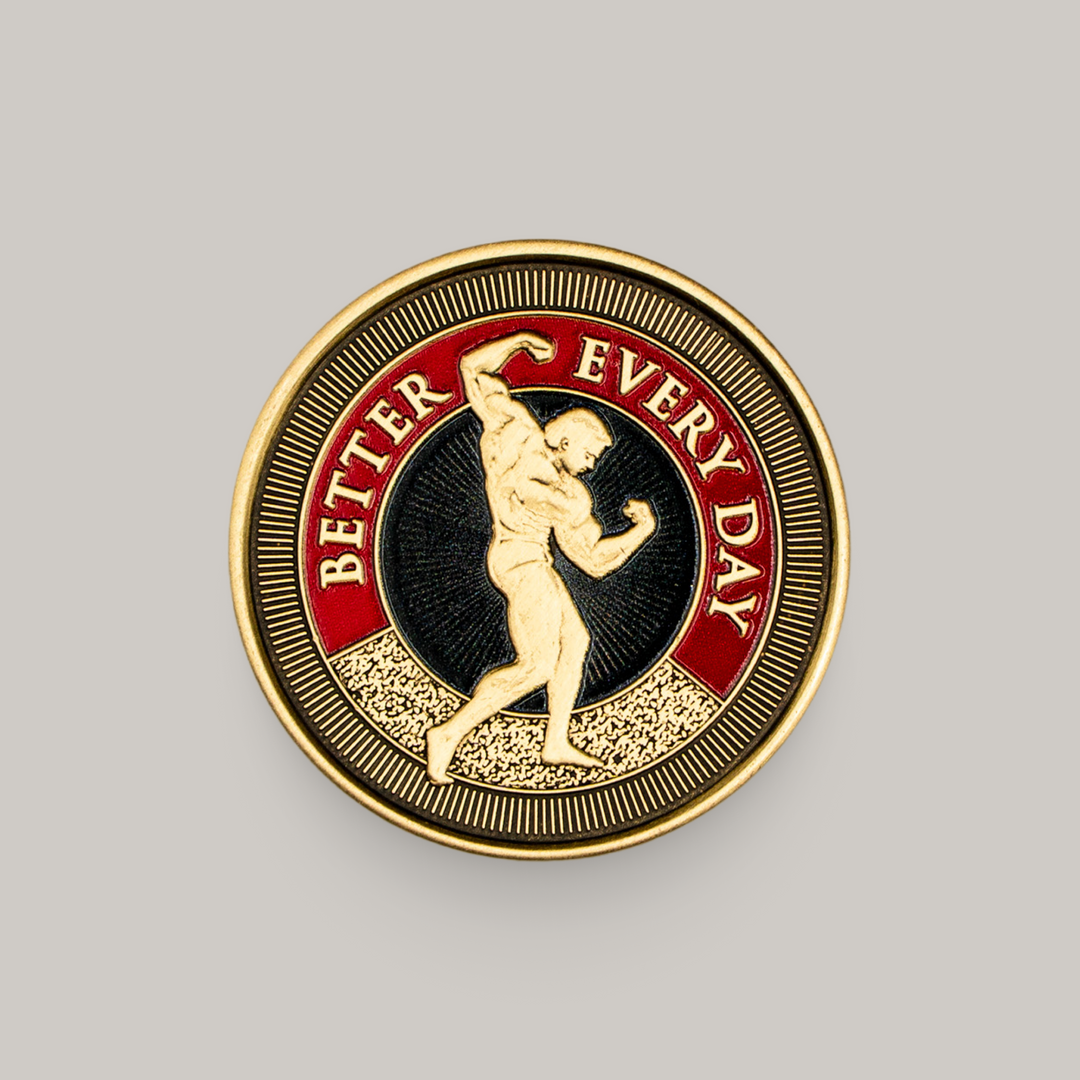
After: I try to leverage these small incremental wins in actions like cooking and improving meals over time, and things like that, but most importantly, I try to use this message for others. Most recently, my sister had brain surgery and is in recovery, and I've gifted her a "Better Every Day" coin and shirt. After the surgery, she couldn't move her right arm and leg and had a lot of trouble speaking, but every day, I see her improving and regaining motion. She can walk again, she was able to start lifting her arm last week, and her speech has greatly improved. I keep trying to support her and remind her to celebrate the small wins.
Editor’s Note: Our goal here was to help you see yourself in one of the inspirational people whose stories we shared this week.
If it worked, let us know. If you didn’t feel represented, reply to this email and let us know so we can find a success story that speaks to you. We know one, we guarantee it.
And that’s it for this week. Thank you for being part of the positive corner of the internet. Remember, you have endless opportunities to get better every day. Don’t overthink, do something, and repeat. Have a fantastic weekend!
-Arnold, Adam, and Daniel
Better Today
Take any of these tips from today’s email and put them into action:
1. Hours of Sitting Increases Death Risk 2.6x (But 60-Second Breaks Change Everything)
A 4-year study tracking nearly 8,000 adults using accelerometers found that sitting for 13+ hours per day increased mortality risk by 2.6 times, but breaking up sitting with 60 seconds of movement every 30 minutes significantly lowered that risk, even when total sitting time remained the same. The key isn't just sitting less; it's interrupting prolonged stretches to reactivate the large muscles that regulate blood sugar and fat metabolism.
2. Kettlebells, Barbells, or Bodyweight? How to Choose Your Home Gym Foundation
Four home gym setups ranging from $300 to $1,500 — organized by training preference (resistance bands, bodyweight, dumbbells, or barbell) — give you everything needed to build strength and conditioning without a commercial gym membership. Each tier includes specific equipment with exact prices, from a $75 kettlebell that handles swings, squats, rows, and presses to a complete squat stand and 260-pound plate set for barbell training.
3. How to Stop Quitting Before Results Show Up (A 4-Step Patience Framework)
Most people overestimate one-year progress and underestimate ten-year compounding, which leads to quitting during the "noisy" early phase when missed days and false starts feel like failure. The fix: pick a long-term direction (not a rigid plan), define a 12-week "boring win" habit that feels almost too easy, and score yourself on showing up rather than results.
—
Publisher: Arnold Schwarzenegger
Editors-in-chief: Adam Bornstein and Daniel Ketchell