


Does Icing After A Workout Really Cost You Muscle Growth?
A meta-analysis found that post-lift cold plunges slow muscle growth. If you're going to use ice to help with recovery, here's the timing window that protects your gains.
Welcome to the positive corner of the internet. We’re here to make your life healthier, happier, and less stressful. At the bottom of each email, we explain our editorial process, stance on AI, and partnership standards.
If you were forwarded this message, you can get the free daily email here.
Today’s Health Upgrade
Should you chill out after a workout?
The surprising health benefit of reading books
Adam’s Corner: Play the empty room
Reader Question
Use It Or Lose It: The Post-Workout Ice Bath
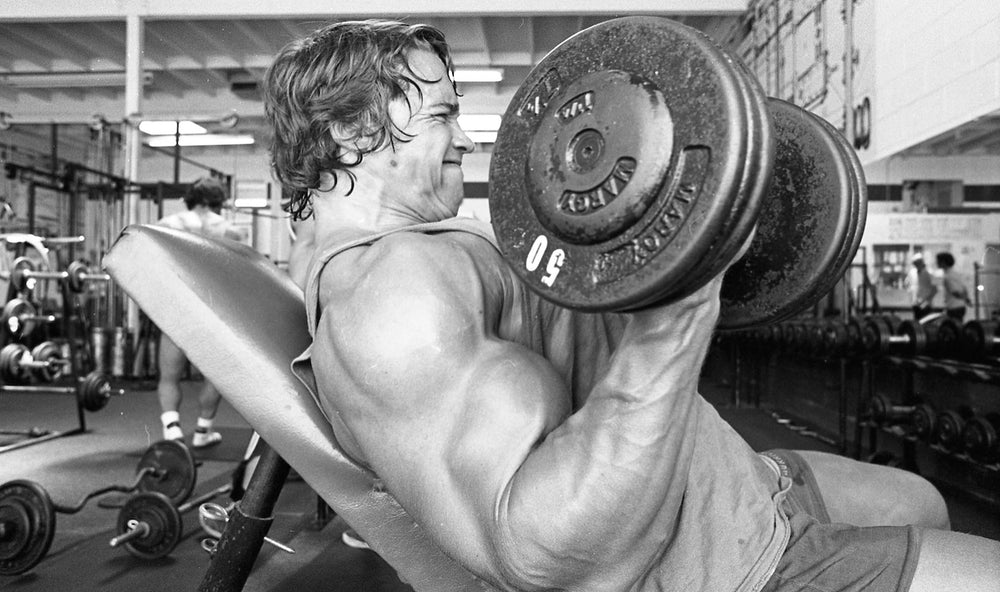
The practice: You finish your lift and then decide to climb straight into a cold plunge or ice bath to speed recovery. It's popular, seemingly proven (icing has been around forever, right?), and plenty of biohackers and “experts” swear this is the move for anyone serious about training.
Let's break it down: Cold water after a hard session does feel great, and it genuinely blunts soreness. The problem is what it's doing to the exact thing you lifted for.
If you're training to build muscle, jumping into a cold plunge right after lifting can shrink your results because the cold interrupts the growth signal your muscles send in the hour after a workout.
When you lift, you kick off a cascade of "build" signals that help your muscles grow. If you think of the muscle-building process as a light with a dimmer switch, applying the cold right after turns down the intensity.
In 2024, the first meta-analysis on the question pooled eight studies and found that cold plunging after resistance training blunts the muscle-growth response. A separate training study that tracked participants for weeks observed the same pattern at the muscle-fiber level, even as their maximal strength improved.
To be clear, this isn't all-or-nothing.
The effect hits muscle size harder than raw strength. Second, cold water doesn't seem to hurt endurance training as much.
If you're a runner, or you've got two sessions in one day, or you're deep in a season and just need to recover fast for tomorrow, a plunge can earn its keep.
The verdict: If you like it for recovery, keep the plunge but change the timing.
You don’t need ice baths or cold exposure. That’s the first thing you need to know. You will bounce back from your training — even the hardest workouts — just fine without it.
But it can reduce perceived soreness, and that can help you recover. Plus, some people just love it.
So, the ice bath isn't inherently bad. However, if you’re training hard to build muscle, cold exposure within 6 hours of your lift doesn’t support your main goal.
If you want, do it much later, or do it on off days to get the recovery and mood boost without stepping on your gains.
On Our Radar
Do Readers Live Longer?
Imagine two people. One keeps a book on their side table and reads before bed. The other decides to scroll social media.
Most people would say the book is a better use of time. But it might be that it’s not just spending less time scrolling that’s good for you. Reading itself might have more benefits than you realize.
Yale researchers tracked more than 3,600 adults for over a decade, and those who read books were about 20% less likely to die during the study than those who didn't.
Those results remained true even after accounting for variables associated with mortality, such as wealth, education, and health.
The most interesting part was how little reading it took to gain a survival advantage.
As little as half an hour a day was enough to separate readers from non-readers, and the more people read, the wider the gap grew.
What they read mattered too: books were more impactful than newspapers and magazines.
Admittedly, with this type of study, the “why” tends to be unclear. It’s an observational study, so we don’t have cause-and-effect. We don’t even know if one thing leads to another, just that there is a connection that’s hard to deny.
Readers may differ in ways no survey fully captures, and the group skewed older. But the difference, even when accounting for those mortality adjustments, is the part that made the researchers look twice. Advantages like this usually shrink once you account for the fact that healthier, better-off people tend to do more of everything.
The researchers' best guess is that a book asks more of you: you hold a plot, track people, connect one idea to the next, and that deeper engagement is what seems to do the work.
And, reading is one of the few kinds of mental training that feels like rest. Thirty minutes with a book isn't time stolen from winding down; it might be part of it.
So tonight, when your hand drifts toward the phone, reach past it. Take in a few chapters of something with a spine. Just to give your mind something better to chew on than the feed.
Adam’s Corner
Play the Empty Room
It was late, and I was doing the thing I just told you not to do: Scrolling with no purpose, thumb moving faster than my brain.
But then something made me stop, put down the phone, and write this column.
A musician named Zack Telander had a show coming up in St. Louis. I don’t live in St. Louis. But here’s why I couldn’t stop watching and had to start writing.
He sold only four tickets. His booking agent gave him the numbers straight, then gave him a way out: push the date, buy more time to sell, or show up and play for four people.
Most people in that situation would probably take the exit. It would be easy to reschedule, come up with any excuse, or say nothing at all and act like it never happened. With only 4 tickets sold, the risk of a reschedule and angry fans didn’t exist. Nobody has to know the room was empty if nobody ever watches it happen.
Telander didn't take it.
He told his fans that sales were bad, and he needed people to buy tickets. But if they didn’t, he said something that triggered something inside me.
“The truth is, I’ll play to nobody.”
Challenge Your Instincts
Telander could have buried the whole thing the way most of us bury what isn’t working.
Instead, he stood in the failure and let people watch it happen in real time.
Most of us aren’t staring down an empty venue. But we’ve all done the math on some version of that room. The job application we don’t mention in case nothing comes of it. The program we start telling no one, so no one has to know if we quit. The number on the scale we stop discussing the second it stops moving.
We don’t cancel the show. We just don’t tell anyone we booked the venue.
That’s how we are wired. Our instincts are to hide the thing we don’t want others to see. Bury the evidence. Cover up the scars. Do away with the flaws that make us human.
And yet, Telander went the other direction. He openly shared the moment of embarrassment.
He probably was able to do so because he said he’d play the room for free.
There’s something special about “doing it for the love of the game.” Not the applause. Not the numbers. The work itself.
It sounds cliché and almost cheesy. But when it’s authentic, there’s a magic to it.
Psychologists who study motivation have found that the effort that survives disappointment is the effort that was never meant to rent itself out to an audience in the first place.
Applause matters. But if applause is the only reason you show up, silence eventually makes the decision for you.
The Reward Nobody Advertises
Which brings up the real question: What’s happening in your own life, right now, in the room you’ve already decided isn’t worth walking into?
Maybe it’s the workout you started and stopped telling people about, so nobody has to know if you quit again.
Maybe it’s the idea sitting in your Notes app, unsent, because a good idea nobody hears is still technically a good idea.
Maybe it’s the conversation you keep rehearsing in the shower and never having, because saying it out loud makes it real in a way that thinking it never does.
Every one of those is the same move. Cancel the show, and never tell anyone you booked the venue.
Here’s what almost nobody tells you about playing the empty room: it usually doesn’t get you what you think it will.
Telander didn’t ask for four hundred people. He asked for whoever was willing to show up, and said he’d play regardless. That’s not a formula for a packed venue. It’s a formula for something else.
Proof.
Proof that you’re the kind of person who shows up even when the outcome has already been decided against you. Proof that you can be embarrassed and still function. Proof that your effort was never actually contingent on anyone clapping for it in the first place.
That kind of proof compounds. Show up once when nobody’s watching, and the next empty room gets a little less frightening.
Show up enough times, and you stop needing the room to be full at all because you’ve already gotten what you came for.
This is training long before there’s a stage. It’s the 5 a.m. set with nobody spotting you. The run you finish in the rain because it was on the calendar, not because anyone will ask how it went. The habit you keep long after the compliments stop, because the compliments were never the engine. They were just exhaust.
The empty room isn’t a punishment. It’s the only place that tells you the truth about why you’re really doing this.
I wrote this column, and had no idea what happened with the St. Louis show. I hoped more people would buy tickets. But whether it was 4 attendees or a packed house of 400, Telander already decided to show up.
And then, before pressing publish, I decided to take a look at his Instagram feed. Because if I’m being honest, I couldn’t let this go. And I knew what I thought I would find out. But I was wrong.
Turns out, the venue canceled the event.
Somewhere right now, you’ve got a room like that. Waiting on you to decide if you’ll play it before you know who’s coming, or keep waiting for permission that may never show up.
That’s the show that actually counts. And it’s the one — no matter how hard — you don’t want to cancel.
Next time you’re staring down a room that might stay empty, don’t ask if they’ll show up. Just make sure you will. -AB
-Adam Bornstein is the co-founder and co-editor-in-chief of Arnold’s Pump Club
Better Today
Take any of these tips from today’s email and put them into action:
1. Ice Baths Can Cost You Muscle If You Time Them Wrong
Cold exposure soon after a resistance-training session blunts the muscle-growth response, though it doesn't erase gains entirely and leaves endurance adaptations unaffected.
Why it matters: Cold turns down the growth signal your muscles send after a workout. That’s not to say cold doesn’t dull the perception of soreness, but timing matters depending on your goals.
Try this: If muscle gain is your primary goal and you're training for it, wait at least a few hours after lifting before you cold plunge.
2. People Who Read Books Live Nearly 2 Years Longer
Adults who read books had roughly a 20% lower risk of death over 12 years than non-readers, even after accounting for wealth, education, and health status.
Why it matters: The study can’t prove causation. But in terms of behaviors that have no risk, lots of potential upside, and offer many other benefits, you’ll be hard-pressed to find many better options.
Try this: Swap 30 minutes of scrolling tonight for a few chapters instead.
3. Why Hiding Your Failures Does More Harm Than You Imagine
Effort that was never dependent on approval or an audience tends to survive setbacks better, because quitting was never contingent on anyone noticing in the first place.
Why it matters: Hiding your unfinished goals makes it easier to quietly quit them. Looking fear of failure in the eye and still pushing towards your goals has many benefits, even in the worst-case scenarios.
Try this: Tell one person about the thing you've been doing privately. Commit publicly to your goals. And pursue them passionately, even in the face of frustration or (temporary) failure.
The Positive Corner of The Internet
About Arnold’s Pump Club Editorial Standards
We do things a bit differently here, starting with transparency.
The Content: All APC emails are researched, written, and fact-checked by the APC editors (see bottom of the email), with written contributions from Arnold (noted with “Arnold’s Corner”). Links take you to original studies (not second-hand sources).
Does AI play a role? Not for the primary content, but it is used in two ways. The main items are original content written by the APC team. The summaries at the end are AI-generated based on the human-written content above. We also use an AI tool to review our interpretations of the research and ensure scientific accuracy. We don’t assume AI is right, but we use technology to hold ourselves accountable.
Yes, we have partners (all clearly noted by “Together With”). Why? Because it allows us to keep the APC emails free. We first test products, and then reach out to potential partners who offer ways to help you improve every day. The bar is set high, and to date, we have turned down millions in ad deals. (Example: we will not partner with any non-certified supplements or those without evidence in human trials). If we won’t buy the product, we won’t recommend it to you. And if there’s no evidence it works, then there’s no place for it here.
—
Publisher: Arnold Schwarzenegger
Editors-in-chief: Adam Bornstein and Daniel Ketchell