


Is Your Diet Costing You Muscle?
Cutting calories means losing weight, but not all of it is fat. A review of 34 randomized trials identified how to prevent nearly half the muscle mass you'd lose.
Welcome to the positive corner of the internet. We’re here to make your life healthier, happier, and less stressful. At the bottom of each email, we explain our editorial process, stance on AI, and partnership standards.
If you were forwarded this message, you can get the free daily email here.
Today’s Health Upgrade
Are you unintentionally losing muscle?
Why your work breaks are flawed
The slip vs. the spiral
Instant Health Boost
Why Dieting Causes You To Lose Muscle
Cutting calories gets all the attention when you want to lose weight. And many have suggested that diet deserves all the credit for fat loss.
But a new study highlights why focusing only on what you eat paints an incomplete picture of how your body changes when you reduce how much you eat.
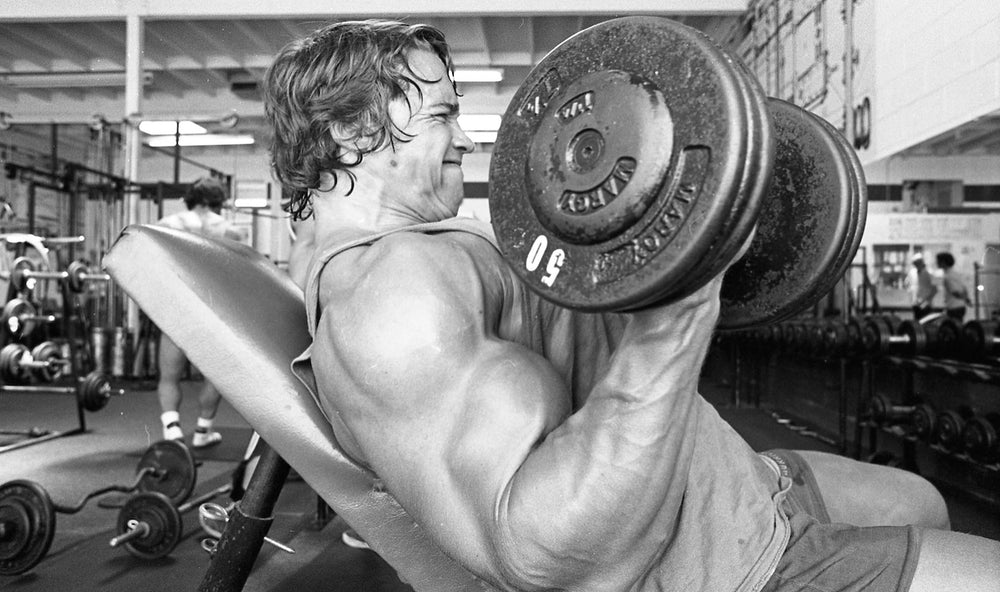
Adding exercise while you diet — especially lifting weights — cuts the lean mass you'd lose by nearly half.
Researchers reviewed 34 randomized trials comparing people who cut calories only to those who cut calories and trained.
The exercisers retained about 2 pounds of lean mass, offsetting roughly 46 percent of what they'd otherwise have lost.
When the team ranked training styles, a lifting-and-cardio mix came out on top, with resistance training next. Cardio alone trended in the right direction. The takeaway isn't that one style wins. It's that doing something beats doing nothing, and the something is best if it includes added resistance, like a barbell, dumbbell, kettlebell, cable, or machine.
When you eat less than you burn, you lose weight. But it's not all fat, unless you do something about it.
Otherwise, your body pulls fuel from its own tissue. Muscle is expensive to maintain, so if you're not using it, your body sees little reason to keep it.
Training changes that message: load a muscle, and you signal it still has a job, so your body keeps it and burns fat instead. That's the likeliest explanation for what these researchers found.
And holding onto that lean mass won't just change how you look when you're done cutting calories — it also supports how your body functions, processes food, and performs.
If you're looking to lose some weight, diet does the heavy lifting. But that doesn't mean you should ditch the heavy lifting. Keep training, and more of what you lose will be fat instead of muscle.
On Our Radar
Are You Taking Work Breaks The Right Way?
You already know you should take breaks. Here's the question few people stop to ask:
Does how you spend your breaks from work influence the benefits you see after your downtime?
Researchers examined this question by having participants in a study take the exact same break — four minutes of video, then five minutes of rest — before tackling a run of mental tasks. But there was one little wrinkle.
One time, the clip was a funny bit from a top comedian. The other time, it was a weaker one that barely landed.
After the funny clip, people responded faster on an attention task, showed increased blood flow to the regions involved in focus and working memory while they worked, and rated their mood higher.
Remember, it was the exact same break, but a very different result.
It’s worth mentioning this was a small study, so it’s not a hard rule. But the study’s outcome is worth testing on the breaks you build into your day.
You might treat your downtime without much thought. Maybe you scroll social media or just zone out. But there’s evidence that a break isn't just a pause. It's an input.
When you give your mind something you enjoy, it could help recharge even more and make you sharper.
Next time you step away before something demanding, don't just stop working; do something you genuinely like. You don’t need a stopwatch, but the study suggests at least four minutes of something that makes you laugh could do the trick. It won’t cost you much, and the upside is likely worth it.
Better Questions, Better Solutions
It's Not the Slip. It's the Spiral.
You had the cookie. Fine.
But then you have another, and another. You start to freak out. But if you understand how nutrition works, there’s no need to panic. One meal or one day doesn’t matter in the big picture. It’s what you do the majority of the time that determines your outcomes.
However, even if you know that (and if you didn’t, you do now), a voice shows up. It tells you, “The day's already blown, might as well finish the sleeve.” You listen to the voice and polish off the whole thing.
Ok, so maybe it’s not the best reaction, but it’s till not the end of the world or something you can’t overcome. You’re good until the next day rolls around and that same voice returns, “You really blew yesterday; the rest of the week is toast. Might as well enjoy!”
That voice has ended more diets than any sleeve of cookies ever has.
Old question: How do I make sure I never slip up?
Better question: How fast can I get back on track once I do?
Diets do two things incredibly well: they push the limits of how much you need to restrict, and they instill the belief that if you're not perfect, then you've failed.
But perfection isn't what keeps people healthy. And it's not what's necessary for success in any area of life.
What might matter more is how you respond when things don't go as planned.
In a classic experiment, researchers gave college students a rich milkshake, then offered them ice cream.
You'd expect the ones who normally watched what they ate to eat less afterward. Instead, they ate about 66% more than when they'd had no milkshake at all, while everyone else ate roughly half as much, exactly as you'd predict.
The researchers' explanation: once the day felt "blown," the guardrails came down. Herman and his longtime collaborator Janet Polivy eventually gave it a name — “the what-the-hell effect.” I already blew it, so why stop now?
It's a small, decades-old lab study, and later work suggests people compensate better in real life than they do surrounded by free ice cream. But the pattern is familiar to anyone who's ever written off a day, week, or month.
So it’s essential to know that perfection isn't what keeps people healthy. And it’s not what’s necessary for success in any area of life.
A better indicator of your success is your ability to bounce back and recover from when things don’t go as planned.
The damage almost never lives in the slip. It lives in the story you tell yourself about the slip, and the behaviors that follow.
So change the story before you need it.
Decide, right now, what your next move is after any slip. “Once you’ve had a few too many cookies, I’ll go for a walk to interrupt the behavior or call a friend for support.” It can be anything that helps you regroup.
You're not planning to fail. You're deciding in advance that one bad rep won't cost you the whole set.
The people who stay consistent aren't the ones who never fall off. They're the ones who get back without stressing what happened.
Take any of these tips from today’s email and put them into action:
1. Diet Does the Heavy Lifting. But Don't Skip the Heavy Lifting.
Dieting alone costs you muscle along with fat, but exercising while you diet prevents nearly half of that loss. A 2026 meta-analysis of 34 randomized controlled trials found that people who trained while cutting calories retained about 2 pounds more fat-free mass than dieters who didn't, offsetting nearly 50% of the loss.
Why it matters: Cutting calories makes you lose fat and muscle. Training keeps most of the muscle. Muscle is what makes you look and feel better after the weight comes off.
Try this: Keep lifting while you're eating less. At least two or three days a week, pushing the intensity within 1-3 reps of failure is enough to see the results you want.
2. Same Break, Different Result: How To Make The Most Of Your Downtime
What you do during a break appears to change what the break does for you. In one study, watching a four-minute comedic video before a mental task produced significantly better attention scores than a control video of the same length, along with better self-reported mood.
Why it matters: A break works better when you do something you actually enjoy. People who watched something funny came back sharper than people who didn't.
Try this: Before your hardest task today, take four minutes and watch something that makes you laugh.
3. The Damage Isn't in the Slip. It's in What You Tell Yourself After.
One slip doesn't ruin a diet — the story you tell yourself about the slip does. It’s a pattern researchers named the "what-the-hell effect" after a 1975 experiment in which chronic dieters given a milkshake preload went on to eat about 66% more ice cream than dieters given no milkshake, while non-dieters ate roughly 47% less.
Why it matters: One mistake rarely ruins anyone. The story after it does. Most people quit after a bad day, not after a bad bite.
Try this: Decide right now what you'll do after your next slip. Go for a walk. Call a friend. Pick one. Have a plan. The mistakes aren’t a big deal. It’s the spiral that does most of the damage.
The Positive Corner of The Internet
About Arnold’s Pump Club Editorial Standards
We do things a bit differently here, starting with transparency.
The Content: All APC emails are researched, written, and fact-checked by the APC editors (see bottom of the email), with written contributions from Arnold (noted with “Arnold’s Corner”). Links take you to original studies (not second-hand sources).
Does AI play a role? Not for the primary content, but it is used in two ways. The main items are original content written by the APC team. The summaries at the end are AI-generated based on the human-written content above. We also use an AI tool to review our interpretations of the research and ensure scientific accuracy. We don’t assume AI is right, but we use technology to hold ourselves accountable.
Yes, we have partners (all clearly noted by “Together With”). Why? Because it allows us to keep the APC emails free. We first test products, and then reach out to potential partners who offer ways to help you improve every day. The bar is set high, and to date, we have turned down millions in ad deals. (Example: we will not partner with any non-certified supplements or those without evidence in human trials). If we won’t buy the product, we won’t recommend it to you. And if there’s no evidence it works, then there’s no place for it here.
—
Publisher: Arnold Schwarzenegger
Editors-in-chief: Adam Bornstein and Daniel Ketchell