


Flexible People Might Live Longer. Stretching Isn't the Only Way to Get There.
Researchers scored flexibility across 13 years and 20 movements. The least flexible participants had a higher risk of death. Here's what the results mean.
Welcome to the positive corner of the internet. We’re here to make your life healthier, happier, and less stressful. At the bottom of each email, we explain our editorial process, stance on AI, and partnership standards.
If you were forwarded this message, you can get the free daily email here.
Today’s Health Upgrade
Flexibility: The other longevity metric
Muscle-building kryptonite
Weekly wisdom
Does a bigger breakfast burn more calories?
Longevity
Number You Won’t Forget: 1.87
You've probably been sold flexibility as injury insurance. Touch your toes before the workout so you don't pull something.
Last week we discussed why the connection is misleading. But then we noticed something in your replies: Because stretching doesn’t necessarily prevent injury, you assumed that flexibility doesn’t matter, but that’s not the takeaway.
Scientists found that people who were the least flexible were nearly twice as likely to die over the next 13 years as those who were the most flexible, even after accounting for age, weight, and overall health.
Researchers scored the participants on a 20-movement test across seven joints. The least flexible men were associated with a 1.87-fold higher risk of dying than the most flexible participants.
It was enough for the scientists to suggest that flexibility is another performance marker — alongside strength, aerobic fitness, and balance — as a basic physical quality that correlates with how long you live.
Like many other longevity studies, the research was observational. It shows flexible people lived longer, not that stretching bought them the extra years. Flexibility might just be a marker of a body that stayed active and uninjured.
Or, it’s possible that the more flexible just happen to be strong and healthy, and that’s the association many people overlook. Because stretching is not the only way to improve flexibility; so is pumping iron.
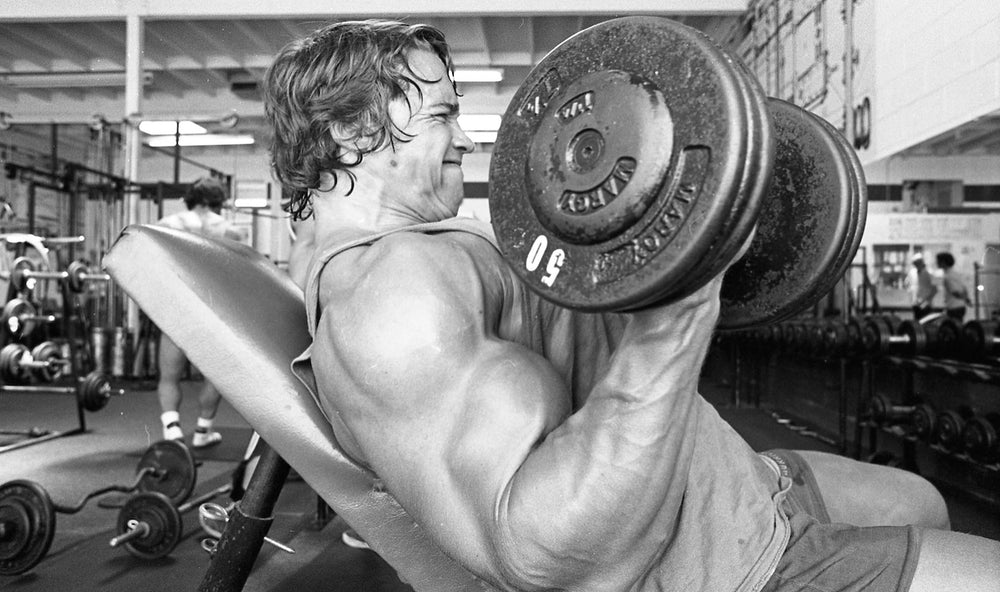
A review of 11 trials found that strength training through a full range of motion improved flexibility about as well as stretching did.
So the deep squat, the full-stretch row, the hamstring curl taken all the way out — those count.
Once you understand that connection, you can see how these longevity metrics all tie together.
Strong people live longer. Lean people live longer. Flexible people with great balance live longer. And all of those capabilities are directly improved by resistance training.
You can stretch your way to more flexibility. But that approach only checks one box. Or, you can lift weights with great form, and improve everything all at once.
Together With Eight Sleep
Why Protein Works Less When You Don't Sleep
You know the week: A deadline, a sick kid, a flight that got moved. Life gets chaotic, so something has to give. You still train. You still eat well and hit your protein. But sleep is the thing you decide to pay back later because it feels like the cheapest bill on the table.
However, scientists found that when you don’t get enough sleep, your body might have a harder time building muscle.
Researchers studied young adults in a sleep lab and tested different sleep scenarios, ranging from 8 hours to just 4 hours. Everyone ate the same food, portioned by body weight, with a specific focus on getting enough protein to support recovery and muscle growth.
Those who slept only 4 hours per night built new muscle protein 19% slower than men who slept normally.
And it wasn’t just that study. In a different lab, using a different method, scientists asked how your muscles react to the food you give them after a night of no sleep at all. Much like the other study, muscles responded 18 percent less when sleep-deprived.
This is what scientists call anabolic resistance. The protein reaches your muscles, but the machinery that helps you build and recover responds less.
And in another study, when researchers compared 5.5 hours of sleep to 8.5 hours in people who were cutting calories, the sleep-deprived participants lost 60% more lean mass, despite being on the same diet and seeing the same overall weight loss.
In other words, sleep deprivation led to greater muscle loss and less overall fat loss.
The lesson: don’t view sleep as competing with training or diet. They all work together. And the more you sacrifice sleep, the more your body starts to work against you.
The standard fix — wind-down routine, cooler room, screens off at least an hour before bed — all can make a real difference. But for some people, getting better rest still feels like a tall task.
The Pod by Eight Sleep is the version that does the work for you and works with your biology to give you better rest every night. It's a cover for the bed you already own. No new mattress, nothing strapped to your wrist.
It reads your sleep from underneath you and adjusts its own temperature all night, each side of the bed on its own. You don't manage it. It manages you.
And then the Pod does the rest. According to published research, that means getting up to 34% more deep sleep.
Unfortunately, the bed can’t determine when you go to bed and wake up. If you're only getting five hours of sleep, work on fixing that. But when you are in bed, the Eight Sleep will make your rest meaningfully better. And that's the part you can actually control.
Right now, as a Pump Club reader, you can get up to $350 OFF when you use the code PUMPCLUB. And you get 30 days to try it at home and return it if you don't love it.
And if you have an HSA or FSA, the Pod may qualify as a medical expense through Truemed, and qualified customers save about 30% on average. Check your eligibility here.
Mindset
Weekly Wisdom
How we spend our days is, of course, how we spend our lives.
"I just need to get through this week."
We’ve all said it before. It's such an ordinary sentence that nobody flinches when it lands. Your coworker says it back. Your spouse nods. It's small talk.
It’s not a big deal. Until it is.
Sometimes words are just a way to connect. But other times, you really mean what you say. You want those 7 days gone.
But then put it in context.
If things go well, you get about 4,000 weeks. And each time you want to “get through the week,” you’re requesting a refund on one of them.
We do this all day. Ugh, Monday. Almost Friday. Once things calm down. Every one of those is a small, cheerful vote to fast-forward a piece of your own life, cast so casually that it doesn't register as a choice at all.
Dillard wasn't writing about productivity. She was saying the plainest thing there is:
Your life isn't somewhere ahead of you. It's the day you're standing in.
You already know that. However, most of us don't want to think about it, because if it's true, then today counts, and today is usually pretty ordinary.
That's the trap. We think ordinary days can be skipped or wished away. We instead focus on the outcomes we dream about. Better job, better body, less chaos.
Get there, and then we'll be present. So we wait. And the waiting eats away at the years and leaves us missing out on so much.
Attention isn't a reward you hand out once life improves. It's what makes life feel like anything at all.
Think about the last vacation you were present for. You remember it. Now try to remember the six weeks you white-knuckled to get there. Blank. Same days on the calendar. Only one block felt like you were living.
Turn wisdom into action
Find something you'd normally rush through and don't. One meal without your phone in your hand. One walk without a podcast. One conversation where you're not drafting your reply while the other person is still talking.
You're not fixing your life. You're collecting evidence that an hour you attend is worth it, even if it feels like nothing.
Fact or Fiction
Does A Big Breakfast Burn More Calories?
You've heard the pitch: Eat like a king at breakfast, a prince at lunch, and a pauper at dinner.
The idea is that you should front-load your calories because the ones you eat in the morning "count less" than the ones at night. The reasons range from how your metabolism works to calories you eat at night turning to fat when you sleep.
Rather than take it at face value, scientists designed a study to test it properly.
Researchers found that eating your biggest meal in the morning doesn’t necessarily burn extra calories or change your metabolism. However, it does do something that could lead to more dramatic weight loss.
Scientists had participants test out two different 4-week diets, each spaced a few weeks apart. Same food, same calories, same everything. The only thing that differed was when people ate.
One diet had people consume 45% of their calories at breakfast. The other had people eat 45% of their calories at dinner. And everything was completely controlled. Each meal was provided by the scientists to ensure accuracy, and total calories burned were measured using doubly labeled water, the gold standard.
Despite decades of claims, the weight loss was essentially identical: about 3.3 kg (about 7 pounds). And it wasn’t just the scale. When they looked at metabolism, the total energy burned was the same.
But here’s what we found interesting: a four-week story could be hiding something bigger when you expand a diet beyond a month.
During big-breakfast weeks, people reported less hunger and a reduced desire to eat throughout the day.
And it’s likely because of how digestion works. A large morning meal empties from your stomach more slowly, taking about six hours, compared with about four and a half hours for the small one.
And that triggered hormonal changes that influence hunger. Specifically, the bigger breakfast suppressed the hunger hormone ghrelin while boosting the fullness hormones.
It’s hard to say whether it leads to more weight loss, since it wasn’t tested. But other studies with longer time frames have reported similar findings.
If calories are the same, eating more or less in the morning or at night will not lead to more or less fat loss.
However, if you let people eat as they please, those who eat more in the morning might naturally end up eating less as the day goes on and lose more weight, because a big morning meal can act as an appetite suppressant, reducing total daily calories.
If mornings are when you're genuinely not hungry, don't force a feast. But if your pattern is grazing all afternoon and standing in front of the open fridge at 9 p.m., try shifting more of your food earlier and see what happens to the evening cravings. Not because it torches more calories. Because it might leave you wanting less.
And that’s it for this week. Thanks for being a part of the positive corner of the internet. And remember: don’t wait to make a change. Take action on any goal, don’t quit in the hard moments, and the results will come. Have a fantastic weekend!
-Arnold, Adam, and Daniel
Better Today
Take any of these tips from today’s email and put them into action:
1. Flexibility Is Linked To Longevity. But You Don’t Need To Stretch to Improve
Flexibility tracks with how long you live. Among middle-aged men, those in the bottom of the flexibility distribution had 1.87 times the mortality risk of those at the top over an average of 13 years, even after adjusting for age, BMI, and health status.
Why it matters: Flexibility belongs alongside other metrics, like strength and balance, as a way to assess fitness or longevity. But you don’t need to stretch to see the benefits. Full-range-of-motion resistance training can also improve flexibility, according to recent research.
Try this: Think “full stretch, full flex” on every single rep of every exercise. Full range counts as a way to improve your flexibility.
2. Four Hours of Sleep Cut Muscle Growth 19% (Despite Eating The Same Amount of Protein)
Short sleep blunts your body's ability to turn protein into muscle. When participants were sleep-deprived, four hours in bed reduced protein synthesis in healthy young men who were eating identical diets with enough protein.
Why it matters: The protein you eat still shows up. Your muscles just don't listen as well.
Try this: Protect and prioritize your sleep. Aim for a minimum of 7 hours per night.
3. You Get About 4,000 Weeks. Stop Asking for Refunds.
Annie Dillard's quote — “How we spend our days is, of course, how we spend our lives” — means your life isn't the future you're waiting for; it's the ordinary day you're standing in, and the days you wish away are subtracted from the same roughly 4,000 weeks as the ones you remember.
Why it matters: You remember the days you paid attention. But don’t just pay attention to “the big days.” They all have value.
Try this: Be more present at any singular moment. It can be a meal or a conversation, but don’t let distraction invade your time.
4. Does a Big Breakfast Burn More Calories? No, But It Does Offer A Different Benefit
Meal timing doesn't change how many calories you burn. In a randomized crossover trial, 30 adults ate the same number of calories, loaded at breakfast (45%) or at dinner (45%) for four weeks each, and lost the same amount of weight, about 3.3 kg. However, there was a potentially important benefit: the morning-loaded diet made people less hungry through the day.
Why it matters: A bigger breakfast can make you less hungry all day. That's the real win. But if you’re not hungry in the morning, you don’t have to force feed extra food.
The Positive Corner of The Internet
About Arnold’s Pump Club Editorial Standards
We do things a bit differently here, starting with transparency.
The Content: All APC emails are researched, written, and fact-checked by the APC editors (see bottom of the email), with written contributions from Arnold (noted with “Arnold’s Corner”). Links take you to original studies (not second-hand sources).
Does AI play a role? Not for the primary content, but it is used in two ways. The main items are original content written by the APC team. The summaries at the end are AI-generated based on the human-written content above. We also use an AI tool to review our interpretations of the research and ensure scientific accuracy. We don’t assume AI is right, but we use technology to hold ourselves accountable.
Yes, we have partners (all clearly noted by “Together With”). Why? Because it allows us to keep the APC emails free. We first test products, and then reach out to potential partners who offer ways to help you improve every day. The bar is set high, and to date, we have turned down millions in ad deals. (Example: we will not partner with any non-certified supplements or those without evidence in human trials). If we won’t buy the product, we won’t recommend it to you. And if there’s no evidence it works, then there’s no place for it here.
—
Publisher: Arnold Schwarzenegger
Editors-in-chief: Adam Bornstein and Daniel Ketchell