


Muscle Memory: DNA Evidence Shows How To Make Fitness Come Back Faster
Muscle biopsies reveal epigenetic changes that persist after long breaks in activity, and the type of training that helps you bounce back quickly after stretches of inactivity.
Welcome to the positive corner of the internet. We’re here to make your life healthier, happier, and less stressful. At the bottom of each email, we explain our editorial process, stance on AI, and partnership standards.
If you were forwarded this message, you can get the free daily email here.
Today’s Health Upgrade
Number you won’t forget
The skill that gets better with age
Weekly wisdom
What you need to know about muscle memory
Mindset
Number You Won’t Forget: 5 Minutes
Optimism Is a Skill, Not a Personality Type
Most people treat optimism the way they treat height: fixed at birth, distributed unfairly, not worth arguing with. Either you're wired to see the glass half full, or you spend a lot of time explaining that you're not a pessimist, you're just being realistic.
The research doesn't agree.
Spending five minutes a day writing or visualizing your best possible future self is linked to meaningful increases in optimism, and the gains appear to be genuine shifts in how you think, not just temporary mood boosts.
A meta-analysis analyzed 29 studies involving nearly 3,000 participants and found that a practice called "best possible self" (BPS) imagery consistently improved well-being, optimism, and positive affect. Think of it less like a personality transplant and more like building a muscle: small gains, reliably earned.
One of the foundational studies behind this research had participants spend five minutes a day for two weeks imagining themselves at their best across three domains: personal, relational, and professional. Compared to a control group imagining their daily activities, the “best possible self” group showed significantly higher optimism.
The researchers tested whether the effect was just people feeling good in the moment and calling it optimism. It wasn't. The gains held after controlling for mood changes, which means something more durable was happening. A separate meta-analysis confirmed the downstream effects of a more positive mood, reduced negative affect, and lower rates of depression and pain.
The three-domain structure appears to be part of why it works. Vaguely imagining "things going well" isn't enough. Breaking it across personal, relational, and professional life gives your brain something specific to build toward, a direction rather than a wish.
If you want to become a more optimistic person, start with five minutes. Write — or simply close your eyes and imagine — your life at its best across each domain. What does the best version of your personal life look like? Your relationships? Your work?
You're not predicting the future. You're practicing a direction. That distinction is what the research keeps confirming matters most.
Together With Babbel
One Habit That Slows Cognitive Aging (And Works Better As You Age)
Most people assume the window for learning a new language closes somewhere around childhood, and that adults are simply fighting a battle biology has already decided. The research on acquisition speed mostly agrees with that.
What it doesn't tell you is that the cognitive payoff might be running in the opposite direction.
A meta-analysis of 170 studies found that bilingualism was associated with faster and more accurate performance on executive function tasks. Not only did learning a language supercharge brain function, but when you learn a language makes a difference. And earlier is not necessarily better.
Researchers analyzed 170 published and unpublished studies comparing bilinguals and monolinguals across a range of cognitive tasks. Bilinguals outperformed monolinguals on four of seven executive function categories. The age difference is what stood out to us.
The advantage was more than three times as large in adults over 50 as in those in their 20s.
The likely explanation involves cognitive reserve, your brain's capacity to remain functional as age-related changes accumulate.
Managing two languages appears to exercise the same mental systems that decline most visibly over time: filtering distractions, staying on task, and switching fluidly between competing demands. It's cross-training for attention, and the data suggest your brain needs that workout more as you get older.
If you want to learn a language, it’s never too late to start, and it might be best if you’re in your 40s, 50s, or later.
So what's the most practical way to act on this?
Language learning is one of the clearest examples of the kind of effortful, dual-system cognitive work the research describes. Managing two languages exercises the exact mental systems the study tracked — filtering distractions, switching between competing demands, holding and retrieving information under pressure.
The catch most people hit is the timing.
Babbel was designed specifically for adult learners who don't have hours to spare, and Pump Club readers tell us it works better than anything else they've tried.
The program is built around 10-minute daily sessions: bite-sized lessons developed by more than 200 language experts, grammar and vocabulary guides you can actually use, native-speaker podcasts, and AI-powered speaking practice that puts you in real conversations, not just drills. Most learners report holding basic conversations within weeks, which, with Memorial Day weekend and a summer of travel ahead, is better timing than it sounds.
APC readers can get Babbel Lifetime access for $199 — 34% off, automatically applied, no code needed.
The research doesn't say it gets harder as you get older. It says the payoff gets bigger. Might as well get started.
Mindset
Weekly Wisdom
It is not the load that breaks you down, it's the way you carry it.
Most people think they're struggling with too much.
Too many responsibilities. Too many obligations pulling in too many directions. The job, the relationship, the body that keeps demanding attention, the inbox that never empties. The math feels simple: less load, less suffering.
So they wait. For the project to end. For the kids to get older. For things to calm down. For life to finally hand them a lighter season.
It rarely comes. And when it does, a new weight usually takes the old one's place.
Here's what that waiting costs: it hands the problem to the wrong variable.
The load isn't what's breaking people down. It's the posture. The tension they carry into it. The resentment they layer on top of it. The avoidance that turns a manageable problem into a festering one.
Two people can face the same impossible week — same deadlines, same family stress, same body running on too little sleep — and have completely different outcomes. Not because one week was easier. Because one person's relationship to the weight was different.
This isn't a pep talk. It's closer to a physics lesson.
Rigidity fractures under load. Flexibility absorbs it.
When you carry stress with clenched teeth and white knuckles — treating every hard thing as a personal offense, as evidence that life is unfair, as something to power through rather than navigate — you amplify the damage. The weight doesn't change. Your ability to bear it does.
The Stoics understood this. Marcus Aurelius didn't live a light life. He ruled an empire at war, buried children, battled illness. What he returned to, again and again, was the distinction between what happens and how you meet it. Events are largely neutral. Suffering is constructed in the meeting.
That's not a philosophical abstraction. It's a practical edge.
Self-awareness about how you're carrying something — with avoidance, with resentment, with breath held — creates the opening to carry it differently. Not lighter. Differently.
Turn Wisdom Into Action
Pick one thing you're currently carrying with tension. Not necessarily the hardest thing in your life. Just one thing you notice you're bracing against.
Ask yourself: Am I solving this, or am I just suffering through it?
If the answer is the latter, identify one small adjustment to your posture toward it. Ask for help. Break it into a smaller piece. Name the emotion underneath the stress rather than burying it in productivity. You don't have to carry less. Just carry it better.
The load is what it is. The rest is yours.
Fitness
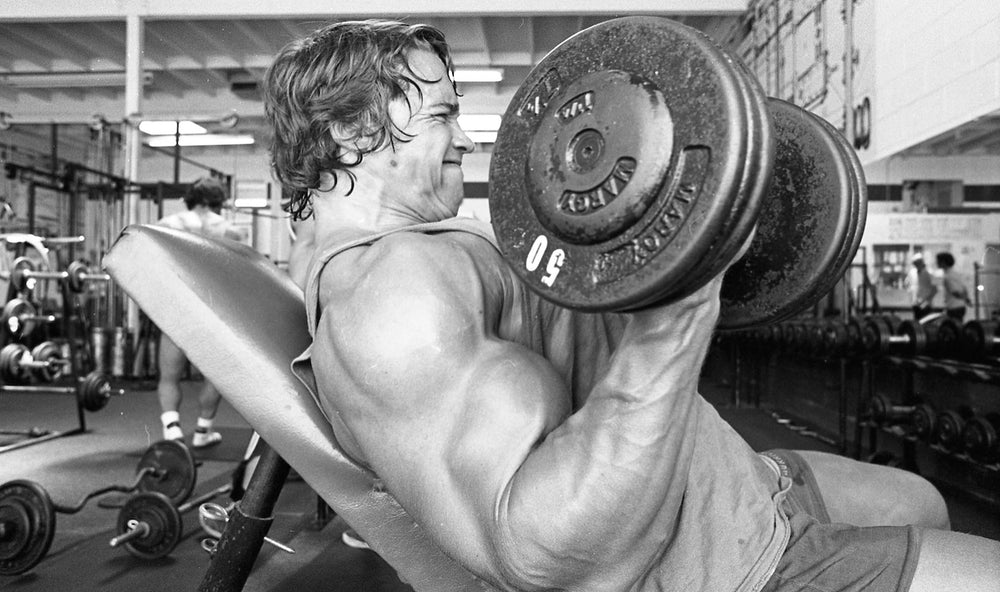
Your Muscles Remember More Than You Think
Some workouts feel like they disappear the moment life pulls you away. But research suggests your muscles might be keeping score in ways you can't see, even months after you stop training.
Scientists found that high-intensity training leaves a "memory" in your muscles at the molecular level, one that sticks around for months, even as your fitness fades.
A team of researchers tested the theory by putting adults through a clever design. For 2 months, participants followed a high-intensity interval training program, then did nothing for 3 full months, and then repeated the exact same 2-month HIIT program. They took muscle biopsies at every stage to see what changed underneath the surface.
During the first training round, thousands of DNA markers in muscle cells shifted, a process called hypomethylation that makes certain genes easier to activate. And even after 3 months of total inactivity, many of those markers didn't go back to "normal."
In fact, VO₂max dropped during detraining and recovered by a similar margin during retraining, with gains comparable to the first training block. The epigenetic bookmark was still there; the body followed the same map both times.
The researchers believe high-intensity training creates long-lasting molecular changes that preserve the muscle's biological infrastructure for future training. Think of it like leaving a bookmark in your muscle's instruction manual: when you start again, it knows where to pick up, even if the reading speed is the same as before.
The study was small, and the participants were all in their 20s, so we can't say that everyone's body works the same way.
But the idea is powerful: when you put in consistent effort, your body changes, and time off doesn't erase everything you have built; you just need to recommit.
If you've taken time away from exercise — a vacation, an injury, a chaotic season of life — your muscles haven't forgotten you. Return to your habits, give yourself a few weeks to rebuild, and trust that your body remembers how to get fit again.
And that’s it for this week. Thank you for being a part of the positive corner of the internet. Remember to take action on something this weekend rather than waiting for something good to happen.
-Arnold, Adam, and Daniel
Better Today
Take any of these tips from today’s email and put them into action:
1. Five Minutes of Daily Visualization Measurably Increases Optimism
A meta-analysis of 29 studies involving nearly 3,000 participants found that five minutes a day of "best possible self" imagery — visualizing your life at its best across personal, relational, and professional domains — reliably increased optimism, with gains that held after controlling for mood, indicating durable cognitive change rather than a temporary lift. The three-domain structure appears to be the active ingredient: vague positive thinking produces weaker results, while structured, domain-specific imagery gives the brain a concrete direction to build toward rather than an abstract wish. Five minutes a day over two weeks is the evidence-backed entry point. Write it out or close your eyes and run it, and you're not predicting the future; you're rehearsing a direction.
2. Learning a Language After 50 Delivers More Than 3 Times the Cognitive Benefit of Learning in Your 20s
A meta-analysis of 170 studies found that bilingualism improves performance on executive function tasks. The catch: the advantage is more than three times larger in adults over 50 than in adults in their 20s, inverting the common assumption that earlier language learning produces the greater cognitive payoff. The mechanism is cognitive reserve: managing two languages exercises the mental systems that decline most visibly with age — filtering distractions, switching between competing demands, holding and retrieving information under pressure — making it cross-training for the aging brain rather than a skill that benefits the young more. The practical implication is a direct inversion of the conventional wisdom: if you've been waiting to start, you may have arrived at the point in your life when the return on the investment is highest.
3. The Problem Isn't How Much You're Carrying. It's How You're Carrying It
The dominant response to overwhelm — reducing load, waiting for a lighter season — targets the wrong variable. Two people facing identical pressure routinely produce different outcomes, not because one week was easier, but because their relationship to the weight was different. Marcus Aurelius, who governed an empire at war while battling personal loss, returned to this principle throughout Meditations: events are largely neutral; suffering is constructed in the meeting — a position modern psychological flexibility research has since formalized and validated. The actionable shift isn't removing weight from your plate; it's identifying one thing you're bracing against and honestly asking whether you're solving it or merely suffering through it, then adjusting your posture — asking for help, breaking it smaller, naming what's underneath — accordingly.
4. High-Intensity Training Leaves an Epigenetic Bookmark in Your Muscles That Survives Three Months of Inactivity
A study using muscle biopsies found that two months of high-intensity interval training produce widespread epigenetic changes — specifically, hypomethylation that makes performance-related genes easier to activate — and that these molecular markers persist for three full months of complete inactivity, even as VO₂max measurably declines. When participants repeated the same two-month HIIT program after that detraining period, fitness recovered at a rate comparable to the original training block, suggesting the biological infrastructure built by previous effort remains intact and functional even when surface-level performance has faded. The practical implication for anyone who has stepped away from training — through injury, travel, or a chaotic stretch of life — is specific: your muscles haven't reset; they've bookmarked. Give yourself a few consistent weeks back, and the body follows a map it already knows how to read.
The Positive Corner of The Internet
About Arnold’s Pump Club Editorial Standards
We do things a bit differently here, starting with transparency.
The Content: All APC emails are researched, written, and fact-checked by the APC editors (see bottom of the email), with written contributions from Arnold (noted with “Arnold’s Corner”). Links take you to original studies (not second-hand sources).
Does AI play a role? Not for the primary content, but it is used in two ways. The main items are original content written by the APC team. The summaries at the end are AI-generated based on the human-written content above. We also use an AI tool to review our interpretations of the research and ensure scientific accuracy. We don’t assume AI is right, but we use technology to hold ourselves accountable.
Yes, we have partners (all clearly noted by “Together With”). Why? Because it allows us to keep the APC emails free. We first test products, and then reach out to potential partners who offer ways to help you improve every day. The bar is set high, and to date, we have turned down millions in ad deals. (Example: we will not partner with any non-certified supplements or those without evidence in human trials). If we won’t buy the product, we won’t recommend it to you. And if there’s no evidence it works, then there’s no place for it here.
—
Publisher: Arnold Schwarzenegger
Editors-in-chief: Adam Bornstein and Daniel Ketchell