


Welcome to the positive corner of the internet. We’re here to make your life healthier, happier, and less stressful. At the bottom of each email, we explain our editorial process, stance on AI, and partnership standards.
If you were forwarded this message, you can get the free daily email here.
Today’s Health Upgrade
Let’s talk about collagen and skin health
Why you feel tired (even when you have a good night of sleep)
30 Studies Exposed a Strength Training Myth
How coffee can protect your brain
Fact or Fiction
Does Collagen Actually Work For Better Skin? Here's What Two Big Studies Say About
Collagen is one of the most popular supplements on the market and one of the most debated. Some people swear it transformed their skin. Others call it an expensive placebo. So, which is it?
Two large reviews of randomized controlled trials found that oral collagen supplementation improves skin hydration and elasticity, but consistent use of at least 8 weeks is required to see results.
Researchers pooled data from 26 clinical trials comparing hydrolyzed collagen supplements to a placebo, and a separate review of 19 trials conducted a similar analysis. Both reviews found that collagen could help with skin hydration, elasticity, and even wrinkle reduction, and that those improvements lasted about four weeks after people stopped taking it.
Hydrolyzed collagen is broken down into small peptides that your body can absorb. Researchers believe these peptides stimulate your skin cells to produce more collagen and hyaluronic acid on their own, giving your skin the raw materials and the signal to rebuild.
Before you stock up, a few things are worth knowing. The vast majority of participants in these studies were women, so the evidence for men is limited. Fish, bovine, and porcine sources all performed similarly (chicken-derived collagen was the weakest). And while the improvements were statistically significant, "significant" in research doesn't always mean dramatic in the mirror. The changes are real, but they're likely subtle — not the before-and-after transformation some brands promise.
If you want to try it, aim for at least 10 grams of hydrolyzed collagen daily and allow at least two months before evaluating.
Together With Magtein
Why You Feel Rested Has Less To Do With Hours Than You Think
You slept seven hours. Your tracker says you got decent deep sleep. But you still woke up feeling like you need another three hours. Sound familiar?
The disconnect between sleep quantity and how recovered you actually feel is one of the most frustrating parts of trying to improve your rest. New research suggests the missing variable might not be how long you sleep, but what your nervous system does while you're out.
A recent study found that six weeks of Magtein® (magnesium L-threonate) supplementation improved heart rate variability (HRV) and lowered resting heart rate during sleep — two objective markers of nervous system recovery — without changing how long people slept.
Researchers gave adults who struggle with sleep either 2 grams of Magtein (providing 145 mg of elemental magnesium) or a placebo for six weeks. Using Oura rings to track sleep data, they found the magnesium group's resting heart rate dropped while the placebo group's didn't change. There was also a difference in HRV between the groups, suggesting a shift toward greater parasympathetic ("rest and digest") activity during sleep.
And participants in the magnesium group reported feeling less impaired by their sleep, even though they weren't sleeping longer. Their nervous systems appeared to be recovering more efficiently during the same hours.
Magnesium helps regulate the balance between your "fight or flight" and "rest and digest" systems. The L-threonate form (Magtein) has been shown to cross the blood-brain barrier more effectively than common forms such as oxide or citrate, which could explain why the effects were observed in brain-driven autonomic measures.
The study looked at three recovery markers: higher HRV during sleep, lower resting heart rate, and less daytime impairment from poor sleep. Habits like regular aerobic training, consistent sleep, and slow breathing are all well-supported ways to improve those numbers. But the researchers also observed that Magtein (magnesium L-threonate) was associated with improvements across these same metrics, likely by supporting the parasympathetic (“rest and recover”) nervous system during sleep.
Magtein, which is found in our favorite sleep supplement, is not a substitute for consistent sleep hygiene, exercise, and stress management. But for people who've nailed the basics and want to push recovery further, magnesium l-threonate could be a helpful addition. To learn more about the science behind magnesium l-threonate, visit magtein.com.
Fitness
Women Over 50 Get Stronger Faster Than You'd Think
If you've ever assumed that lifting weights is mostly a "guy thing" or that you “age out” of getting benefits from resistance training, a large body of research says otherwise.
A meta-analysis of people over the age of 50 found that women gain proportionally as much muscle as men from resistance training and make even greater relative strength gains.
Researchers pooled data from 30 studies comparing men and women (ages 50 to 90) who performed identical resistance training programs. In absolute terms, men gained more strength, which makes biological sense given higher baseline muscle mass. But when the researchers looked at gains relative to each person's starting point, the story flipped.
Women showed greater relative improvements in both upper-body and lower-body strength compared to men.
The researchers believe this comes down to the "room to grow" effect. Because women typically start with less muscle mass and strength, their bodies respond proportionally more to the same training stimulus. It's not that women adapt differently; it's that the adaptation is just as powerful, and in some cases, even more pronounced when you account for where they started.
This has been confirmed across multiple analyses covering adults aged 18 to 90, making the conclusion hard to dispute: resistance training doesn't play favorites.
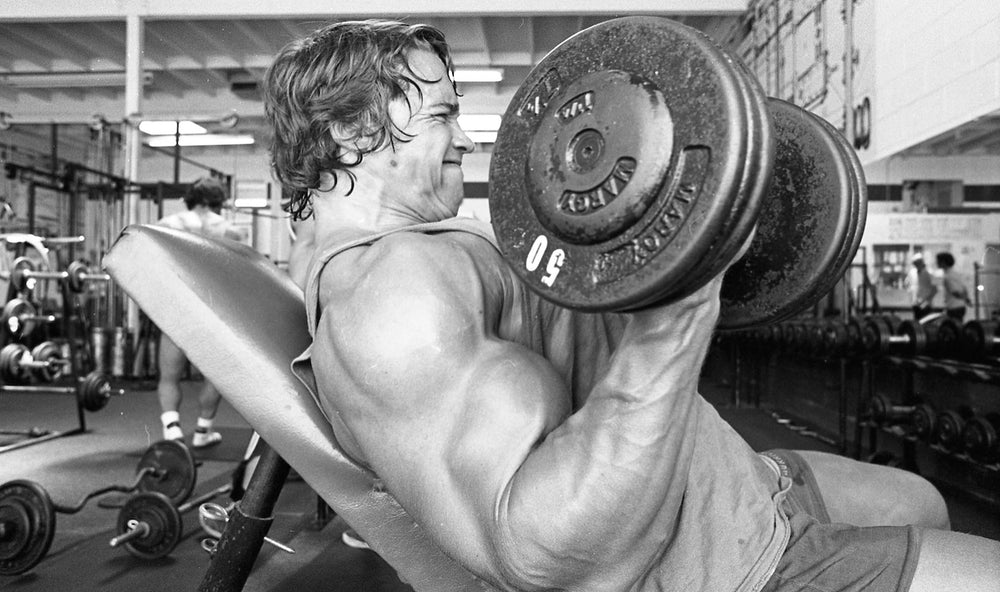
If you're over 50, especially if you're a woman who's been on the fence about lifting, here's your green light. You don't need a complicated program. Two to three sessions per week focusing on major muscle groups (squats, presses, rows, hinges) is enough to start building strength and protecting against age-related muscle loss (If you need help, the Pump Club has you covered with a free 7-day trial to see for yourself). Start with weights that feel challenging (even if it’s just bodyweight exercises), and build from there. The research is clear: the best thing you can do is begin.
Instant Health Boost
Your Daily Coffee Habit Might Be Doing More Than You Think
If your morning routine starts with a cup of coffee (or two, or three), you probably don't need a reason to keep drinking it. But what if that habit was also linked to protecting your brain decades from now?
Research suggests that drinking 2 to 3 cups of caffeinated coffee per day (or 1 to 2 cups of tea) is associated with a lower risk of dementia.
Researchers from Harvard followed more than 131,000 people for up to 43 years. During that time, they tracked coffee and tea consumption every two to four years and documented more than 11,000 cases of dementia.
The people who drank the most caffeinated coffee had an 18 percent lower risk of developing dementia compared to those who drank the least. Tea drinkers saw a 14 percent lower risk. And the benefits followed a "sweet spot" pattern; moderate intake (about 2 to 3 cups of coffee or 1 to 2 cups of tea daily) showed the strongest association, with no extra benefit from drinking more.
Here's what made this study especially interesting: decaffeinated coffee showed no meaningful link to dementia risk. That suggests caffeine itself might be doing something useful, possibly by reducing neuroinflammation and supporting the brain's ability to clear out harmful proteins tied to Alzheimer's disease. The polyphenols in both coffee and tea (powerful antioxidant compounds) may also play a role.
This was an observational study, which means it can show a connection between coffee and lower dementia risk, but it can't prove coffee caused the protection. It's possible that moderate coffee drinkers also have other healthy habits that support brain health.
If you already enjoy coffee or tea, consider this a reason to keep going, not a reason to overhaul your routine. And remember: the most reliable ways to protect your brain are still the fundamentals: regular exercise, quality sleep, a solid diet, and staying socially connected. Your coffee is a nice bonus, not a replacement.
Better Today
Take any of these tips from today’s email and put them into action:
1. Collagen Supplements Can Improve Skin Hydration and Elasticity (But There's a Catch)
Researchers analyzed 26 clinical trials and found oral hydrolyzed collagen works for skin hydration and elasticity, but you need at least 10 grams daily for a minimum of 8 weeks, and the results are more "noticeable improvement" than "Instagram transformation.”
2. Why You Might Still Feel Tired After 7 Hours of Sleep
New research shows the gap between "enough sleep" and "actually recovering" might come down to your nervous system. Scientists found that Magtein, a specific form of magnesium shown to cross the blood-brain barrier, outperformed placebo on HRV, resting heart rate, and next-day function in just 6 weeks. This suggests that improving nervous system recovery can help you feel better rested without increasing total sleep time.
3. Women Over 50 Build Relative Strength Faster Than Men
Researchers pooled data from 30 resistance training studies and found that women over 50 gain proportionally as much muscle — and even more relative strength — as men from the same programs, confirming that lifting doesn't play favorites with age or gender.
4. Your Coffee Habit Might Protect Your Brain (But Only If It's Caffeinated)
Researchers followed more than 131,000 people for up to 43 years and found a "sweet spot" of 2–3 cups of caffeinated coffee per day, linked to an 18% lower risk of dementia. Decaf didn't move the needle, pointing to caffeine as the likely active ingredient.
The Positive Corner of The Internet
About Arnold’s Pump Club Editorial Standards
We do things a bit differently here, starting with transparency.
The Content: All APC emails are researched, written, and fact-checked by the APC editors (see bottom of the email), with written contributions from Arnold (noted with “Arnold’s Corner”). Links take you to original studies (not second-hand sources).
Does AI play a role? Yes, in two places. Everything above is original content written by the APC team. The summaries below are AI-generated based on the human-written content above. We also use an AI tool to review our interpretations of the research and ensure scientific accuracy. We don’t assume AI is right, but we use technology to hold ourselves accountable.
Yes, we have partners (all clearly noted). Why? Because it allows these emails to remain free. We reach out to potential partners who offer ways to help you improve every day. The bar is set high, and to date, we have turned down millions in ad deals. (Example: we will not partner with any non-certified supplements or those without evidence in human trials). If we won’t buy the product, we won’t recommend it to you. And if there’s no evidence it works, then there’s no place for it here.
—
Publisher: Arnold Schwarzenegger
Editors-in-chief: Adam Bornstein and Daniel Ketchell