


Welcome to the positive corner of the internet. We’re here to make your life healthier, happier, and less stressful. At the bottom of each email, we explain our editorial process, stance on AI, and partnership standards.
If you were forwarded this message, you can get the free daily email here.
Today’s Health Upgrade
The fight against type 2 diabetes
The memory supplement
Can you make yourself more optimistic?
The Pump Club Pop-Up (dates and times)
Dead wrong
Reader Question
What Exercise Is Best For Type 2 Diabetes Prevention and Remission?
I run to manage my type 2 diabetes, and I have trouble finding time for strength training. What’s the right approach for my workout schedule?
Most advice for people with type 2 diabetes starts and ends in the same place: get your cardio in. Walk more. Add some cycling. Keep the heart rate up. That's sound advice, and it shouldn’t be ignored. But it also might not be the best approach to fight, prevent, or push type-2 diabetes into remission.
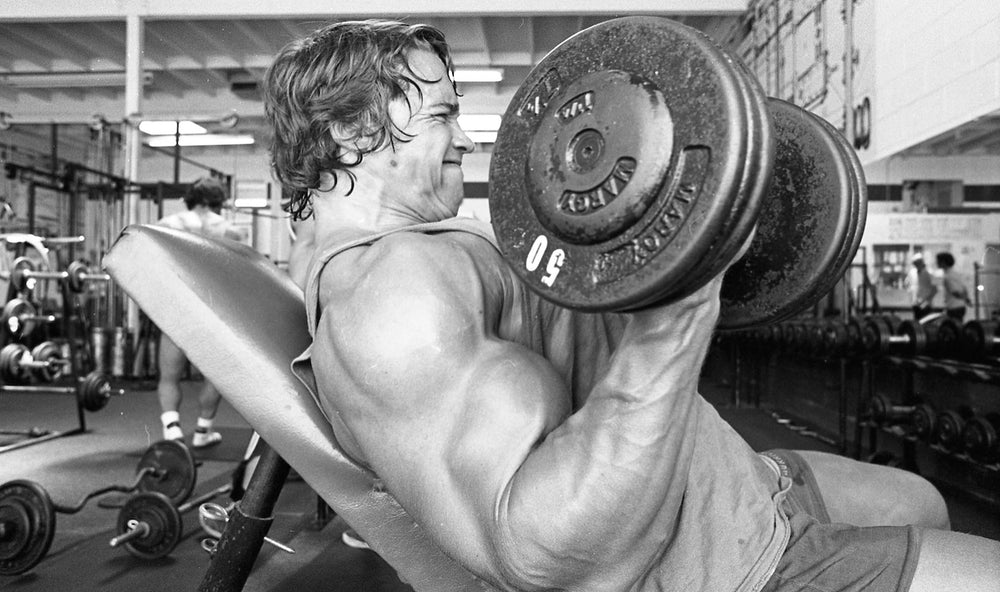
Researchers found that strength training significantly reduced blood sugar in people with type 2 diabetes, suggesting that building muscle may matter more than most exercise guidelines acknowledge.
Scientists studied type 2 diabetics with a BMI under 25. Participants completed three sessions per week of either strength training, aerobic exercise, or a combination of both for 9 months.
The strength training group was the only one to show a statistically significant drop in HbA1c (a measure of average blood sugar). The aerobic group showed improvements, but they weren’t statistically significant.
Skeletal muscle handles roughly 80% of the glucose your body absorbs after a meal. When muscle mass is low, blood sugar control can suffer. Strength training increases lean mass relative to fat mass, and that shift is tracked with better blood sugar outcomes.
If you have type 2 diabetes, this doesn't mean quitting cardio. But if strength training keeps getting bumped from your schedule, this is a reason to reconsider what the priority should be. Other studies suggest three sessions per week — bodyweight, machines, or free weights — is a reasonable place to start.
Together With Magtein
One Type of Magnesium Shows Up Most For Your Brain
If you're taking magnesium — and a lot of people are — you might not be paying attention to the type of magnesium in your supplements. But a new study suggests that if you want memory and cognition benefits, the form of magnesium you take might matter more than the dose.
In a six-week randomized, double-blind, placebo-controlled trial, adults who took Magtein® (magnesium L-threonate) showed significantly greater improvements in overall cognitive performance than those on placebo, with the strongest effects in working memory and episodic memory.
Researchers studied 100 healthy adults between 18 and 45 — a notably younger population than most brain-supplement studies target — and split them into two groups. One group took Magtein® daily, once in the morning, and again two hours before bed. The other received a matching placebo at the same time. And then they were given cognitive tests.
The Magtein group improved their total cognition more than the placebo group, and an exploratory analysis suggested these changes mapped to cognitive performance roughly 7.5 years younger than participants' chronological age.
The biggest advantage was seen with memory, specifically the ability to recall sequences of events and hold information in working memory. For anyone trying to protect those capacities as they age, that's a meaningful signal.
If Magtein® is something you want to try, the dose used in the study was 2 grams daily, split across two doses. We use Momentous Magtein® because of their rigorous standards for testing, safety, and quality. And they use Magtein® specifically, as other magnesium compounds cross the blood-brain barrier less efficiently, which appears to make this form distinct for cognitive outcomes.
To learn more about the science behind magnesium l-threonate and the research that suggests it improves cognitive vitality, visit magtein.com.
Mindset
Optimism Isn't a Personality Trait. It's a Practice.
Most people treat optimism the way they treat height — either you've got it, or you don't. If you tend to expect things to go wrong, you assume that's just how you're wired, and pessimism becomes the story you tell about yourself instead of a skill you haven't trained yet.
More than 30 randomized trials say that framing is worth reconsidering.
Spending just 5 minutes a day imagining your best possible future self can measurably increase optimism within two weeks — and the effect holds independent of any mood lift.
We end up saying this a lot, but Arnold was ahead of the science.
How many times have you heard him say that the most important thing is having a vision, that you should sit down and see it as clearly as a movie? Now, if he didn’t convince you, listen to the science.
Arnold’s a famous optimist, and now it all makes sense.
In the foundational study, researchers randomized participants into two groups. One spent 5 minutes daily imagining a future where everything had worked out optimally: relationships, career, health. The other imagined a typical day.
After two weeks, the "best possible self" group showed significantly higher optimism, and critically, that improvement wasn't a side effect of feeling better in the moment. The shift in optimism held after mood was statistically controlled. That finding has since been replicated across nearly 3,000 participants in multiple independent meta-analyses, with consistent effects on optimism, positive affect, and overall well-being.
Researchers believe the mechanism is expectation-shifting. Imagining a positive future in personal, specific terms appears to update your sense of what's actually possible. Not wishful thinking, but a genuine recalibration of what you see ahead.
One thing to keep in mind (like so many other things that are good for you): this works as a daily habit, not a one-time exercise. Consistency is what moves the needle.
Five minutes. Write it out or visualize. Research suggests both work equally well. Picture yourself some years from now: your health is where you want it, your relationships are strong, and the work feels meaningful. Be specific. Return to it tomorrow.
Community
Mark Your Calendars
We’re now less than a week away from something we’ve never done before.
It’s a Pump Club pop-up, and smoothies are on us.
As an APC reader, you’ve already done the hard part: you’ve signed up and read the newsletter.
Now, show up, and you get free smoothies, coaching from Coach Jen and Coach Nic, the chance to win prizes, or ask questions to Ketch and Adam.
In partnership with our friends at Momentous, we’ll be running a pop-up smoothie shop in Venice, CA, on April 20-22, right across from Gold’s Gym. Show up any time between 7 am and 2 pm, and your protein and Fiber+ needs are covered.
We hope to see many of you there. You can find more details here.
Dead Wrong
The "Fat-Burning Zone" Is The Best Way To Lose Fat During Cardio
We bust myths. But sometimes, you don’t even realize when you’ve bought into something that’s not true. In “Dead Wrong,” we take the things you think are accurate and provide an updated perspective on what the latest science has found.
WHAT MOST PEOPLE THINK: Lower-intensity cardio burns a higher percentage of fat for fuel, so staying in that zone — around 60–65% max heart rate — is the smart strategy for fat loss. Going harder just burns carbs.
WHAT'S ACTUALLY TRUE: The “fat-burning zone” can use a higher percentage of fat. But the percentage of fuel source is the wrong metric. What determines fat loss from exercise is the total number of calories you burn, and higher-intensity exercise burns more calories per minute. So when you’re in the fat-burning zone, you’re not necessarily burning more body fat, which is what you care about.
If you compare two forms of exercise done for 30-minutes, a harder effort produces greater total energy expenditure — and therefore greater fat loss potential — even though a larger share of that energy comes from carbohydrates.
The fat-burning zone concept came from a real metabolic phenomenon that was misapplied as a weight-loss strategy.
High-intensity exercise also increases the afterburn effect (EPOC), which is sometimes used to further justify high-intensity work. It does exist and does scale with intensity, but research shows it accounts for only 6–15% of the energy cost of the session itself, making total calories burned during exercise still the dominant variable for fat loss.
WHY IT MATTERS: When time is limited, a 30-minute moderate-to-hard effort will likely produce better fat loss outcomes than 30 minutes at an easy pace — not because of afterburn, but because you simply burn more calories in the same window.
That said, if you can sustain low-intensity cardio for significantly longer (or you have a reason to hold off on more intense exercise), total calorie output can equalize or tip back in its favor. The best intensity is the one you'll actually do consistently and can recover from.
And remember, your diet and nutrition will contribute more to fat loss and weight changes than exercise.
Is there something you worry might be dead wrong? Hit reply to this email and let us know what you want us to explore.
Better Today
Take any of these tips from today’s email and put them into action:
1. Strength Training Significantly Reduces Blood Sugar (Even More Than Cardio) And Helps Fight Against Type-2 Diabetes
In a 9-month trial, strength training was the only form of exercise to produce a statistically significant reduction in HbA1c — a measure of long-term blood sugar — outperforming aerobic exercise in adults with type 2 diabetes. The mechanism is structural: skeletal muscle absorbs roughly 80% of the glucose your body takes in after a meal, and increasing its capacity improves the entire system. Don’t stop doing cardio, as it still has many benefits and is supported by other research focusing on type-2 diabetes. However, if strength training keeps getting dropped from your schedule, this research explains why it should come first.
2. Not All Magnesium Crosses the Blood-Brain Barrier. This Form Does, And The Research Shows a Difference
In a 6-week randomized, double-blind, placebo-controlled trial of healthy adults under the age of 45, Magtein® or magnesium L-threonate (2g daily, split into two doses) produced significantly greater improvements in overall cognitive performance than placebo, with the strongest effects in working memory and episodic memory. Magnesium L-threonate crosses the blood-brain barrier more efficiently than other magnesium compounds, which appears to make it functionally distinct for cognitive outcomes regardless of dose. If you're already taking magnesium, the form on the label is worth a look.
3. Optimism Isn't a Personality Trait. Research On 3,000 Participants Says It's a Trainable Skill
A review of more than 30 randomized trials found that spending 5 minutes daily imagining your best possible future self produced measurable increases in optimism within two weeks. And the effect held after researchers controlled for mood, confirming this is a genuine shift in outlook rather than a temporary emotional lift. Visualizing a specific, positive future in personal terms recalibrates your baseline sense of what's achievable, not just how you feel right now. Both writing it out and visualizing it work. The variable that separates people who benefit from people who don't is whether they come back to it the next day and stick with it consistently.
4. Higher-Intensity Cardio Burns More Total Calories in the Same Time Window. That's Why the Fat-Burning Zone Gets Fat Loss Wrong
The fat-burning zone can technically burn a higher percentage of fat, but fat loss is determined by total calories burned, not the ratio of fuel sources, and higher-intensity cardio burns more calories per minute. In a matched 30-minute window, a harder effort produces greater total energy expenditure and therefore greater fat loss potential, even though more of that energy comes from carbohydrates. EPOC — the calorie afterburn effect often used to further justify high-intensity work — is real but modest, accounting for only 6–15% of the session's energy cost, which means total calories burned during the session is still the dominant variable. If time is your constraint, work harder; if you can sustain low-intensity cardio long enough to match total output, that works too — the best intensity is the one you'll actually do.
The Positive Corner of The Internet
About Arnold’s Pump Club Editorial Standards
We do things a bit differently here, starting with transparency.
The Content: All APC emails are researched, written, and fact-checked by the APC editors (see bottom of the email), with written contributions from Arnold (noted with “Arnold’s Corner”). Links take you to original studies (not second-hand sources).
Does AI play a role? Not for the primary content, but it is used in two ways. The main items are original content written by the APC team. The summaries at the end are AI-generated based on the human-written content above. We also use an AI tool to review our interpretations of the research and ensure scientific accuracy. We don’t assume AI is right, but we use technology to hold ourselves accountable.
Yes, we have partners (all clearly noted). Why? Because it allows us to keep the APC emails free. We first test products, and then reach out to potential partners who offer ways to help you improve every day. The bar is set high, and to date, we have turned down millions in ad deals. (Example: we will not partner with any non-certified supplements or those without evidence in human trials). If we won’t buy the product, we won’t recommend it to you. And if there’s no evidence it works, then there’s no place for it here.
—
Publisher: Arnold Schwarzenegger
Editors-in-chief: Adam Bornstein and Daniel Ketchell