

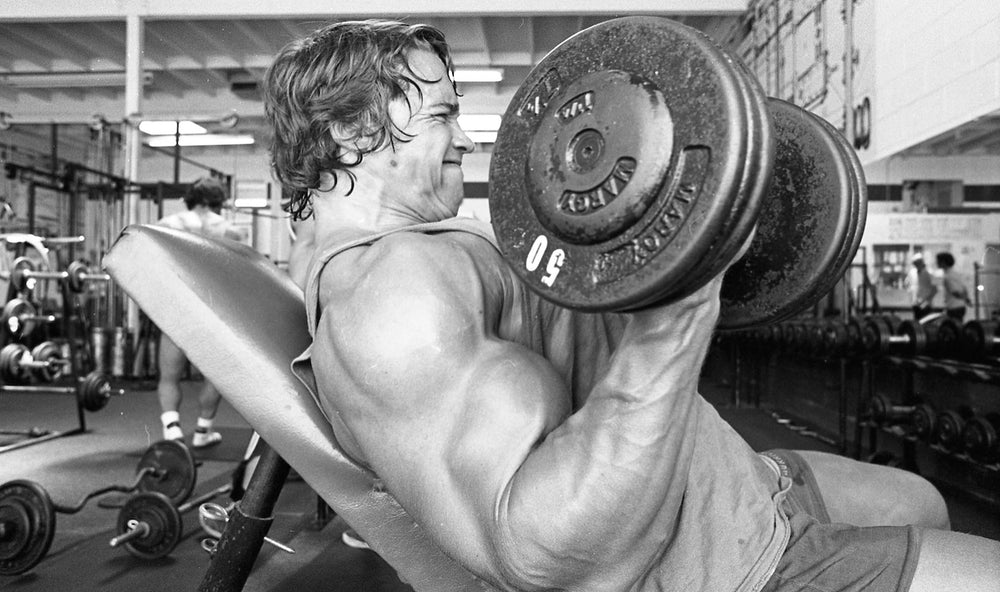

A Plateau Isn't a Ceiling. It's a Message About What Has to Change Next
He broke his back twice, got written off by doctors, and then the impossible happened.
Welcome to the positive corner of the internet. We’re here to make your life healthier, happier, and less stressful. At the bottom of each email, we explain our editorial process, stance on AI, and partnership standards.
If you were forwarded this message, you can get the free daily email here.
Today’s Health Upgrade
Nobody is strong on the first rep
4 tips for a healthier brain (and what really matters most)
You might need a magnesium boost
Adam’s Corner: Have you reached your limit?
Together With ASAS
Nobody Is Strong On The First Rep (Not Even Arnold)
You weren't strong on your first day. Nobody is.
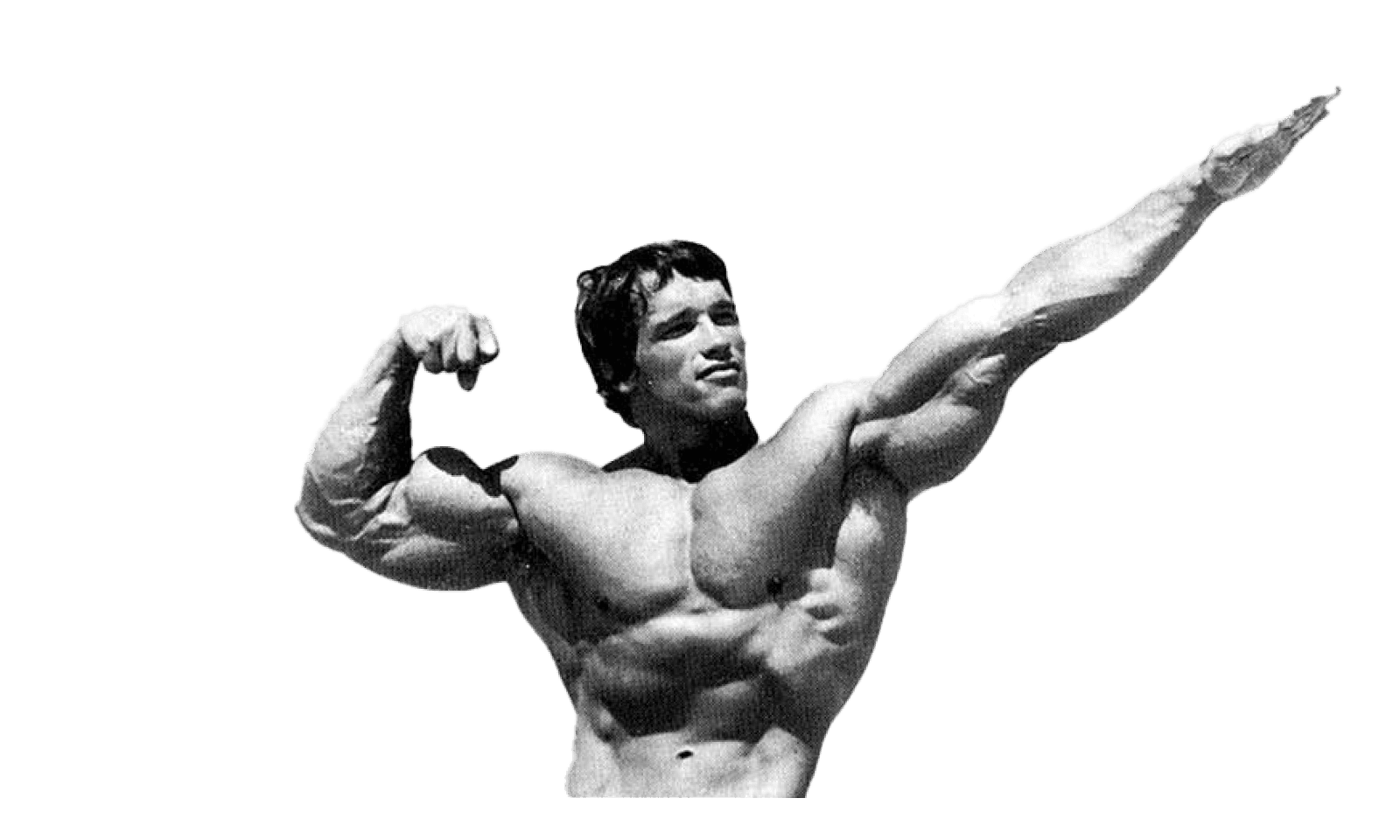
Arnold wasn't either. He was a skinny kid from a tiny village in Austria, and the first time he picked up a barbell, he could barely move it.
But he showed up. He tried. And he came back the next day and tried again.
That's the whole secret, and it's the thing this newsletter comes back to every morning.
The magic was never talent. It's trying — badly, in public, over and over — until one day you're strong.
Here's the part Arnold talks about most. He got to try because somebody let him. He had a gym to walk into. He had Joe Weider, who saw something in him before he'd earned it. He had people in his corner.
A lot of kids don't. Right now, 1.8 million young people in this country are growing up with almost no adult in their corner. Nobody to spot them. Nobody who says, "Go ahead. Try it. We've got you."
You know exactly what that's worth. You know what a spotter does: stands behind you so you can push past the weight that scares you. That's all these kids are missing. Not talent. A spotter.
That's what Arnold built After-School All-Stars to be. The spotter. Last year it showed up for 140,000 kids across 77 cities, served two million meals, and gave each of them an adult who actually listens.
Then, it let them try things. Fail. Try again.
The numbers are the best part. When a kid walks in, only 1 in 3 says they have a trusted adult outside their family. By the end of the year, it's nearly 3 in 4.
Their belief that they can finish something hard nearly doubles. Their belief that good things are coming — more than doubles.
That's not a miracle. That's just what happens when you give a kid a first rep and someone to catch them.
So today, the ask is simple: be the spotter.
We’re running a campaign to help raise funds for the kids that After School All Stars supports.
And because we love giving you an extra reason to lift up others, we’ve raised the stakes.
Anyone who gives $50 or more will receive a free month of the Pump Club app, which will land in your inbox the morning after you donate.
But that’s not all: The single largest gift wins a GORUCK Rucker 5.0. Carry the weight that builds you.
Best of all: 91 cents of every dollar goes straight to the kids.
Nobody is strong on the first rep. But everybody deserves a first rep, and somebody who believes they'll get back up.
Let's give it to them.
Health
Why Knowing What's Good for Your Brain Was Never the Hard Part
You might not think you know what your brain needs, but you already know the list: Move more, eat better, keep your mind busy, stay on top of your blood pressure. Like many healthy habits, the list usually isn’t the problem. The distance between knowing it and living it is.
When two groups got the same brain-health playbook, the one with structure and support to actually follow through protected their thinking more than the group left to figure it out alone.
Researchers enrolled more than 2,000 adults at elevated risk of cognitive decline in a brain-health bootcamp. They were all given the same four habits: regular exercise, a brain-friendly eating pattern, mental challenges, and keeping an eye on heart-health numbers.
One group got the works: 38 guided sessions over two years, a real workout schedule, coaching, and check-ins on their blood pressure, cholesterol, and blood sugar. The other group got six informational sessions and a nudge to do their best on their own.
Both groups improved, which shows that good information can make a difference. But the structured group improved more, and the gap held up well enough that the researchers are confident it wasn't luck.
While the tips matter, the real lesson is how you make changes, not just what changes you make.
Nobody in the structured group got better information. They got a system. A schedule took the daily "should I?" off the table. A team gave them somewhere to show up. Regular check-ins turned vague intentions into progress they could see.
The good news is you can build yourself a smaller version of what worked.
Put movement and meals on your calendar like appointments you don't cancel. Borrow accountability from one person, one class, or one group text. Then start with the single habit you're most likely to keep, and let the wins recruit the next one. You don't need 38 supervised sessions. You need a system you'll actually return to.
Together With Magtein
You Might Be Low On Magnesium. And You’re Probably Taking The Wrong Kind
Here's a number that’s worth your attention:
About half of US adults don't get enough magnesium from food. And not just the people skipping their vegetables. People who eat well, too.
That matters more than it sounds. Magnesium is the spark behind more than 300 reactions in your body, including energy, nerves, muscle, sleep, and memory.
Run low, and nothing breaks all at once. It just runs rough. Sleep gets shallow. Muscles cramp. Your head feels a half-step slow.
So can't you just eat it?
In theory, yes. It's in leafy greens, nuts, beans, whole grains, all stuff you'd want on your plate anyway. The trouble is most people don't eat that way every day.
And even if you do, some research suggests that the magnesium in crops has declined over decades of intensive farming, so the food itself contains less than it used to. Add what you sweat out and burn through under stress, and a shortfall is easy to land in. Even for people who eat clean.
So a supplement is a reasonable move. Here's where it gets interesting, because not all magnesium is the same, and most of it never reaches the place you'd want it most.
The form we reach for is Magtein (magnesium L-threonate). A 2-gram dose delivers only about 145 mg of elemental magnesium, which is worth noting. Big doses of oxide or citrate are what send people running to the bathroom. This one doesn't. If you've quit magnesium before because it wrecked your stomach, that alone is a reason to give it another shot.
But the real reason is the brain. A 2026 randomized, double-blind, placebo-controlled trial found magnesium L-threonate improved sleep and cognition, with the biggest gains in working and episodic memory, and faster reaction time.
Now the one detail that costs people money if they miss it.
Not every "magnesium L-threonate" on the shelf is the same thing.
The form behind that research — and nearly every study on magnesium and the brain — is Magtein, the patented version developed by Dr. Liu, a neuroscientist who held a faculty post at MIT's Picower Institute for Learning and Memory. The generic stuff may share the name. It hasn't shared the results.
So when you shop, do one thing: look for "Magtein" on the label. That one word is the difference between the clinically studied ingredient and a stand-in that might behave nothing like it.
The version we reach for is Momentous because it provides the full 2-gram dose the studies were built on, and NSF Certified for Sport, so every batch is tested by an outside lab.
The goal isn’t to stress about magnesium. It's to make sure you’re getting enough and to ensure you use the right form your body can tolerate. Consistency does the rest.
Adam’s Corner
Maybe You Shouldn’t Know Your Limits
The doctor said he wanted a bone scan, and then he stepped out so I could change into the gown.
Alone in the room, just 15 years old, I did my own informal assessment before the expensive medical tests. I bent down and tried to touch my toes.
It hurt. But I could do it. And that was all the proof I wanted.
No way my back was broken.
My logic was simple: People with broken backs can’t bend over. Can they even stand up on their own? I was bending over. I was standing up. I had decided, on the spot, with the full authority of a teenager who knew nothing, that the doctor was wrong.
He wasn’t. My back was broken. And I had to shut everything down.
I recovered. At least, that’s the word everyone used. But I really didn’t.
Worse news was waiting around the corner.
And the part I couldn’t have known back then is that a setback you refuse to learn from doesn’t leave. It bides its time.
The Story Everyone Got Wrong
My business partner and Pump Club co-founder, Ketch, is — pound-for-pound — one of the stronger people I know, in every sense of the word. It’s not just physical strength, but he has pulled 600 pounds off the floor with a trap bar. If you’re not familiar, it’s the bar where you stand inside, which lets you move more weight than a straight bar in front of your shins ever will.
But Ketch loves getting better and challenging himself, and the straight bar is the harder, more honest test. So he did the thing most strong people refuse to do. He stripped all the way back down to the basics, started over with Pump Club coach (and America’s Strongest Man) Nic Myers, and put in the slow, unglamorous work of getting strong on the bar that doesn’t flatter you.
He built up to 440. Then he got stuck.
Until he didn’t.
A couple of months ago, we flew members of the Pump Club out to meet in person. People who had changed their lives, standing together. Ketch felt the high of that moment, and he went for a PR. He hit it. The lift was real.
So was what happened next. His back didn’t give out. But it started talking to him. A pain that wasn’t there before, low and insistent, telling him something was off. He could quiet it. What he couldn’t do was silence the signal underneath it: if you want to pull this much, something has to change.
We discussed his lift and his injury. And then things got interesting.
People read about his back and told him he met his ceiling. To stop deadlifting so much. That he found the edge. And it was time to back off.
They had it exactly backward. That pain wasn’t a ceiling. It was a detail he hadn’t solved yet.
When the Path Changes
What was happening to Ketch happens to anyone who keeps going long enough, in the gym and far outside it.
Nobody tells you this when you start lifting. In the beginning — and for many years — strength just comes. You show up, you stay consistent, you don’t do anything stupid, and the body answers. Stronger, stronger, stronger. It feels like it might never stop.
Until it does.
That plateau feels like a wall, and almost everyone reads it as one. “This is as far as I go.”
But the wall is rarely the ceiling. It’s a message: The thing that got you here can’t get you there. A weakness you never had to think about becomes the weakest link. A sloppy movement you got away with at lighter loads turns into the exact reason you stall. The program that built you now has to be rebuilt.
None of that is a limit. It’s a different problem wearing a limit’s clothes.
It would be a shame to leave that idea in the gym, because it explains most of life.
Take building a business. Getting one to a million dollars usually runs on a single engine: you. You answer the emails, close the deals, fix what breaks, and care more than anyone else in the room. That total involvement is exactly what makes it work. The will to touch everything is the engine.
Now try to take that same business to ten million. The very thing that got you here becomes the thing holding you back. There are only so many hours, and you already spend all of them. You can’t be in every room anymore. The skill that built the first version, the control and the hustle and the doing-it-yourself, is the skill you now have to give up. You have to build a team you trust, hand off the work you were best at, and learn to lead instead of do.
The wall at a million isn’t proof the business can’t grow. It’s proof that the way you grew it can’t grow it any further.
It’s the same shape every time.
The new parent who learns to calm a screaming infant, then watches every one of those instincts go useless on a teenager. The couple whose early spark carried them for years until, one ordinary Tuesday, chemistry alone isn’t enough and they have to learn something harder.
The thing you were great at becomes the thing in your way. Not because you failed. Because you arrived somewhere new, and new ground asks for a different kind of strength.
So when you hit the wall, in the gym or at work or in a relationship or inside your own head, the question is almost never, is this my limit? It’s, what got me here that can’t take me there?
The Second Break Taught Me the First
Here’s what the doctor’s had me do when I broke my back: I protected it. I babied it. I avoided anything that scared me, which was nearly everything, and I called that healing.
What I was actually doing was building a more fragile version of myself and handing it back to the world.
About a year later, my back broke again. Only this time, it was two bones, two bulging discs, arthritis, and stenosis.
This time the diagnosis came with warnings and a threat that if I did too much damage, I could risk more severe damage, or in the case of another significant injury, paralysis.
I got opinion after opinion, and most of them sounded the same. Careful. Grim. A long list of everything I’d never do again. Two doctors laid out a future built entirely around limitations, the rest of my life arranged to protect a spine they had already given up on.
Then a third doctor offered a different path. He didn’t pretend the risk wasn’t real. He just refused to treat my back as a fixed quantity.
He talked about what a body can become when you understand why it broke instead of only that it broke. One opinion. It was all it took.
The rehab took nearly two years. We stopped protecting the break and started interrogating it. Why did this happen? What was weak? What had I been avoiding that I should have been training? It was slow, it hurt, and most days there was no visible proof it was working.
It was also the most important thing I’ve ever done with my body.
Because here’s the part that sounds impossible.
Years later, with a spine two doctors had written off, I deadlifted five hundred and seventy pounds, pain-free. Not despite the breaks. Because of them.
It’s the same thing we see with thousands of people who have created their own impossible story.
You don’t go looking for the flaw in the foundation until the house cracks.
And the only reason it cracked twice is that the first time, I refused to look.
The Break You Can’t X-Ray
Not every break shows up on a scan.
Long before I met my wife, I was engaged to the wrong person. It ended the worst way it could. I was cheated on, disrespected, and dragged through something no one should experience. I fell into a hole so deep I lost sight of the top. For a while I couldn’t get out of bed. Not wouldn’t. Couldn’t.
The way back up was the same slow, unglamorous work as the rehab. Learn to stand. Learn to look at the wreckage honestly and sort out what was mine to own. Learn where I’d gone quiet when I should have spoken.
And by every rule of self-protection, the lesson looked obvious: read the pain as a stop sign and never put yourself on the line again. Guard the door. Decide that love is a risk with a known downside and an unreliable payout.
The instinct to protect yourself from the next break is exactly what keeps you brittle.
If I’d believed that, I’d have missed all of it. My wife. Our kids. The ordinary, unremarkable mornings that turned out to be the best part of a life I almost let one bad break talk me out of.
I didn’t get bitter. I didn’t shut myself off. I didn’t give in to hate or anger. I rebuilt stronger, more compassionate, more connected.
We Read the Signal Backward
We tell each other to know our limits like it’s wisdom. I think it’s mostly how people talk themselves out of the life they could have had, because we are terrible at telling the difference between a limit and a speed bump.
When Ketch wrote about his back, the comments filled with the same instinct: slow down, you’re getting older, you found the edge.
And look, I don’t want Ketch to hurt. Avoiding injury is the entire point. But the people telling him to quit had read the signal exactly backward.
The pain wasn’t proof he’d found his ceiling. It was information about what stood between him and the next number, something in how he braced or moved or recovered that had to change.
The stumble wasn’t the end of the climb. It was the climb telling him where the next foothold had to go.
That’s the part we miss.
We don’t overestimate our limits nearly as often as we surrender to a moment of friction and call it a wall.
The plateau, the injury, the failed launch, the heartbreak. We read them as verdicts when they are almost always just directions.
There’s an old line that the fruit is out on the limb, not back against the trunk. The trick was never to stay off the limb. It’s to learn how to read it. Sometimes the stumble is the price of finding out there’s more out there at all.
Two doctors told me where my life would stop. A third one wouldn’t. I’ve spent the years since proving him right.
The strange gift of all of it? After my back and the heartbreak and all the different holes I’ve climbed out of, I still don’t know where my limit is.
And you know what? I’ve decided I’d rather not find out. -AB
-Adam Bornstein is the co-founder and co-editor-in-chief of Arnold’s Pump Club
Better Today
Take any of these tips from today’s email and put them into action:
1. Both Groups Got the Same Brain-Health Habits. Only the One With a System Got the Bigger Gain.
In US POINTER — a 2-year randomized trial of more than 2,000 adults at elevated risk for cognitive decline run across five US sites — two groups followed the same four habits (exercise, a brain-friendly diet, mental challenge, and heart-health monitoring), but the group given structure improved more, and the gap was large enough that researchers are confident it wasn't chance. Nobody in the structured group got better information; they got a schedule that took the daily "should I?" off the table, coaching, and regular check-ins that turned intentions into visible progress. The lesson isn't a new habit list — it's that how you implement matters as much as what you implement, so put movement and meals on your calendar like appointments you don't cancel, borrow accountability from someone or a group, and start with the single habit you're most likely to keep.
2. About Half of US Adults Fall Short on Magnesium — Even People Who Eat Well
Roughly half of US adults don't get enough magnesium from food — including people who eat well — and the mineral runs more than 300 reactions tied to energy, nerves, muscle, sleep, and memory, so a shortfall doesn't break anything outright; it just makes everything run rough. Most common forms either upset the stomach at effective doses or don't readily reach the brain, which is the gap magnesium L-threonate was designed to close: a 2-gram dose delivers about 145 mg of elemental magnesium — small on purpose, to avoid the GI hit — and a 2026 randomized, double-blind, placebo-controlled trial found it improved sleep and cognition, with the largest gains in working and episodic memory and faster reaction time. If you've quit magnesium before because it wrecked your gut, the takeaway is simple: the problem was probably the form, not the mineral — match the dose used in the research and let consistency do the rest.
3. A Plateau Isn't a Ceiling — It's a Message About What Has to Change Next
The pain that shows up when you stall — a tweaky back at a new PR, a business stuck at a million, a relationship that's run out of early chemistry — almost always reads as a ceiling, when it's really information about the one thing that now has to change. The proof: after breaking his back twice and being told by two doctors to build a life around protecting it, the Ada Bornstein rebuilt by interrogating the break instead of babying it, and years later pulled 570 pounds pain-free — not despite the injuries, but because he finally trained the weakness they exposed. The takeaway is uncomfortable and useful: we surrender to friction far more often than we hit a true limit, so when you stall, stop asking "is this as far as I go?" and start asking "what got me here that can't take me there?"
The Positive Corner of The Internet
About Arnold’s Pump Club Editorial Standards
We do things a bit differently here, starting with transparency.
The Content: All APC emails are researched, written, and fact-checked by the APC editors (see bottom of the email), with written contributions from Arnold (noted with “Arnold’s Corner”). Links take you to original studies (not second-hand sources).
Does AI play a role? Not for the primary content, but it is used in two ways. The main items are original content written by the APC team. The summaries at the end are AI-generated based on the human-written content above. We also use an AI tool to review our interpretations of the research and ensure scientific accuracy. We don’t assume AI is right, but we use technology to hold ourselves accountable.
Yes, we have partners (all clearly noted by “Together With”). Why? Because it allows us to keep the APC emails free. We first test products, and then reach out to potential partners who offer ways to help you improve every day. The bar is set high, and to date, we have turned down millions in ad deals. (Example: we will not partner with any non-certified supplements or those without evidence in human trials). If we won’t buy the product, we won’t recommend it to you. And if there’s no evidence it works, then there’s no place for it here.
—
Publisher: Arnold Schwarzenegger
Editors-in-chief: Adam Bornstein and Daniel Ketchell