


Scientists Offer A Verdict on Mouth Taping. Here's Why Trend Outran the Evidence
A systematic review of 10 papers found no reliable research suggesting mouth taping improves sleep. More importantly, they flagged safety concerns for some users and revealed a critical irony in the two studies that are frequently referenced as proof of the benefits.
Welcome to the positive corner of the internet. We’re here to make your life healthier, happier, and less stressful. At the bottom of each email, we explain our editorial process, stance on AI, and partnership standards.
If you were forwarded this message, you can get the free daily email here.
Today’s Health Upgrade
Arnold’s Corner: Monday Motivation
Why supplements settle for mediocrity
Walking does a lot more for your heart than you might imagine
Use it or lose it: Mouth taping
Workout of the week
Arnold’s Corner
Monday Motivation: When Life Feels Stuck, Here’s How To Jumpstart Your Life
There’s a man in our community named Gerald. He wrote in the app in our weekend schmooze, where everyone shares their wins for the week, that the past week was one of the biggest of his life.
He had recently passed the California contractor’s license exam. He bought his first business — a home maintenance company in the Bay Area called The Home Doctors — on his birthday. And he has been training with us, consistently, for 70 weeks.
He thanked us. He thanked the team, he thanked me, he thanked the community. But the truth is, I want to thank Gerald, because I have read a version of Gerald’s story hundreds of times now. And he helped inspire what I want to talk about this week.
Last week, I was in New York promoting The Man with the Bag with our great director, Adam Shankman. On the flight, we were talking about the Pump Club. He asked me what people actually get out of it.
I told him about the stories you would expect. People drop a hundred pounds. They hit lifting PRs they never thought they would touch. Grandparents who couldn’t get down on the floor with their grandchildren can play with them again, without pain.
These are the stories you sign up for when you decide to take care of your body. They are wonderful. They change lives. Then I told him about the other stories. The ones nobody expects.
People in our community leave abusive relationships. They repair good relationships that have gone cold. They find better jobs. They start businesses, like Gerald just did. They tell us they are happier. More positive. Less afraid of their own lives.
I have said for years that all of my lessons started in the gym. The discipline. The patience. The vision. The willingness to do something hard today because of what it gives you tomorrow.
The barbell was a great teacher.
What I am watching in our community now is people figuring out what I mean in real time.
People who join the Pump Club come to us to improve the body. But they end up gaining something much bigger.
I do not know exactly why this happens, and I am not going to pretend that I do. But I have a few ideas.
Maybe it is because once you see you can change your body, you stop believing everything else in your life is set in stone. You realize you have more power over your life than you thought. The mirror or the weight becomes the first piece of evidence, and the rest of your life is downstream of that evidence.
Maybe it is because the gym is a safe place to practice pushing yourself. You get to practice being uncomfortable. You get to practice not quitting on yourself. And then one day you find you are doing the same thing somewhere else in your life — at work, in a conversation you have been avoiding, in a goal you have been hiding from — and you barely notice that you are doing it. The practice carried over.
Or maybe it is because when you start your day with one thing already accomplished, a hard workout, before the rest of the world gets its hands on you, you walk into the day hungry. You already won once. Now you want to win again.
Training is the action that unsticks the rest of your life. You do not need to know how. You just need to show up and do it.
It could be any of these. It could be all of them. It is probably different for every person. But the pattern is unmistakable.
The work you do in your gym or your living room doing bodyweight movements does not stay there. It has a ripple effect that improves your entire life.
So here is what I want from you this week.
If something in your life feels stuck right now — a relationship, a job, a project, a part of yourself you have not been able to move — I am not going to tell you to go fix that thing first.
I am going to tell you to train.
I know that sounds like I am dodging the question. I am not. The training is the answer.
When everything feels stuck, do not sit with it and try to think your way out. Go put your hands on a barbell. Get into the pushup position. Go finish the workout. The session is not separate from the problem. The session is your first move on the problem.
I have seen it now in hundreds of stories from our community. People did not solve the marriage problem and then start training. They started training, and the marriage shifted. People did not figure out the new business and then start training. They started training, and the courage to start the business arrived later, almost as a side effect.
Training is the action that unsticks the rest of your life. You do not need to know how. You just need to show up and do it.
Thank you to Gerald for sharing his story with us, and thank you to every one of you who is quietly doing the work week after week. Your stories are the engine of this community.
Now, let’s get to work.
Let the barbell share its wisdom.
Together with Momentous
The Supplement That Was Already Among the Best Just Got Better
Most supplement companies upgrade their formulas when something goes wrong. A failed test. A customer exodus. A competitor pulling ahead. Improvement, in this industry, is usually reactive.
What's harder to explain (and worth paying attention to) is when a company changes a working product because they found a way to make it better
The supplement industry operates with a structural honesty problem. Unlike pharmaceuticals, supplements don't require FDA approval before hitting store shelves. Manufacturers are largely responsible for policing themselves.
The consequences of that gap are well-documented. Independent testing organizations routinely find products that contain less of the active ingredient than the label claims, include undisclosed contaminants, or load their formulas with fillers and gums that make no meaningful contribution to your health.
The industry even has a term for including a trace amount of an expensive ingredient just to earn a label mention: pixie dusting.
The incentive to do more is low. And barriers to cutting corners and deceiving the consumer (that’s you) is practically nonexistent.
This is why the certification process at NSF Certified for Sport® matters. It's an independent third-party program that tests every batch of a product for label accuracy, banned substances, and contaminant levels. It's rigorous. It's meaningful. And most supplement brands on store shelves don't have it.
Momentous does, on every product and every batch. For them, it isn't a marketing badge. It's the minimum they hold themselves to.
What's harder to quantify, and more interesting, is what they do once they've already cleared the standard.
In 2024, Momentous overhauled its Essential Whey Protein formula. Not because something failed. Because their team identified ingredients — gums used as thickeners, higher stevia concentrations, excess emulsifiers — that could be removed without sacrificing texture or taste. So they removed them, reformulated with monk fruit extract for cleaner sweetness, and optimized particle size for better mixability in both cold and warm liquids.
The core protein didn't change: 20g per serving, sourced from European grass-fed dairy farms, cold-processed to preserve the native amino acid profile, and enhanced with ProHydrolase® enzymes to improve absorption and reduce GI discomfort. NSF Certified for Sport, still. Certificates of Analysis publicly available on their site, still.
What changed is everything surrounding that protein: a leaner delivery system with fewer ingredients between you and the thing you're actually paying for.
Momentous's original whey isolate was designed in 2016. It was good. It held up against nearly everything else on the market. But nearly a decade of ingredient science, supplier evolution, and customer feedback pointed to a better version, so they rebuilt it.
Silica, guar gum, and sunflower lecithin were removed entirely from the formula. New suppliers of vanilla and chocolate flavors came in. The result is a protein that mixes cleaner, tastes better, and contains fewer ingredients than the previous version, without changing anything that made the protein itself effective.
And they didn't stop there. Momentous recently released what they're calling the Pure flavor line — a series of protein flavors built from a single ingredient sourced directly from its raw form. Pure Cinnamon, for example, contains exactly five total ingredients: whey protein isolate, ProHydrolase, salt, Reb M, and cinnamon bark powder.
That's not a product revision. This is what it looks like when a company believes good enough isn't a stopping point.
If you want a protein powder that delivers exactly what's on the label and keeps getting better because its makers think that's how it should work, Momentous is the one we recommend.
APC readers get 35% OFF their first purchase subscription or 14% off a one-time purchase with the code “PUMPCLUB.”
The supplement industry has a comfortable standard. Momentous just keeps refusing to stay comfortable with it.
Start Your Week Right
What Walking Actually Does to Your Heart
We talk about walking a lot, and most people still underestimate how much it can do for their health. So if you’re not already prioritizing steps, here’s one more reason it’s more helpful than it appears.
A meta-analysis of 32 randomized controlled trials found that walking — with no diet changes or other exercise — produced meaningful improvements in blood pressure, aerobic fitness, and body composition in previously sedentary adults.
Researchers pooled data from studies that required at least 4 weeks of a walking-only intervention against a no-exercise control, with all participants sedentary at baseline. The numbers: systolic blood pressure fell an average of 3.6 mmHg, aerobic capacity improved by 8%, body weight dropped by 3 pounds (1.4 kg), and waist circumference shrank.
Remember, this was all with no dietary changes or other forms of exercise. Just walking.
The drop in systolic blood pressure is associated with real reductions in stroke and coronary heart disease risk. And the improvements to your aerobic capacity are likely to improve your all-cause mortality. And the body composition shifts happened without a single dietary change, which says something about what consistent movement can do on its own.
The studies pooled here didn't standardize a single walking prescription, so the goal is to find a way to get about 150 minutes per week, or about 20 minutes per day. Even if you can’t do that much, start where you are. A 15-minute walk after dinner or a loop around your office building at lunch.
Just move. At any pace. Your body will thank you.
Use It Or Lose It
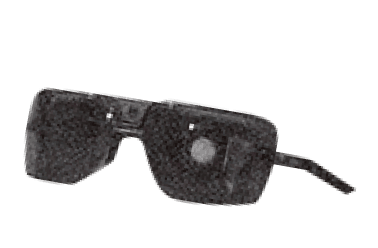
Does Mouth Taping Fix Your Sleep?
The question: Does taping your mouth shut at night improve sleep quality?
This one has millions of TikTok views and a devoted following among biohackers and wellness influencers. The premise sounds intuitive: force nasal breathing overnight, and you'll sleep deeper, snore less, and wake up refreshed.
A 2025 systematic review — the most comprehensive look at the evidence to date — examined 10 studies covering more than 200 participants. The scientists came to a conclusion that would take some people’s breath away.
The majority of studies suggest that mouth taping leads to no meaningful differences in sleep, and several studies raised safety concerns, including asphyxiation risk for people with nasal obstruction.
That’s not to say every study was negative. Two studies showed statistically significant improvement in established markers of sleep apnea — specifically the apnea-hypopnea index and oxygen desaturations —, but the remaining studies were underwhelming.
There's also a critical irony buried in the data: the two studies that did show benefit specifically excluded patients with any nasal obstruction, meaning mouth taping was tested only in people who could already breathe freely through their nose, not in the people most likely to reach for the tape in the first place.
The alleged benefits of mouth taping range from improved sleep quality to anti-aging effects and relief from dry mouth, bad breath, and poor concentration. However, the existing research is too limited and inconsistent to support the practice (or the alleged benefits) for most people.
For the general population without documented mouth-breathing or mild sleep apnea, there is no reliable clinical evidence supporting the practice.
That said, better studies could change the story. As it stands, the evidence base supporting the findings is also notably thin: only one of the 10 included studies was a randomized controlled trial, enrolling just 10 participants, with the rest being smaller observational studies.
In other words, we can’t say for certain that mouth taping has no benefits. But that also means there’s no strong published evidence suggesting it does anything helpful, either.
The Verdict: Lose It. If you have mild, diagnosed sleep apnea and your doctor has specifically evaluated whether this might help, there's a case worth that conversation. For everyone else taping up based on a trend, the evidence isn't there, the downside risk is real, and it’s best to wait till there’s more substantial evidence.
Fitness
Workout Of The Week: The Bodyweight Pump
Today’s workout is a sneak peek inside the Pump Club. This workout is one session of The Foundation Bodyweight Workout.
Warning: If you’re not used to higher volume bodyweight training, this might be a shock to the system (in a good way).
The workout features classic Arnold supersets, volume, and a full-body workout that will leave you, dare we say, pumped.
How to do it
The workout consists of supersets, meaning you’ll do the workout in exercise pairs. Do the first exercise, rest as little as possible, and then jump to the next exercise. Then rest for 2 minutes and repeat. Once you complete all sets listed, move to the next exercise pair and repeat the process.
1A. Bodyweight good morning: 3 x 15, 12, 10 reps
1B. Bodyweight squat: 3 x 20, 15, 12 reps
2A. Bodyweight lunge: 3 x 15, 12, 10 reps/leg
2B: Pullup: 3 x 10, 10, 10 reps
3A. Pushups: 3 x 20, 20, AMAP (as many reps as possible)
3B. Rear-foot elevated split squat: 3 x 12,10, 10
4A. Single-leg standing calf raise: 3 x 20, 15, 12
4B. Bent-leg situp: 3 x 12, 10, 10
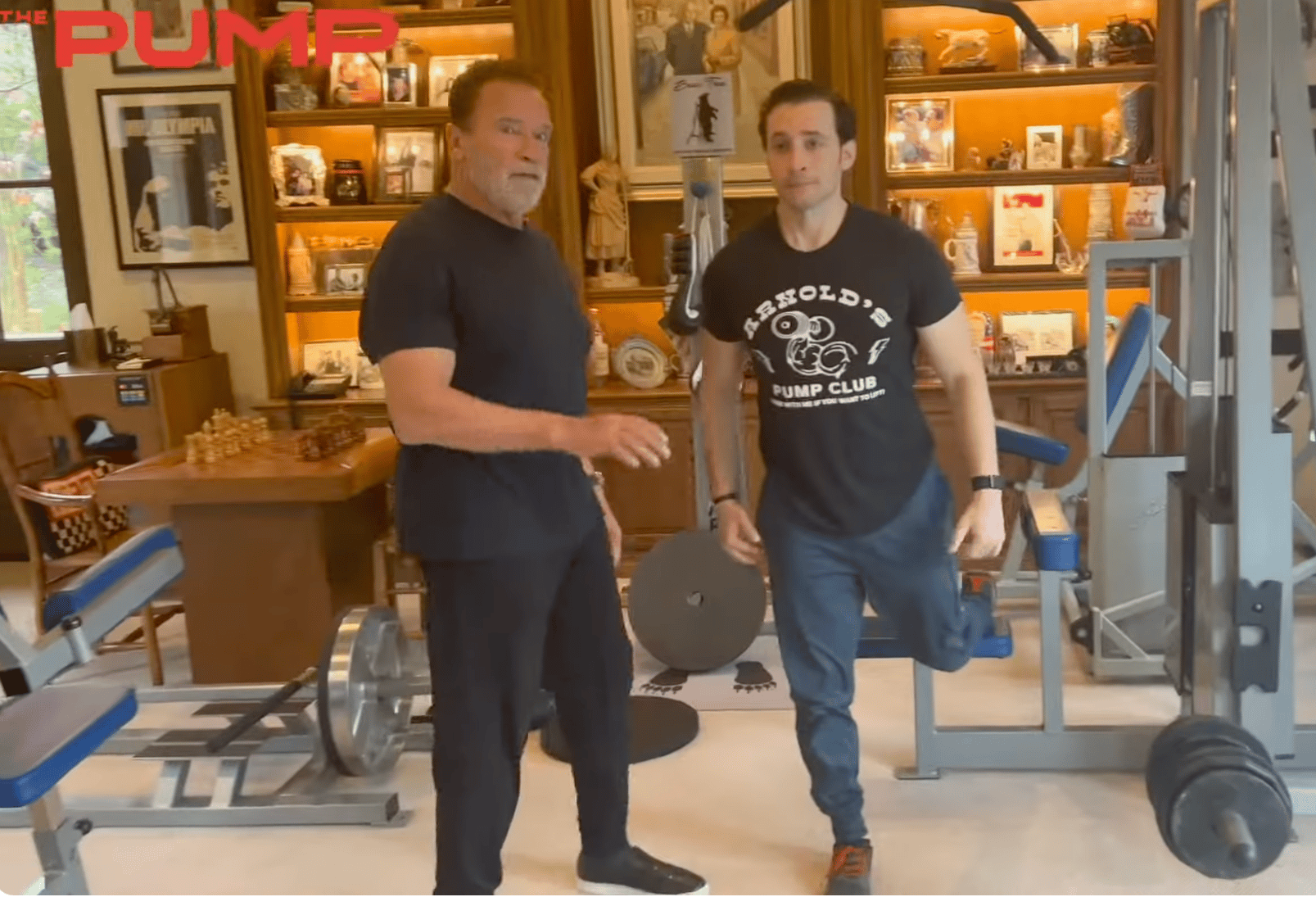
Want To Test Drive The Entire Workout Program Above? Try the Pump Club app risk-free. We’ve made the app free for 7 days so anyone can see if it’s a good fit. Follow the signup process, and we’ll customize the first 12 weeks (The Foundation) to your needs and preferences. You’ll also get access to the personalized nutrition tracker, the habit builder, weekly coaching calls, direct access to Arnold, special discounts, and much more. Give it a try and log the workout in the app. (And make sure you don’t miss the special video call from Arnold when you join.)
Better Today
Take any of these tips from today’s email and put them into action:
1. Arnold Schwarzenegger on What the Gym Actually Teaches You (And Why It Fixes Problems That Have Nothing to Do with Fitness)
Across hundreds of Pump Club member stories, Arnold has documented a consistent and unexpected pattern: people who start training to fix their bodies end up changing their careers, relationships, and self-belief. One recent example is Gerald, a member who logged 70 consecutive weeks of training before passing his California contractor licensing exam and buying his first business. Arnold's explanation for why this happens is concrete: the gym is where you practice being uncomfortable and not quitting on yourself, and that practice transfers — often invisibly — into every other area of your life, from the conversation you've been avoiding to the goal you've been hiding from. His prescription for anyone who feels stuck right now isn't to address the stuck thing directly — it's to train first, because the evidence of what you can change about your body is the first proof your brain accepts that anything else can change too.
2. Most People Think Walking Isn't Real Exercise. 32 Randomized Trials Say Otherwise.
A meta-analysis of 32 randomized controlled trials — each requiring at least four weeks of a walking-only intervention with no dietary changes and no other exercise, among adults who were sedentary at baseline — found that walking alone produced a 3.6 mmHg drop in systolic blood pressure, an 8% improvement in aerobic capacity, a 3-pound reduction in body weight, and measurable reductions in waist circumference. A 3.6 mmHg reduction in systolic blood pressure is associated with documented downstream reductions in stroke and coronary heart disease risk, and the improvement in aerobic capacity is directly linked to all-cause mortality. These aren't minor health signals; they're meaningful shifts in how long and how well you're likely to live. The practical target the data supports is 150 minutes per week, which works out to roughly 20 minutes per day — but if you're not there yet, start with a 15-minute walk after dinner and build from there, because the data is clear that any consistent movement is better than waiting until you can do it perfectly.
3. A 2025 Systematic Review of 10 Studies Found No Reliable Evidence That Mouth Taping Improves Sleep (And Flagged Real Safety Concerns)
A 2025 systematic review examining 10 studies and more than 200 participants found no reliable clinical evidence that mouth taping improves sleep quality for the general population, and flagged asphyxiation risk as a specific concern for anyone with nasal obstruction. Buried in the data is a critical irony: the only two studies that showed statistically significant improvement — specifically in apnea-hypopnea index and oxygen desaturation levels — had explicitly excluded participants with any nasal obstruction, meaning the evidence for benefit applied only to people who could already breathe freely through their nose, which is precisely not the population reaching for the tape in the first place. The evidence base itself is thin enough that this verdict could shift — only one of the 10 included studies was a randomized controlled trial, with just 10 participants — but until larger trials exist, the verdict is straightforward: if you have diagnosed mild sleep apnea and your doctor has evaluated this specifically for you, there's a conversation worth having; for everyone else, the trend has outrun the data, and the downside risk is real enough to wait.
The Positive Corner of The Internet
About Arnold’s Pump Club Editorial Standards
We do things a bit differently here, starting with transparency.
The Content: All APC emails are researched, written, and fact-checked by the APC editors (see bottom of the email), with written contributions from Arnold (noted with “Arnold’s Corner”). Links take you to original studies (not second-hand sources).
Does AI play a role? Not for the primary content, but it is used in two ways. The main items are original content written by the APC team. The summaries at the end are AI-generated based on the human-written content above. We also use an AI tool to review our interpretations of the research and ensure scientific accuracy. We don’t assume AI is right, but we use technology to hold ourselves accountable.
Yes, we have partners (all clearly noted by “Together With”). Why? Because it allows us to keep the APC emails free. We first test products, and then reach out to potential partners who offer ways to help you improve every day. The bar is set high, and to date, we have turned down millions in ad deals. (Example: we will not partner with any non-certified supplements or those without evidence in human trials). If we won’t buy the product, we won’t recommend it to you. And if there’s no evidence it works, then there’s no place for it here.
—
Publisher: Arnold Schwarzenegger
Editors-in-chief: Adam Bornstein and Daniel Ketchell