


Does a Standing Desk Actually Make You Healthier?
A 7-year study of 83,000 adults found standing alone didn't lower heart risk. Here's what actually does, and where (and why) a standing desk helps.
Welcome to the positive corner of the internet. We’re here to make your life healthier, happier, and less stressful. At the bottom of each email, we explain our editorial process, stance on AI, and partnership standards.
If you were forwarded this message, you can get the free daily email here.
Today’s Health Upgrade
Will a standing desk improve your health?
Why your workout feels harder than it should
How probiotics influence your brain
The science of silencing your inner critic
Instant Health Boost
Reader Question: Does a Standing Desk Actually Make You Healthier?
You bought the standing desk and stood through your meetings, waiting to feel healthier. Months later, you're standing more and wondering whether any of it is making a difference.
Research suggests that a standing desk reduces your health risks by preventing a critical threshold linked to many problems.
Scientists have found that the risk of sitting doesn't build evenly through the day. It works more like a line you cross. And there are two different ways to cross it.
When you sit for less than 10 hours a day, the added strain on your heart and circulation is less significant. Past that, it climbs with each extra hour. And those effects are arguably amplified when you go for longer stretches without getting up.
One study followed 83,000 adults wearing wrist sensors for nearly seven years, and more standing wasn't clearly linked to lower heart-disease risk. And that’s because people who stand more also tend to be leaner and more active to begin with. Strip out that head start, and standing's edge isn’t as definitive.
If you’re trying to be a little healthier, it's not only how many hours you sit, but how many of them are unbroken.
Sit still for a long stretch, and the big muscles in your legs go idle, and those muscles are what keep blood sugar and fats moving and clearing out of your bloodstream.
Stand up and take a few steps, and the system switches back on. That's why three hours of sitting — broken up by movement each hour — is easier on your body than three hours straight, even though the total amount of sitting time is similar.
A standing desk helps because it makes those breaks easy. A randomized trial of 756 office workers found that adding a standing cut daily sitting by about an hour, three times more than the same program without it.
If you don’t have a standing desk or don’t like working that way, you can easily get the same health benefits. Set a timer for every 30 to 60 minutes, and stand up and move for two or three minutes. Take a call on your feet, walk a lap, or refill your water.
And while your workouts are great, don't count on the gym to erase the effects of sitting.
Together With Eight Sleep
Why You Seemingly Lose Strength And Endurance Overnight
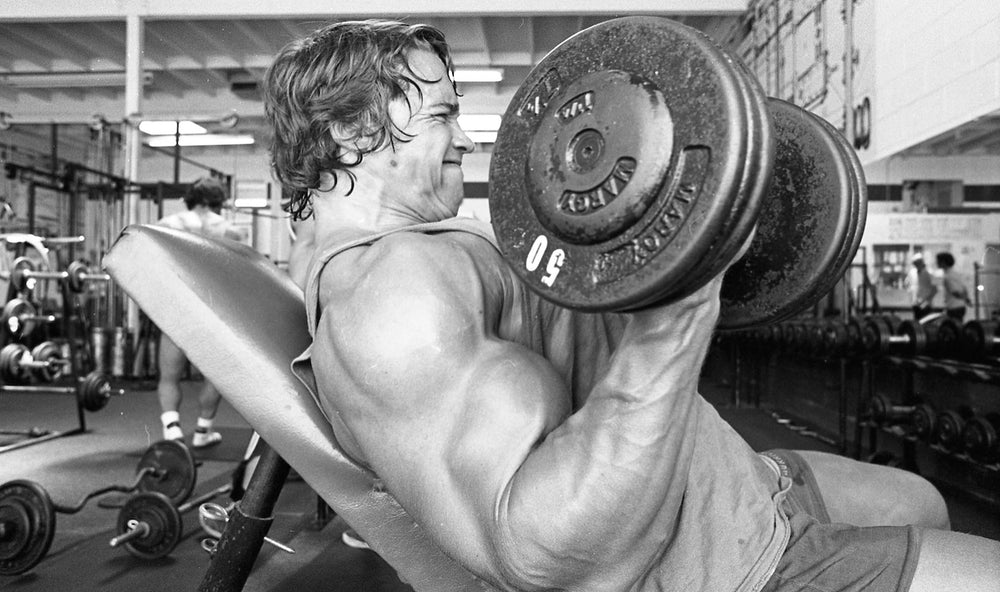
You drag yourself to the gym on four hours of sleep, and the dumbbell you lifted for 10 reps feels heavy on rep one. The weights didn't change. You did.
New research found that poor sleep changes how your body burns fuel during exercise, making your workout feel much harder.
Researchers put trained adults, split evenly between men and women, through three different nights of sleep: a normal 8 hours, a short 4 hours, and no sleep at all. It was a crossover design, so every person served as their own comparison and tried each condition. The next morning, they did a workout while researchers measured how their bodies produced energy.
After a single night of short sleep, your body shifts toward burning more fat during exercise. But that's not a perk. It's a stress signal that is doing more damage to your workout performance than you realize.
You might think, “Isn’t this great? I’m burning more fat!” It’s not what it seems, because when you look at the big picture, total calories burned didn't change
When you’re burning a slightly higher proportion of fat in a single session, if the total calories stay flat, that is not a recipe for fat loss.
The changes the researchers saw were all signs of strain: resting heart rate climbed, systolic blood pressure rose, mood and focus slipped, and the same effort felt harder.
The researchers believe it’s because short sleep flips on your fight-or-flight system. That stress response pushes more fat into your bloodstream, so more of it gets burned, and the same switch drives your heart rate and blood pressure up. The extra fat in the tank and the harder workout are the same thing wearing two faces.
So treat sleep as part of your training, not something separate from it. After a rough night of sleep, it’s wiser to pull the intensity back instead of chasing a personal best. You're not losing more fat by toughing it out. You're just paying more to do the same work.
Most people train hard and leave the recovery half to chance. But a good night of sleep isn’t an accident; it can be designed.
If you struggle to get deep, restorative sleep, focus on cooling your body. When the room won't let you cool down, deep sleep is the first thing to go.
You can use your thermostat or take a hot shower. But there’s another lever with significant research behind it: keeping your mattress cool so your body temperature stays lower when it needs it most.
The Pod by Eight Sleep is a smart mattress cover that goes on the bed you already own. It actively cools or heats each side to 55°F to 110°F and keeps adjusting on its own throughout the night.
Now remember the strain signals from the study — resting heart rate climbing, recovery slipping. Those are the exact numbers the Pod tracks from the cover, no wearable needed.
Across Pod users, resting heart rate runs lower, with up to 34% more deep sleep. That’s exactly what you need to recover and perform your best every day.
So if you've been wondering what it takes to get better rest, it could be what you're sleeping on.
Years ago, we purchased Eight Sleep beds before we even started the Pump Club. And they were one of the first products we featured because we knew the benefits were real.
Right now, as a Pump Club reader, you can get up to $500 OFF when you use the code PUMPCLUB. This is a very limited offer, and you get 30 days to try it at home and return it if you don't love it.
One more thing. If you have an HSA or FSA, the Pod may qualify as a medical expense through Truemed, and qualified customers save about 30% on average. Check your eligibility at truemed.com/eightsleep. Truemed is for qualified customers. HSA/FSA tax savings vary.
On Our Radar
Your Probiotic Might Be a Brain Supplement
Most people take a probiotic for digestion and gut health. Seventy-two studies suggest something might also be happening between your ears.
A large review found that probiotics can modestly reduce symptoms of depression and anxiety, and may also improve sleep quality.
Researchers analyzed 72 randomized controlled trials with more than 6,000 participants. They compared probiotics, prebiotics, and synbiotics with placebos for their effects on mood.
All three supplement types independently reduced depression and anxiety scores. The strongest results came from blends combining three or more strains, and formulas with Bifidobacterium outperformed those relying on Lactobacillus alone. Benefits showed up quickly — often within the first few weeks — and probiotics helped people with clinical depression even more than those with milder symptoms.
Your gut and brain are in constant two-way communication through what scientists call the gut-brain axis.
Researchers believe probiotics help by calming inflammation and supporting that signaling, which may explain the improvements in mood and sleep.
The effects were noticeable but significant, so think "helpful addition," not a replacement for therapy or medication.
If you want to try it, look for a multi-strain probiotic that includes Bifidobacterium and give it four to eight weeks.
And remember: probiotics work best when you eat the right foods to help them be fueled, colonize, and provide your body with various benefits. Fiber-rich foods, regular exercise, and solid sleep support the good bacteria you want in your gut, and those behaviors also support better mood whether you take probiotics or not.
Better Questions, Better Solutions
How To Respond To Your Inner Critic
The moment you finish something — a workout, a presentation, a hard conversation — there should be a moment of pride for taking action.
Instead, within seconds, your brain skips past everything that went well and finds something to criticize.
You replay it. You narrate it back to yourself in a voice you'd never use on anyone you love. And underneath all of it sits a troubling belief: that this voice is doing you a favor. That if you ever went easy on yourself, you'd fall apart.
So you keep the critic around. You mistake it for standards and tough love. But it’s time to understand how that voice can sometimes do much more harm than good.
The Old Question: "How do I stop being so hard on myself?"
The Better Question: "If a friend made this exact mistake, what would I tell them to do next?"
The first question turns self-kindness into a willpower fight you have to win. The second one walks around the fight entirely, because the real problem was never kindness versus high standards.
The problem is that beating yourself up feels like accountability but it actually works like avoidance. It's hard to study the tape of a mistake you can't stop wincing at.
Researchers tested this across four experiments. The scientists found that people who met a personal failure with self-compassion ended up more motivated to improve, not less. In one study, students who treated themselves kindly after bombing a test spent more time studying for the next one.
Being your own biggest fan isn't cheering from the stands. It's coaching. A good coach never pretends the missed shot went in. But instead of punishment, they focus on the adjustments.
That's the piece most people miss. Self-compassion doesn't drop the bar. It's the thing that lets you look straight at where you came up short without needing to look away.
Next time the critic starts its monologue, don't argue with it — outwrite it. Grab your phone or a notebook and try three quick lines:
The friend line. Write what you'd say to someone you're coaching who just did this exact thing. ("You rushed the close. Here's the fix.")
The "not just me" line. Name one reason this is a normal thing humans miss, not proof you're uniquely bad at it.
The next-rep line. Write the single, specific thing you'll do differently next time. Make it so focused that it’s something you could do tomorrow.
Better Today
Take any of these tips from today’s email and put them into action:
1. Breaking Up Long Stretches of Sitting Is What Makes Standing Desks Valuable
A standing desk mainly helps by making it easy to break up sitting, not because standing itself lowers heart risk. In 83,013 adults followed for ~7 years, more standing was not clearly associated with lower cardiovascular risk, whereas sitting for more than ~10 hours a day was associated with higher risk.
Why it matters: Standing more isn't what makes you healthier. Breaking up sitting is. Sit for hours, and your leg muscles stop clearing sugar and fat from your blood.
Try this: Every 30 to 60 minutes, stand up and move for 2 to 3 minutes.
2. What Poor Sleep Does to Your Workout
New crossover research shows one bad night shifts how your body fuels exercise, and why "burning more fat" isn't the win it sounds like.
Why it matters: After a rough night, the same workout feels harder and costs your body more. Short sleep flips on stress mode, so your heart works harder for the same effort. The body switching it’s fuel source is a signal that you’re not functioning as efficiently.
Try this: After a bad night, go easier. You can push, but going for your personal best after poor rest is an unnecessary uphill battle.
3. Your Gut Supplement May Double as a Mood Supplement
Probiotics can modestly reduce depression and anxiety and improve sleep quality, according to a review of 72 randomized trials in over 6,000 people — with the largest benefits from multi-strain blends (three or more strains) and from Bifidobacterium-containing formulas rather than Lactobacillus alone
Why it matters: A probiotic might help your mood, not just your stomach. Your gut and brain talk to each other all day, so improving your gut health might also support a healthier mind.
Try this: Pick a multi-strain probiotic with Bifidobacterium and give it four to eight weeks.
4. Self-Compassion Beat Self-Criticism for Getting Better After Failure
Beating yourself up feels like accountability but works like avoidance. Research shows self-compassion makes you more motivated to improve, not less.
Why it matters: Being mean to yourself after a mistake doesn't help you do better. People who go easy on themselves actually try harder next time.
Try this: After a slip-up, write the one thing you'll do differently next time. Act like a coach who focuses on improvement.
The Positive Corner of The Internet
About Arnold’s Pump Club Editorial Standards
We do things a bit differently here, starting with transparency.
The Content: All APC emails are researched, written, and fact-checked by the APC editors (see bottom of the email), with written contributions from Arnold (noted with “Arnold’s Corner”). Links take you to original studies (not second-hand sources).
Does AI play a role? Not for the primary content, but it is used in two ways. The main items are original content written by the APC team. The summaries at the end are AI-generated based on the human-written content above. We also use an AI tool to review our interpretations of the research and ensure scientific accuracy. We don’t assume AI is right, but we use technology to hold ourselves accountable.
Yes, we have partners (all clearly noted by “Together With”). Why? Because it allows us to keep the APC emails free. We first test products, and then reach out to potential partners who offer ways to help you improve every day. The bar is set high, and to date, we have turned down millions in ad deals. (Example: we will not partner with any non-certified supplements or those without evidence in human trials). If we won’t buy the product, we won’t recommend it to you. And if there’s no evidence it works, then there’s no place for it here.
—
Publisher: Arnold Schwarzenegger
Editors-in-chief: Adam Bornstein and Daniel Ketchell