


Welcome to the positive corner of the internet. Every weekday, we help you make sense of the complex world of wellness by analyzing the headlines, simplifying the latest research, and providing quick tips designed to help you stay healthier in under 5 minutes. If you were forwarded this message, you can get the free daily email here.
Today’s Health Upgrade
Is your gut the key to healthier skin?
Remember this the next time you cook
The problem of more
How strength powers longevity
On Our Radar
Can Probiotics Help Clear Acne?
Most acne advice tells you to fix your skin from the outside in. But new research suggests the gut might play a small supporting role if given enough time.
A new review of 9 randomized trials found that taking oral probiotics improved skin health and clarity.
But there’s a catch: the benefits didn’t show up until the three-month mark. In fact, there was an unnoticeable difference after the first 4 weeks.
Researchers think any improvement may come from how improving your gut health triggers a domino effect — reducing inflammation, improving the skin barrier, and altering immune signaling — that makes a real difference for healthier skin.
However, the biggest gap is knowing which probiotic might work best. Unfortunately, studies used completely different formulas (Lactobacillus, Bifidobacterium, Bacillus, Enterococcus), so we still don’t know which probiotic strains are most effective.
If you're already using proven treatments like retinoids or benzoyl peroxide and want to experiment, probiotics might offer small added help, but don’t expect dramatic results. And give it at least 12 weeks before judging whether it’s doing anything.
Together With Our Place
The Healthy Cooking Habit Most People Miss
When was the last time you adjusted how you cook — not just what you cook?
Most of us obsess over ingredients. We argue about seed oils, debate which fats are “bad,” and worry that every drop in the pan is plotting against our health.
But the real challenge isn’t the oil itself. It’s how easily those calories disappear into your food without you ever noticing.
A massive review of 42 studies found that canola oil (one of the most criticized seed oils) can actually improve heart health by lowering total cholesterol, LDL, and Apo-B. The catch? It only helps when you’re using the right amount. And that’s where most people run into trouble.
Because oils are so energy-dense, most people unintentionally consume hundreds of extra calories each week just from the pan.
Research shows we under-report calorie intake by as much as 50 percent, especially from fats. One tablespoon is 120 calories. But because oil blends seamlessly into veggies, eggs, and proteins, it’s shockingly easy to forget it’s even there.
So if you’re trying to lower your oil intake, protect your heart, or tighten up your nutrition… the solution isn’t cutting out oils entirely.
The simplest fix is upgrading your cookware. And if you want a pan designed to help you cook healthier without feeling like you’re on a diet, Our Place makes one of our favorite options.
Their Always Pan uses a next-generation ceramic nonstick coating called Thermakind®, which is made without PFAS, PTFE, PFOA, lead, or microplastics. Translation: you get an ultra-slippery cooking surface that genuinely requires less oil.
You still get the flavor and browning you want, but with far more control. When you have the right pan, you can use just 1–2 tablespoons of a high-smoke-point oil, skip aerosol sprays (they damage most nonsticks), cook on low-to-medium heat, and let the pan do the work.
And because the Always Pan can braise, sear, steam, strain, sauté, fry, boil, bake, roast, and serve — it replaces a cabinet full of cookware. We love it because it’s designed to help you cook more at home without adding friction or unnecessary calories.
If you’ve been wanting to clean up your cooking, lower the hidden oils you don’t realize you’re using, and make healthier meals that still taste incredible, this is the upgrade we’d recommend to a friend.
Today is the last day of Our Place’s biggest sale of the year. You can save up to 35% off everything. All APC readers also get a 100-day risk-free trial, free shipping, and free returns so that you can shop with total confidence. Just click here to access the sale, and no code is needed at checkout.
Instant Health Boost
Why Doing Less Might Be the Key to Achieving More
When your plan stalls, what’s your first instinct? Add another exercise? A new supplement? More goals?
If any of these sound familiar, you’re not alone. Our brains are wired to think that more is always better. But what if the real progress happens when we take something away?
Scientists found that people overlook subtractive changes, and it’s costing you progress.
Researchers ran eight experiments to see how people solve problems. Whether it was redesigning LEGO structures, improving travel plans, or fixing a mini-golf course, most participants defaulted to adding new elements rather than removing old ones, even when subtraction created a better outcome. The bias persisted even when people were told to consider all options. Only when participants had more time to think and less mental load did they start removing rather than piling on.
The researchers believe this happens because our brains associate action with addition: it feels more productive to add than to subtract. But in practice, “more” often creates clutter, stress, and diminishing returns.
That bias shows up in health all the time. We add new supplements before cutting nightly drinks. We stack more exercises before fixing recovery. We build routines so packed they collapse under their own weight.
Next time you recognize you’re not achieving your goals, before you add, perform a subtraction audit and ask what you can remove: Cut one exercise that doesn’t serve your goal, drop one habit that drains energy or time, or simplify your nutrition plan by removing one variable.
Because sometimes the fattest way forward is identifying and letting go of what is holding you back.
Longevity
One Workout Per Week Makes A Bigger Difference Than You Imagine
“A little bit goes a long way,” isn’t just a clever cliche. When it comes to strength training, it might be the key to improving longevity.
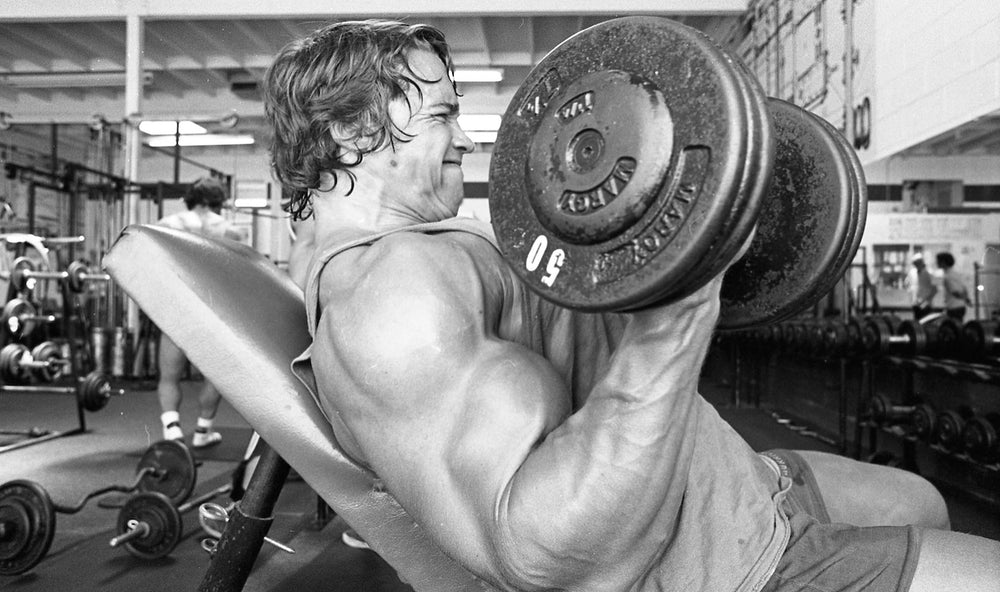
Researchers found that older adults who performed weight training had a significantly lower risk of early death — including from heart disease and cancer — even if they didn’t do much cardio.
Scientists tracked the exercise behaviors of more than 216,000 adults. About 25 percent of participants reported doing some form of weight training in the past year, while 75 percent reported none.
People who did any weight training — even once per week — had a 6 percent lower risk of dying from any cause, an 8 percent lower risk of cardiovascular death, and a 5 percent lower risk of cancer death compared to those who never lifted weights.
Women appeared to benefit slightly more than men from weight training, though both sexes saw meaningful reductions in mortality risk.
Researchers believe that weight training protects longevity through multiple mechanisms: preserving muscle mass (which naturally declines with age), maintaining bone density, improving insulin sensitivity, and supporting cardiovascular health through pathways distinct from those of aerobic exercise.
You don't need to become a powerlifter to live longer. But it’s a reminder that strength is protective and one of the best ways to improve longevity.
Better Today
Take any of these tips from today’s email and put them into action:
1. Can Probiotics Clear Acne? Possibly (But Only After 12 Weeks)
Summary: A new review of 9 randomized controlled trials found oral probiotics improved skin clarity, but the benefits didn't appear until the three-month mark, with no noticeable difference at four weeks. Researchers believe gut health improvements reduce inflammation and strengthen the skin barrier, though the optimal probiotic strain (Lactobacillus, Bifidobacterium, Bacillus, or Enterococcus) remains unknown.
2. Why Subtraction Works Surprisingly Well For Behavioral Change
Researchers found that people consistently overlook removing counterproductive behaviors, even when subtraction creates better outcomes. Next time you recognize you’re not achieving your goals, before you add, perform a subtraction audit and ask what you can remove.
3. Lifting Weights At Least Once a Week Linked To A Lower Risk of Early Death
A study tracking more than 216,000 adults found that those who did any weight training—even once per week—had a lower risk of dying from any cause, lower cardiovascular death risk, and lower cancer death risk compared to non-lifters.
—
Publisher: Arnold Schwarzenegger
Editors-in-chief: Adam Bornstein and Daniel Ketchell