


Welcome to the positive corner of the internet. We do things a bit differently here, starting with transparency.
All APC emails are researched and written by the editors in chief (see bottom of the email), with additions from Arnold (noted with “Arnold’s Corner”).
Does AI play a role? Yes, in two places. The summaries at the end are AI-generated based on the human-written content, and we use an AI tool to review our interpretations of research to ensure scientific accuracy.
We have partnerships (all clearly noted), but the bar is set high (example: no non-certified supplements or those without evidence in human trials). If we won’t buy the product, we won’t recommend it to you. If there’s no evidence it works, there’s no place for it here.
If you were forwarded this message, you can get the free daily email here.
Today’s Health Upgrade
A healthier after-meal routine
How to outsmart and overpower low willpower
Trouble falling asleep? This could be why.
Adam’s Corner: Learn from my mistakes
On Our Radar
Done Eating? Take 10 Minutes (And Go For A Walk)
Dinner wraps up, and the kitchen looks like a crime scene. Dishes are stacked, leftovers need covering, and all you want is to clear the counter and collapse on the couch. But here's a case for letting the mess sit for a few extra minutes: a quick walk right after eating might do more for your health than you'd expect.
New research suggests a 10-minute walk immediately after eating controls blood sugar spikes better than a longer walk that starts just 30 minutes later.
Scientists tested healthy adults under three conditions after consuming a sugary drink: complete rest, a 10-minute walk right away, or a 30-minute walk that began half an hour later. Both walking groups showed similar overall blood sugar control throughout the testing period.
But here's what stood out: only the immediate walkers significantly reduced their peak glucose spike, the sharp rise that strains your system most.
The reason comes down to timing. Your muscles act like sponges for glucose, pulling sugar out of your bloodstream to use as fuel. But they work best when blood sugar is actively climbing, not after it's already peaked and started to drop. Wait too long, and you've missed the window where movement makes the biggest difference.
If you don’t walk, your body can handle the rise and fall of blood sugar. It’s normal. The problem is if blood sugar remains elevated. But the walk is beneficial, regardless.
This finding isn't an outlier. A 2023 meta-analysis of eight studies reached the same conclusion: post-meal exercise works best when you start as soon as possible after eating.
This was a small pilot study of young, healthy adults who consumed a glucose drink instead of real food. Larger trials in older populations are needed before this becomes ironclad advice. However, the timing principle has solid support.
Together With KNKG
Why Your Willpower Fades by Evening (And What Actually Fixes It)
No matter how determined you are, for many people, by 6 pm, the gym feels impossible. This isn't weakness — it's math.
The more choices you make throughout the day, the worse they become. The key isn’t to let this frustrate you, but to understand how to use this to your advantage since it’s a human trait.
Researchers studying nurses found that, by the end of their shifts, they made 49% more conservative, less efficient decisions than immediately after a break. The culprit wasn't physical exhaustion. It was decision volume. Every choice — big or small — chips away at your mental reserves until even simple tasks feel overwhelming.
But here's where it gets useful: a meta-analysis of 41 randomized controlled trials found that creating specific plans for when, where, and how you'll act boosted follow-through by up to 35%.
The surprising part? The most effective strategies didn't focus on the workout itself. They focused on preparation, such as packing your bag, laying out clothes, and setting up your gear the night before.
Another study confirmed this: preparatory habits predicted exercise consistency far better than performance habits.
Preparation removes the micro-decisions that derail you. "Should I go?" "Do I have time?" "Where are my shoes?" These questions never arise when the answers are already handled.
Training doesn't start with your first rep. It starts when you pack your bag.
That's why KNKG is part of our routine for not letting life get in the way. There are bags, and then there are bags built for people who take preparation seriously, making it easier to act with intelligent design, customizable compartments, and durability that outlasts excuses.
The CONQUER Duffel is a different type of bag (and we’ve seen them all): magnetic dividers, independent shoe storage, dual bottle sleeves, and quick-access zones. It's the most organized gym bag we've tested.
APC readers get 20% off (no code needed) on all KNKG products. Your discount applies automatically. Just click here.
Discipline isn't what happens in the gym. It's what happens before you get there.
Health
Why Your Brain Won't Shut Off at Night
After a long day, you crawl into bed, and suddenly your mind decides it's time to solve every problem you've ever had. It's not a lack of discipline. It's not that you're "bad at sleeping."
People with insomnia have a circadian rhythm problem: their brains fail to receive the biological signal to stop thinking at night.
Researchers kept participants awake for 24 hours in a controlled lab environment, testing their cognitive patterns hourly. Healthy sleepers showed a clear mental "downshift" at night. Their goal-directed thinking peaked in the afternoon and then declined as bedtime approached. Their brains naturally moved from focused problem-solving to fragmented, dream-like thoughts.
Insomniacs? No such luck. Their brains remained in daytime mode all night, with peak mental activity delayed by roughly 6.5 hours compared to healthy sleepers. When they should have been powering down, they were still running full steam.
The researchers believe this reflects a failure to downregulate at night. Insomniac’s brains, essentially, stay at the office when everyone else has gone home.
While this study identified the problem, separate meta-analyses involving over 1,800 participants suggest that strengthening the circadian signals your brain might be missing could help.
Here are three places to start:
Morning light matters: It’s cliché now because of popular podcasts, but getting 15-30 minutes of bright light within an hour or two of waking can help set your circadian rhythm. Outside is ideal; a light therapy box works too. This helps set a clearer contrast between day and night.
Dim things down in the evening: Lower household lights a couple of hours before bed. It's not magic, but it removes one more signal telling your brain to stay alert.
Same time, every day: Consistent sleep and wake times — even on weekends —reinforce the rhythm. Research suggests regularity may matter more than total hours.
Adam’s Corner
What I Got Wrong About Training (For a Very Long Time)
I used to train as if I were trying to win an argument with my body.
Every workout was a referendum. Every session was a chance to prove something. More weight. More reps. More pain tolerance.
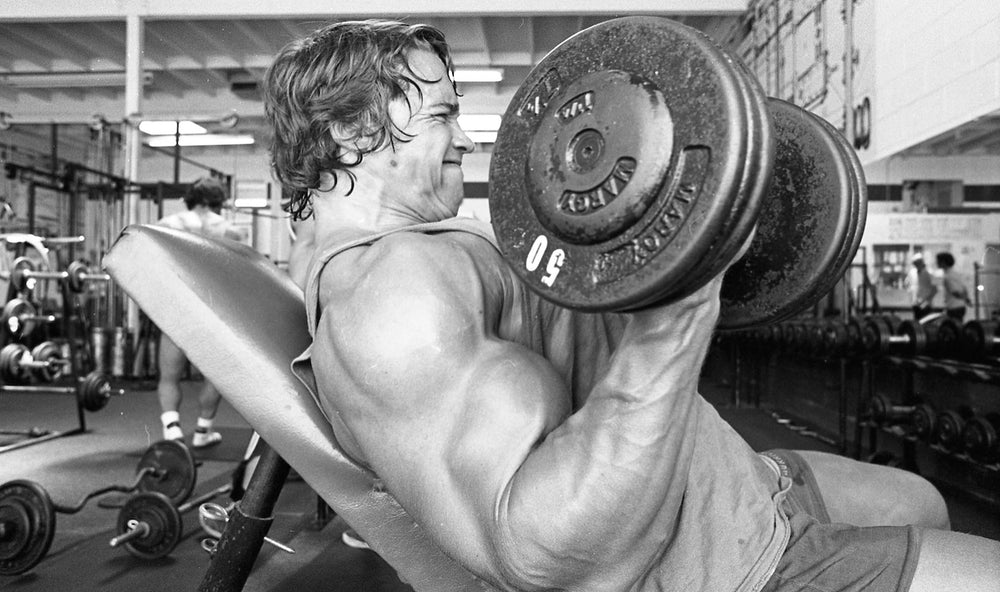
PRs were the goal, even when they didn’t make sense. Aches and nagging pains weren’t warning signs; they were badges of honor. Rest felt like weakness. Recovery felt optional. If something hurt, I pushed harder and told myself that was discipline and the price of hard work.
And here’s the part that’s uncomfortable to admit: For a long time (maybe too long), I believed that approach was the reason I stayed fit as I got older.
I wore it like evidence: See? Beating myself into the ground worked.
Until, slowly, it didn’t. Or, maybe more accurately, I started to ask, “What if I trained differently? Could I even be healthier and fitter?”
A few weeks ago, we asked for your feedback in this space. A lot of you wrote back. Thoughtful notes. Honest questions. Real frustration mixed with hope. I’ll be covering many of those themes in the weeks ahead. It was invaluable, so thank you. And if you still want to share how we can help you, please feel free to reply. (As so many of you saw, we read and reply — not to all of you, but as many as we can)
But one message stopped me.
“How do I work with — not against — my body so I can stay strong as I age? Beating my body into submission doesn’t seem to be working anymore.”
And it hit me that this wasn’t just a question about training. It was a question about time. About what we know at 20 versus what we understand later in life (in my case, at 43). About how much our younger selves could benefit from the clarity our older selves earned the hard way.
And here’s the part that surprised me most: This lesson doesn’t belong to one age group.
I’ve seen it help people in their 20s avoid years of frustration. I’ve seen it unlock progress for people in their 40s and 50s who thought their best days were behind them. I’ve even worked with people in their 80s and 90s who finally felt capable again, not because they did more, but because they understood the one thing they’d been missing all along.
What Age Gives You (If You Pay Attention)
The funny thing about training — and life — is that clarity tends to arrive later than we’d like. But that doesn’t mean it’s too late. It’s never too late.
When you’re younger, your body is forgiving. You can ignore sleep, stack stress, skip warm-ups, chase sweat, and still improve. You get away with things.
But “getting away with it” isn’t the same as doing it well.
By the time you reach your 40s or 50s, the noise falls away. You start to see patterns. You notice what actually moves the needle and what just leaves you tired, sore, and stuck.
And that’s when you realize something uncomfortable and freeing at the same time:
If most people trained in their 20s with the wisdom of someone older, they would’ve experienced results that were exponentially better.
Most people would think this means going easy. It’s the opposite. Your body responds to intensity and consistency. We have people in the Pump Club App in their 60s and 70s hitting lifetime PRs because they’d finally understand the rules in a way that allows them to take advantage of how their body works.
The Rules Don’t Change (But Your Interpretation Should)
There are three truths that never stop being true:
Intensity is essential
Consistency is everything
Design matters
Most people fixate on the first two and completely misunderstand the third.
They think intensity means annihilation. They think consistency means grinding, no matter what. And, they assume more work automatically leads to better results.
But your body doesn’t reward effort. It adapts to signals. And signals have limits.
If you want to know how to train effectively, think “Stimulate, don’t annihilate.”
This is where everything shifts. The goal of training is not to leave the gym empty. It’s to leave it changed. Better. Stronger.
That means training toward failure, not past it. Caring more about progress than soreness. Valuing recovery as part of the program, not a break from it.
I could rattle of one-liners like it’s my job to create a jingle:
Sweat is not a scorecard.
Pain is not proof.
Exhaustion is not evidence of effectiveness.
All of them speak to a simple reality: many people sabotage their progress by doing what feels hardest instead of what works best.
They add extra sets at the end of a workout when focus is gone and fatigue is high, instead of warming up better and crushing their first two working sets. This is a costly mistake I see repeated over and over. You're counting sets and reps instead of impact, progress, and intensity.
The first approach piles on fatigue, delays recovery, and increases the risk of injury. The second — of prioritizing intensity when you are most fresh in your workout — builds strength, skill, and muscle.
That approach, what I call the “first set mindset,” expands capacity. The other quietly erodes it.
Why “Doing More” Is the Wrong North Star
Here’s a truth that’s hard to swallow: Most people would be stronger, leaner, and feel better doing three well-designed full-body workouts per week than trying to train six days a week out of guilt, fear, or habit.
Not because they’re lazy. But because focus beats volume. Quality creates adaptation. Adaptation creates results.
It sounds counterintuitive, but doing more is easy. Doing better requires restraint, focus, and a willingness to push yourself differently. Asking, “Can I get stronger today? instead of just wondering, “Can I exhaust myself today?”
As you get older, training stops being about how much you can tolerate and starts becoming about how well you can listen. The real skill is learning the boundaries of intensity of consistency, and then applying them ruthlessly.
It’s knowing when pushing helps and when it steals from tomorrow. When intensity builds you up, and when it quietly breaks you down. When restraint is actually the most aggressive move you can make.
This isn’t about going easy on yourself. It’s about training with clarity, purpose, and intelligence.
And maybe that’s the lesson our younger selves need most: Yes, hard work matters, but smart work compounds longer. Soreness is a signal, but not a goal.
If you stop fighting your body and start working with it, strength doesn’t disappear with age. It sharpens.
And once you feel that difference, you start to realize that even if you can’t turn back the clock, you can still reshape and improve the future. -AB
Better Today
Take any of these tips from today’s email and put them into action:
1. Why a 10-Minute Walk Right After Eating Beats a Longer Walk 30 Minutes Later
A new study found that a 10-minute walk immediately after eating significantly reduced peak blood sugar spikes compared with a 30-minute walk started half an hour later. Researchers believe it’s because your muscles absorb glucose most effectively while blood sugar is still climbing, not after it's already peaked. A 2023 meta-analysis of eight studies backs it up: when it comes to post-meal movement, sooner beats longer.
2. The Real Reason You Skip the Gym at Night (It's Not Laziness — It's Math)
Research shows decision fatigue — not laziness — is why your willpower craters by evening. In one study, nurses made 49% worse decisions by the end of the shift, not from physical exhaustion, but from decision volume. The fix isn't more discipline; a meta-analysis of 41 trials found that preparation habits boosted follow-through by up to 35%.
3. Your Insomnia Isn't a Discipline Problem, But It Might Be A Timing Problem
New research found that people with insomnia have a circadian rhythm failure: their brains stay in goal-directed "daytime mode" all night, with peak mental activity delayed by roughly 6.5 hours compared to healthy sleepers. Meta-analyses involving over 1,800 participants suggest that strengthening circadian signals through morning light exposure, evening light reduction, and consistent sleep-wake times can help reset the cycle.
4. Stimulate, Don't Annihilate: Why Smarter Training Beats Harder Training at Every Age
After years of treating every workout like a test of pain tolerance, the shift that changed everything was simple: train toward failure, not past it — prioritize your first working sets when focus and energy are highest, rather than piling on extra volume when you're already fatigued. Three well-designed full-body workouts per week can outperform six days of grinding because quality creates adaptation, adaptation creates results, and soreness is a signal, not a goal.
—
Publisher: Arnold Schwarzenegger
Editors-in-chief: Adam Bornstein and Daniel Ketchell