


Welcome to the positive corner of the internet. We’re here to make your life healthier, happier, and less stressful. At the bottom of each email, we explain our editorial process, stance on AI, and partnership standards.
If you were forwarded this message, you can get the free daily email here.
Today’s Health Upgrade
Can garlic improve oral health?
The preferred drink of healthy brains
-
What happens when you take a week off from exercise?
On Our Radar
Is Garlic Mouthwash Actually a Thing? Here's What a New Study Found
Could the thing that gives you bad breath also be the secret to a healthier mouth?
People have used garlic as a natural remedy for centuries, which tends to make scientists skeptical and enthusiasts convinced. A new round of clinical research offers a little more clarity.
A meta-analysis of 6 clinical trials found that garlic mouthwash reduced the bacteria most responsible for tooth decay as effectively as fluoride rinses.
Researchers pooled data comparing garlic mouthwash with fluoride and the gold-standard prescription rinse (chlorhexidine) in terms of their ability to reduce the primary bacterium responsible for dental cavities. At two weeks, garlic showed a moderate advantage over fluoride. Compared to chlorhexidine, garlic showed a modest edge at one week; by two weeks, chlorhexidine pulled ahead; and by one month, there was no meaningful difference between them.
Why might garlic keep your mouth clean? Scientists believe the answer is allicin, garlic's main active compound, which has documented antimicrobial properties against multiple bacterial species.
We dug deeper, and we found reason to pump the brakes on “all-natural” garlic mouthwash. The issue isn’t whether garlic has potential oral health benefits; it’s whether the garlic you use will give you the compound you need. In the research, concentrations ranged from 0.02% to 3% — a 150-fold spread — which tells you something about how far this science still has to go before anyone can say what a clinically useful garlic rinse would look like.
Also, none of the included trials measured actual cavity rates; only bacterial counts were measured, which also limits how much we can trust the outcome.
You might be wondering if eating garlic will give you similar benefits. Chewing raw garlic releases compounds that lab studies show can kill cavity-causing bacteria, but there's no clinical evidence yet that eating garlic protects your teeth, and cooking eliminates the relevant mechanism entirely.
This is research worth watching, just not worth depending on yet.
Together With Pique
What Decades of Research on Tea Drinkers Tell Us About Brain Aging
Most conversations about preventing cognitive decline start with what to cut: alcohol, ultra-processed food, chronic stress, and poor sleep. But a growing body of research keeps pointing toward what you can add.
The list starts with exercise — both cardio and resistance training — and extends to other behaviors such as social connection, learning and education, and eating more nutrient-dense foods. When it comes to the last item, it’s not just what you eat, but also what you drink that could make a difference.
A systematic review of 35 studies found that habitual tea drinkers had 19% to 31% lower rates of cognitive disorders compared to people who drank the least tea, a consistent association that has now appeared across millions of adults and multiple decades of research.
Researchers analyzed 23 cohort studies, 12 cross-sectional studies, and 4 randomized controlled trials tracking tea consumption and cognitive outcomes. The highest tea consumers had meaningfully lower rates of cognitive disorders than the lowest consumers. The 4 randomized controlled trials that specifically measured cognitive function found a meaningful improvement in standardized test scores among tea drinkers. And a separate meta-analysis of more than 410,000 participants found similar patterns.
The vast majority of the studies are observational, meaning we can't establish cause and effect. People who drink more tea may simply have healthier habits overall, and those habits could be doing most of the work.
But the connection is very plausible. Green tea is high in EGCG, an antioxidant that may reduce inflammation and oxidative stress, two processes tied to neurodegeneration. L-theanine, an amino acid found almost exclusively in tea, appears to support neural signaling and works synergistically with caffeine to improve focus.
If you already drink tea, this research adds to a reasonable case for keeping the habit. If you don't, one to two cups a day — brewed, not bottled — is a low-effort addition worth considering. Just don't treat it as a standalone brain strategy.
If you want to make tea a consistent habit, some people don’t love the prep. Loose-leaf requires equipment. Traditional matcha requires a whisk and a ritual. And most bottled teas — the ones you reach for out of convenience — have been processed in ways that significantly reduce the EGCG content that makes tea worth drinking in the first place.
That's what led us to Pique. Pique uses a cold-brew crystallization process that preserves up to 12x more catechins than conventional brewing, which means the compounds the research above points to are actually present in meaningful amounts.
Their teas are triple toxin-screened for heavy metals, pesticides, and mold, and they dissolve instantly in hot or cold water. No equipment. No prep. One cup in under 30 seconds.
We tried their matcha and black tea for several months. The quality held up, and the habit stuck in a way that a box of teabags rarely does.
As an APC reader, you get up to 20% off and a free starter kit on subscriptions of $100+. No code needed, and your discount applies automatically at checkout.
One to three cups a day. Low effort. The research has already made the case. This just makes it easier to act on.
Instant Health Boost
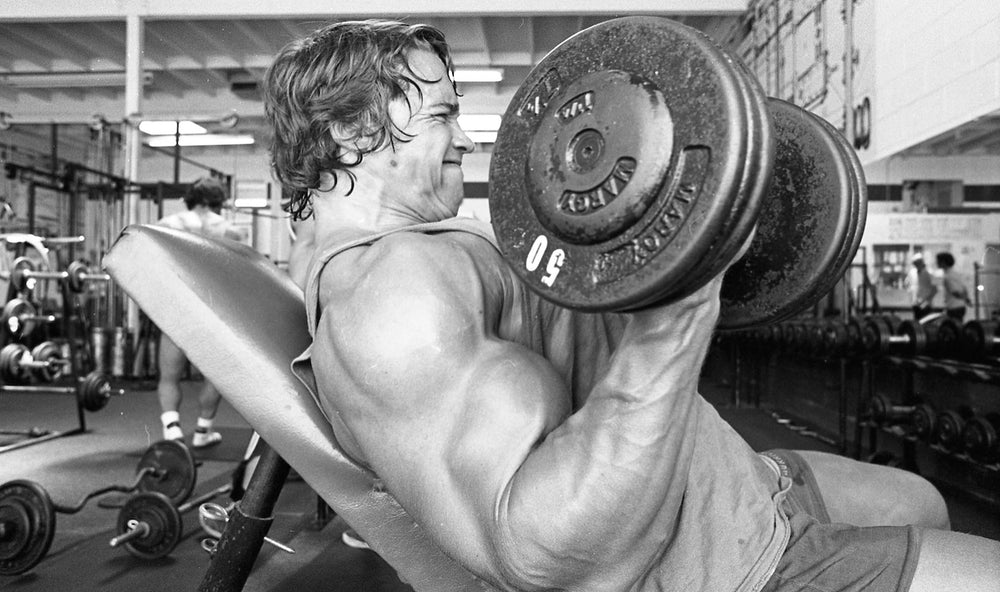
What Actually Happens When You Take a Complete Week Off From Lifting
At some point, every lifter hits the same crossroads: you've been training hard and wonder if an extended break will help you come back stronger. New research suggests it might not hold up the way you think.
A randomized controlled trial found that taking a full week off in the middle of a training program led to no muscle-building advantage over training straight through and actually led to smaller strength gains.
Researchers randomly assigned resistance-trained adults to two groups. Both followed a 9-week high-volume program. One group took a complete rest week at the midpoint. The other trained continuously.
At the end, ultrasound measurements found no meaningful difference in muscle size between groups. But the continuous training group came out ahead in both isometric and dynamic lower-body strength. Somewhat surprisingly, the rested group also reported slightly lower psychological readiness to train afterward, which is the opposite of what most would predict.
To be clear, this was not a planned deload. In a deload, you don’t stop training. Instead, you cut back on volume or intensity. In the study, researchers tested total rest. Dropping weight and sets by 40-50% for a week is a meaningfully different intervention than doing nothing. This study doesn't speak to that approach.
There’s no problem with taking days off. However, if you're banking on a full week off as a performance tool, the evidence isn't there to support it. Your body doesn't appear to need a complete pause to grow. Consistent training with fatigue managed throughout the week is almost certainly doing more work than any planned couch week.
The bigger issue might be your training program itself. The participants were put on a program designed to help them make progress. Not one that’s designed to cause burnout. So if rest feels that necessary, it’s worth reconsidering your current approach, and if you’d be better off trying a program design for progress, not exhaustion.
If life forces a week away, don't panic. You can take time off, go on vacation, or thrive if you need to take a break. Muscle holds longer than you think. But if you’re using longer breaks as a deliberate strategy, the research suggests you might be better off if you keep training.
Better Today
Take any of these tips from today’s email and put them into action:
1. The Allicin Effect: Why Garlic Can Kill Cavity Bacteria (And Why That Doesn't Mean Much Yet)
A meta-analysis of 6 clinical trials found garlic mouthwash reduced cavity-causing bacteria as effectively as fluoride rinses at two weeks, but concentrations across studies ranged from 0.02% to 3%, a 150-fold spread that makes any practical recommendation premature. The active compound, allicin, has documented antimicrobial properties, but none of the trials measured actual cavity rates — only bacterial counts — which limits what the findings actually prove. Until researchers establish a clinically useful concentration and measure real cavity outcomes, garlic mouthwash is worth watching, not adopting.
2. Habitual Tea Drinkers Had 19–31% Lower Rates of Cognitive Decline
A systematic review of 35 studies — including 23 cohort studies, 12 cross-sectional studies, and 4 randomized controlled trials — found that habitual tea drinkers had lower rates of cognitive disorders than those in the lowest category, a pattern consistent across more than 410,000 participants. The likely mechanisms include EGCG, a green tea antioxidant that may reduce neuroinflammatory processes, and L-theanine, an amino acid that supports neural signaling and synergizes with caffeine. Most of the data are observational, so causation isn't established. But the consistency of the association and the plausibility of the mechanisms make one to two cups of brewed tea daily a reasonable, low-effort addition to any cognitive health strategy.
3. A Full Week Off Training Didn't Build More Muscle (And Cost Strength Gains)
A randomized controlled trial assigned resistance-trained adults to either a continuous 9-week high-volume program or the same program with a full rest week at the midpoint and found no meaningful difference in muscle size, but a clear strength advantage for the group that never stopped training. The rested group also reported slightly lower psychological readiness afterward, the opposite of what most people predict a week off will deliver. The important distinction: this was complete cessation, not a planned deload, which reduces volume and intensity by 40–50% while maintaining movement — a meaningfully different intervention that this study doesn't address. If a week away happens, muscle retention is not the concern. But as a deliberate strategy, consistent training with fatigue managed week-to-week outperforms any planned pause.
The Positive Corner of The Internet
About Arnold’s Pump Club Editorial Standards
We do things a bit differently here, starting with transparency.
The Content: All APC emails are researched, written, and fact-checked by the APC editors (see bottom of the email), with written contributions from Arnold (noted with “Arnold’s Corner”). Links take you to original studies (not second-hand sources).
Does AI play a role? Not for the primary content, but it is used in two ways. The main items are original content written by the APC team. The summaries at the end are AI-generated based on the human-written content above. We also use an AI tool to review our interpretations of the research and ensure scientific accuracy. We don’t assume AI is right, but we use technology to hold ourselves accountable.
Yes, we have partners (all clearly noted). Why? Because it allows us to keep the APC emails free. We first test products, and then reach out to potential partners who offer ways to help you improve every day. The bar is set high, and to date, we have turned down millions in ad deals. (Example: we will not partner with any non-certified supplements or those without evidence in human trials). If we won’t buy the product, we won’t recommend it to you. And if there’s no evidence it works, then there’s no place for it here.
—
Publisher: Arnold Schwarzenegger
Editors-in-chief: Adam Bornstein and Daniel Ketchell